

Quick answer: Silent film acting is screen performance that communicates character, emotion and action primarily through visible behavior instead of recorded spoken dialogue. Performers used posture, hand gestures, eye lines, facial expressions, timing and reactions; directors added close-ups, shot composition and editing to make the meaning legible. The familiar stereotype of every silent actor waving wildly is misleading. The best silent performances ranged from flamboyant theatrical gesture to remarkably restrained, intimate looks.
Why did silent films need a different acting language?
Early movie cameras captured moving images before synchronized dialogue became standard in commercial feature films. Intertitles could convey crucial words, but they interrupted the visual flow rather than replacing conversation line by line. Actors therefore had to make relationships, intentions and emotional shifts readable in an image. Audiences interpreted a turn of the head, hesitation at a doorway, a glance at an object or the speed of a movement.
Silent movies were not necessarily experienced in silence. Many theaters provided live piano, organ or orchestral accompaniment; music could help establish tension, humor or sorrow. The distinction is that spoken dialogue was not generally synchronized as it would be in later sound films.
Six tools of silent film acting
1. Clear physical intention
A character who wants to hide a secret may protect a letter, avert a gaze and delay handing over a bag. None of those actions needs speech to read. Rather than merely ‘acting sad,’ performers often communicated a concrete objective: protect someone, leave a room, win approval or conceal an error. An audience can then infer emotion from the effort to achieve it.
2. Facial expression calibrated to shot size
A broad gesture may work in a long shot where the actor occupies only a small part of the screen. In a close-up, a tiny eye movement or a pause can be more powerful than dramatic grimacing. Silent films did not follow one universal acting style: performance choices differed by production, genre, director, decade and framing. A restrained close-up in a drama and a big reaction in a physical comedy can both be authentic silent cinema.
3. Body posture and silhouette
The outline of a body can explain mood instantly. A person frozen at the threshold of a room looks different from someone leaning forward with purpose. Charlie Chaplin’s Tramp character is recognizable not solely through costume but through the contrast between a lively gait, abrupt stops and moments of tenderness or vulnerability.
4. Timing, pause and reaction
Comedy often depends on the moment before an action as much as the action itself. An audience sees a hazard; the character has not noticed it; a delayed realization creates anticipation. Silent drama also used pauses. Holding a reaction a little longer can let a viewer recognize disappointment or resolve without a line of dialogue.
5. Eye line and spatial relationships
Where an actor looks tells a viewer what matters. A cut from a face to an object and back can suggest recognition, fear or desire. If a second character looks toward the same place, the film establishes shared attention. These techniques work together with camera placement and editing; they were not simply tricks performed by actors in isolation.
6. Ensemble reactions
One person’s movement gains meaning from another person’s response. A raised eyebrow, an exchanged glance or a crowd recoiling tells us how a situation should be understood. Strong silent scenes often give each performer a different objective, rather than asking everyone to repeat the same oversized expression.
Examples you can watch and what to look for
| Performer / film | Visible storytelling technique | Watch for |
|---|---|---|
| Charlie Chaplin — The Kid (1921) | Changes between comic movement and emotional vulnerability | The difference between the Tramp’s playful confidence and protective behavior toward the child. |
| Buster Keaton — The General (1926) | Deadpan reactions set against increasingly chaotic physical action | How a relatively still face makes movement and circumstance more amusing. |
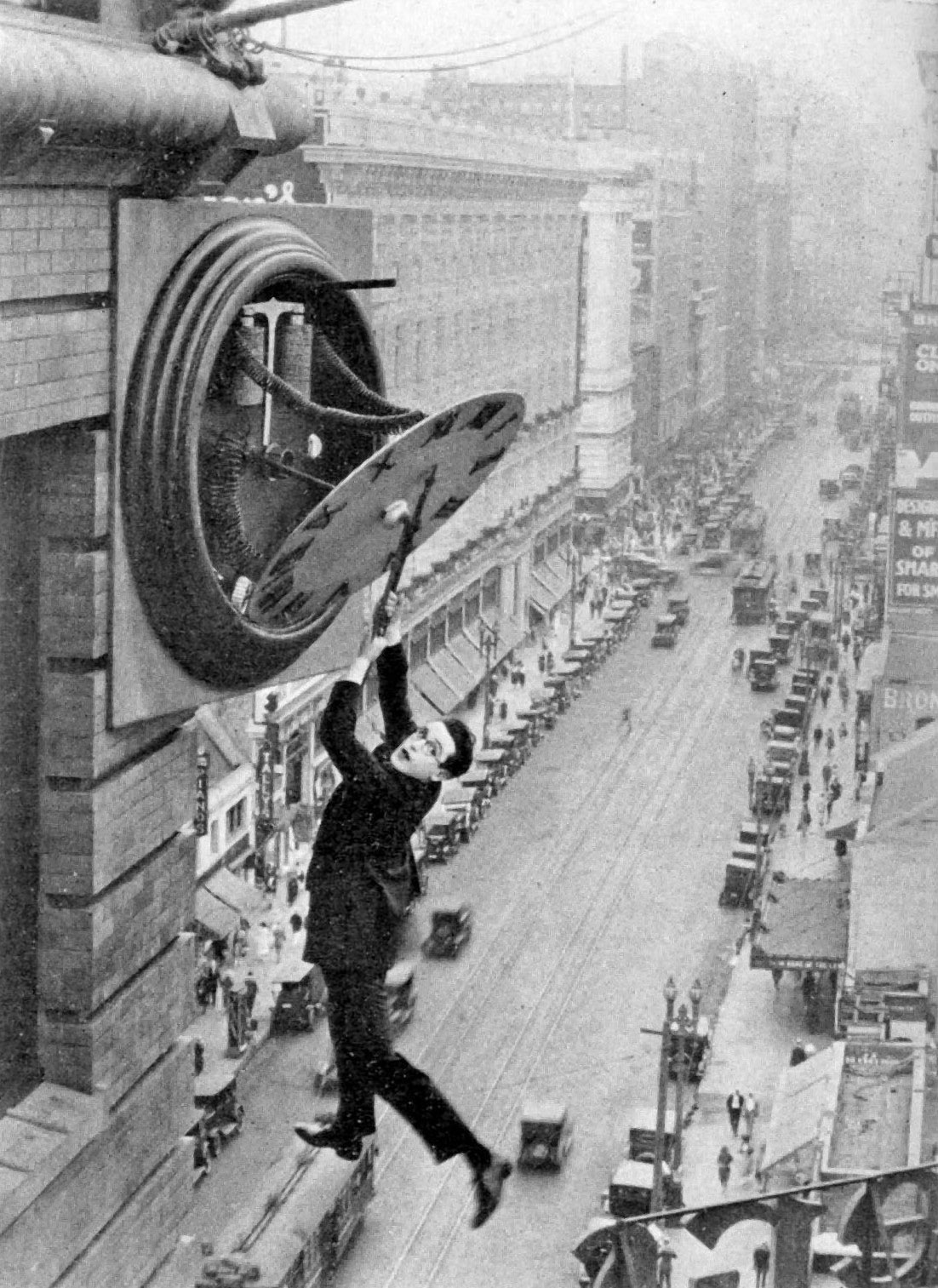
| Harold Lloyd — Safety Last! (1923) | Physical risk staged for rising suspense and comedy | How framing makes the height and the character’s changing predicament easy to read. |
| Lillian Gish — silent-era dramatic roles | Close-up-oriented emotional changes and carefully controlled movement | How small gestures can communicate fragility without pantomiming every feeling. |
These examples are intentionally different. Keaton’s deadpan is not a rule for every comedy, and Gish’s expressive naturalism is not a rule for every drama. Editing, costume, framing and music also shape the viewer’s response.
Were silent actors really overacting?
Sometimes, by modern screen conventions, yes. But describing the entire period as overacting erases real differences. Stage-trained performers were accustomed to making motions visible to a distant audience. Early filmmaking often used wider views and less intricate cutting. As directors explored closer framing, performers could rely on subtler expressions. Some intentionally exaggerated for parody, melodrama or slapstick.
A useful distinction is legibility versus exaggeration. An action must be understandable at the distance and duration the filmmaker chooses. A broad gesture can be precise rather than clumsy when placed in a wide shot; a tiny smile may be precise in close-up but invisible from farther away. The goal is a clear relationship between performance and camera.
Silent film acting versus modern screen acting
| Question | Silent-era approach | Common modern approach |
|---|---|---|
| How is important information conveyed? | Visible actions, intertitles and editing | Often dialogue plus visible actions and editing |
| How do actors express emotion? | Facial expressions, posture, choices, pauses and movement | The same visual tools, often alongside synchronized speech |
| Does the actor need to gesture broadly? | Depends on shot size and film style | Also depends on shot size, genre and direction |
| Does sound contribute? | Live musical accompaniment was common in exhibition | Recorded dialogue, sound design and score can all contribute |
In other words, silent acting is not an obsolete collection of gestures. Contemporary animation, comedy, action and dialogue-free scenes still depend on many of the same principles.
Try a five-minute silent acting exercise
Choose a simple scenario: your character is waiting for someone who has promised to return. Film three versions without speaking. In the first, use a wide view so your posture and travel through space must do the work. In the second, frame the face and hands in a close-up. In the third, introduce an object, such as a watch or closed letter, and show the character looking at it before reacting.
Review the clips with the sound muted. Can someone else identify what your character wants? Which information is clear, and which is missing? Adjust one decision at a time rather than making every gesture bigger. This is a suggested learning exercise, not a claim that silent filmmakers followed a universal training method.
How cinematography and editing complete the performance
Consider a reaction shot after a character sees something off screen. The actor’s response gains a particular meaning from the next image. A look followed by a threatening shadow implies fear; the same look followed by a loved one’s return implies relief. A skilled performer provides readable options while the director and editor determine the sequence audiences see.
This is why comparing isolated publicity photographs is less revealing than watching an entire scene. A still can document costume, expression or staging, but it cannot fully convey timing and the relationship between shots. For more film context, explore AVARIXO’s guide to Buster Keaton’s The General and our explanation of The Sheik (1921).
Frequently asked questions
Did silent films have dialogue?
Characters could be depicted as speaking, but synchronized spoken dialogue was not generally part of the soundtrack. Intertitles often supplied selected lines or context.
Why are silent actors so expressive?
Actors had to communicate visually, especially in wide shots and clear physical comedy. Many productions also used subtle acting in closer shots; bigger expression was a choice, not a universal rule.
Was Buster Keaton expressionless?
No. His celebrated deadpan used controlled facial expression as a contrast to elaborate action and changing circumstances. Understatement was itself a deliberate performance technique.
Can modern actors learn from silent film acting?
Yes. Silent scenes offer clear examples of objectives, readable action, timing and reacting to other performers without relying on dialogue to explain every feeling.
Are silent movies in the public domain?
Some are, but rights vary by original publication, country and later restorations or newly added soundtracks. Check an individual release before reusing it; our public-domain film guide explains the distinction.
Film examples discussed are historical productions. The photographs accompanying this article depict actual performers and works from the silent era, rather than recreations or AI-generated scenes.

Other Articles

