
Quick answer (October 2026): Public domain movies are films whose copyright protection has expired, never applied, or does not protect the work in the relevant country. In the United States, original motion pictures first published in 1930 generally entered the public domain on January 1, 2026, joining older classics. You can legally watch and reuse a genuinely public-domain film, but the particular copy, music, restoration, subtitles or other newly added material may carry separate rights. A streaming site’s label alone does not prove that everything in its download is free to reuse.
For the easiest starting point, browse the Library of Congress’s free-to-use films, compare the film’s original publication date with the Duke Center for the Study of the Public Domain’s 2026 list, and confirm the actual file’s rights statement before downloading it. This guide separates the status of a movie from the status of a specific recording of that movie.
What does public domain mean for movies?
Copyright ordinarily gives the owner rights to reproduce, distribute, perform and prepare certain adaptations of the protected creative work. Once a movie’s applicable term ends, the underlying film can enter the public domain. The U.S. Copyright Office’s duration guidance explains that protection depends on factors including publication date, ownership and the law that governed the work. The public domain is a legal status, not the name of a streaming subscription or a guarantee that every website has a usable copy.
There are two practical questions: (1) Is the original film public domain where you plan to use it? and (2) does this particular upload include protected additions? A 1902 silent-film frame may be in the U.S. public domain, while a newly recorded orchestral score accompanying the same 1902 movie may still be copyrighted. Colorization, subtitles, distinctive new edits and restorations deserve their own rights review.
Does ‘free to watch’ mean ‘public domain’?
No. A movie available at no charge on an ad-supported streaming service is often still copyrighted. Its distributor may simply have the right to show it. Similarly, a film on a user-upload site can be available to watch without its uploader having permission to grant redistribution rights. Separate a zero-dollar viewing price from permission to download, republish or edit the movie.
Which movies entered the U.S. public domain in 2026?
Each January 1, a new batch of eligible works reaches the end of its U.S. copyright term. In its Public Domain Day 2026 analysis, Duke identifies multiple 1930 films newly available in the United States. The following are examples; the original films’ status should not be confused with new restorations or re-recorded scores.
| Film | Original release | Why it matters | Important caveat |
|---|---|---|---|
| Animal Crackers | 1930 | Marx Brothers comedy | Confirm the rights in any modern master or accompanying materials. |
| Morocco | 1930 | Josef von Sternberg film with Marlene Dietrich | Do not assume every subtitled or restored edition is identical. |
| Anna Christie | 1930 | Early Greta Garbo sound film | Check version, source and included audio before redistribution. |
| Hell’s Angels | 1930 | Howard Hughes aviation drama | Modern transfers and releases can add independently protected elements. |
| The Big Trail | 1930 | John Wayne early leading role | Verify the particular copy’s rights and territory. |
| The Blue Angel | 1930 | German-language classic often studied in film history | Foreign-film rights can differ among jurisdictions. |
These are U.S.-focused examples based on Duke’s 2026 research, not a claim that the titles are unrestricted in every country. Copyright rules for older foreign works and for works distributed in other countries can differ substantially. If your intended audience or distribution extends beyond the United States, do a local-country analysis rather than applying U.S. dates globally.
Public domain movies you can start exploring today
A trustworthy list should give you a way to inspect a real archive record, not simply promise “thousands of free movies.” These four entry points work well as a first exploration:
1. A Trip to the Moon (1902) — early science fiction
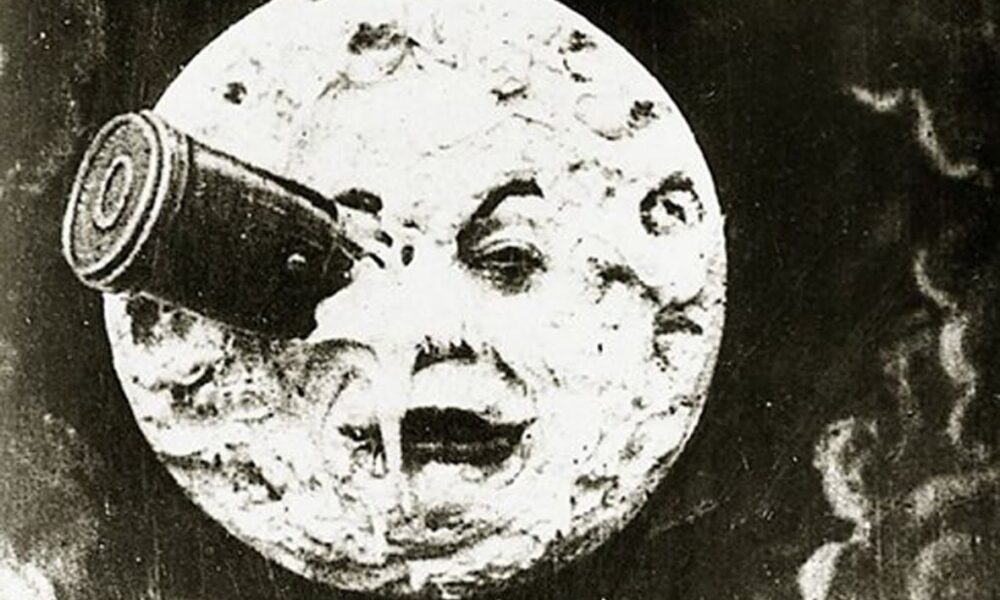
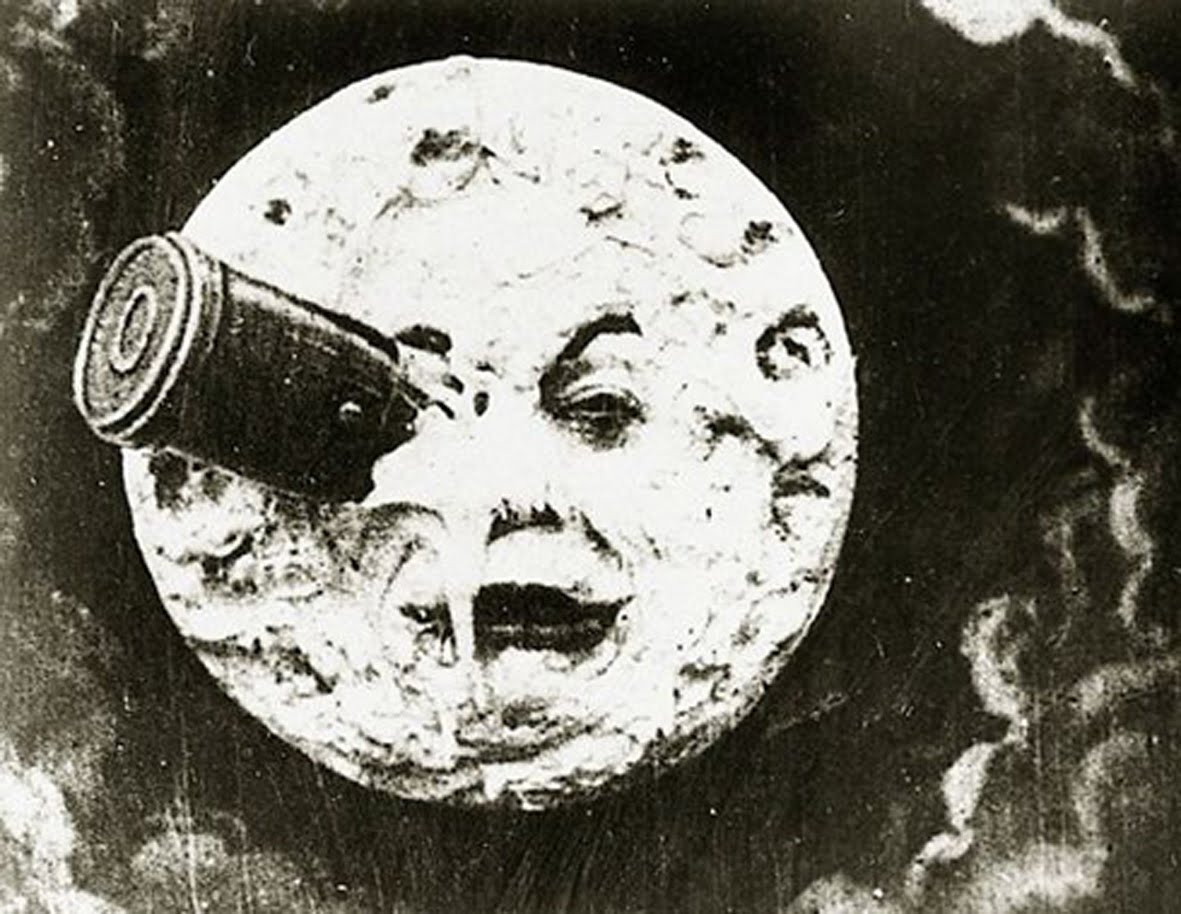
Georges Méliès’s A Trip to the Moon (French title Le Voyage dans la Lune) is an early fantasy adventure notable for the famous image of a rocket lodged in the Moon’s eye. The actual 1902 frame above was sourced from a Wikimedia Commons public-domain record. Commons identifies the historical frame as free of known copyright restrictions; this does not automatically clear a new DVD transfer with a modern score.
Why watch: observe how Méliès created the feeling of traveling through space with painted scenery, edited stage tricks and physical sets, long before computer-generated effects.
2. The Great Train Robbery (1903) — early narrative action
The Library of Congress catalog identifies Edwin S. Porter’s 1903 film, produced for Edison, and provides archive-related film details. The library also includes it in its curated free-to-use National Film Registry film selections. Check the holding’s rights statement and available format; not every archive copy has the same footage or image quality.
Why watch: see early filmmakers assemble a robbery and chase narrative with action across separate scenes. Some surviving prints are incomplete, so consider that when comparing different uploads.
3. Within Our Gates (1920) — pioneering drama
Oscar Micheaux’s Within Our Gates is one of the early works listed in the Library of Congress’s curated public-domain National Film Registry collection. Its significance goes beyond the legal status: the film offers an important early Black filmmaking perspective and addresses difficult issues that may be upsetting to some viewers. Look for a reputable archival presentation and explanatory context.
4. The 1930 movie class — a broader new selection in 2026
Use the 1930 titles listed above as a watchlist rather than a promise that each has a free and clean official streaming copy. Search an archive’s catalog using the precise film title and release year, then inspect the source’s description for whether the accessible file is the historical work itself or a newer version with additional material. It is more useful to verify one trustworthy copy than to download a dozen files of uncertain provenance.
Where to watch public domain films legally
| Destination | Best use | Rights precaution |
|---|---|---|
| Library of Congress: Free to Use and Reuse | Curated U.S. film heritage examples and archive records | Read each catalog’s rights notes for a specific copy. |
| Library of Congress digital collections | Historical context, descriptions, and digitized films | Not every digitized item in every collection is public domain. |
| Internet Archive moving images | Large historical collection with many uploads | The Archive hosts material with different copyright statuses; uploader labels require checking. |
| Wikimedia Commons film media | Specific historically public-domain source files, stills and films | Read each file’s own license page, not just the category name. |
| Duke Center’s 2026 Public Domain Day | Understanding which historical works newly entered the U.S. public domain | Research resource, not a host that grants rights to modern restorations. |
The Library of Congress labels its particular curated selections free to use and reuse, which is a substantially stronger starting signal than a random “Free Movies” playlist. Even then, check any disclaimers that apply to the material you actually plan to redistribute or commercially adapt.
How to check whether a movie is actually public domain
- Record the full original title, release year and country. A remake and the original film are not the same work. A movie released in 1930 can have several versions.
- Check U.S. publication and copyright-term evidence. Use a reliable reference such as Duke’s annual U.S. public-domain assessment, a Library of Congress catalog or the Copyright Office public records. For less straightforward histories, consult a specialist.
- Check the exact digital file. Read the archive record or repository’s rights and provenance notes. Look for a recorded music track, soundtrack replacement, special restoration, editorial subtitles, modern narration or other additions.
- Confirm the relevant country. A work may be usable in the U.S. but still protected elsewhere; life-plus rules and foreign-work issues complicate international redistribution.
- Check identity, privacy and trademark issues where relevant. Being copyright-free does not automatically erase every other legal consideration, particularly for advertising.
- Keep a rights record. Save the page’s source, date checked, rights statement, file identifier and any qualifications. This matters more when republishing a film or using it in a business.
Why different versions can have different rights
Consider a 1902 silent movie. Its original visuals may be public domain. A new edition might add a newly composed musical soundtrack, digitally reconstructed scenes, narrations or creative subtitles. Rights in those new contributions are a separate issue even if the historical footage is no longer protected. Avoid blanket claims that the whole video file is “100% copyright-free” unless you have checked all the included elements.
Can a movie become copyrighted again after entering the public domain?
The historical work does not typically regain ordinary U.S. copyright simply because someone scans it, streams it or puts their logo on the player. But genuine new creative additions may be protected independently, and international or unusual copyright histories can be complex. A simple copy does not justify asserting ownership of the original public-domain film. For a high-stakes licensing decision, seek tailored legal advice.
Can you upload or monetize a public domain movie on YouTube?
U.S. copyright law may permit reuse of an authentic public-domain film, but copyright permission and platform monetization are separate questions. YouTube can apply its own reused-content rules to channels that upload unmodified works with little independent value. Other users may make mistaken copyright claims or have rights in a new soundtrack. A claim does not, by itself, determine whether the underlying historical film is public domain.
For an educational or critical video, add genuine original commentary, research, comparison and meaningful context; distinguish newly created sections from the archive footage, and verify every sound recording you include. Do not assume that public-domain footage guarantees monetization, immunity from automated claims or eligibility under a platform’s creator program.
Public domain vs Creative Commons vs royalty-free movies
| Term | What it ordinarily means | What to check |
|---|---|---|
| Public domain | The underlying work is not protected by copyright in the applicable jurisdiction | Source, place, date, version, added material |
| CC0 dedication | Rightsholder aims to waive rights worldwide to the fullest lawful extent | Whether the uploader actually controls all included rights |
| Creative Commons BY | Reuse under a license with attribution and other terms | Required visible credit and license terms |
| Creative Commons BY-NC or ND | Additional noncommercial or no-derivatives restrictions | Whether intended reuse complies with restrictions |
| Royalty-free | Typically a license model without recurring royalty payments | Scope and limits of the particular commercial license |
| Free to watch | No viewing charge for you | Not proof of download, editing or redistribution rights |
A service’s marketing label is not a substitute for the legal conditions attached to a specific work. For an uploaded movie, check the original movie and each addition rather than relying on the uploader’s description alone.
Common mistakes when searching for free old films
- Confusing “1930 film” and “1930 remaster.” Release year identifies the underlying work; the remaster may include later copyrightable creative material.
- Using an image search result as a license. The visible thumbnail may belong to a modern DVD cover or be from a copyrighted restoration.
- Assuming Archive.org itself verifies all rights. Check the individual upload and independent sources.
- Importing U.S. dates worldwide. Some jurisdictions protect older works under different author-based or publication rules.
- Reposting entire films without adding value. That may be legally permissible for a true PD film but still fail a platform’s monetization policy.
- Believing a watermark changes a work’s copyright status. A watermark does not by itself confer copyright over preexisting public-domain footage.
Frequently asked questions
Are all movies made before 1931 public domain in 2026?
For most originally published films within the relevant U.S. term rules, 1930-or-earlier first publication is a useful starting rule in 2026, but film rights can involve unusual registration, foreign origin, underlying scripts, audio and modern additions. Check the specific work rather than applying a date as an unconditional guarantee.
Are black-and-white movies automatically public domain?
No. Color has nothing to do with copyright expiration. Many black-and-white movies were released much later and still have protected elements. Likewise, a film in color can be old enough for its original copyright to have expired.
Is every movie on the Internet Archive public domain?
No. The site hosts material under different rights arrangements and collects user-submitted files. Inspect the item’s source details and independently verify your intended reuse.
Can I use public domain film stills in a blog article?
Yes where the specific still is genuinely in the public domain in your publication’s jurisdiction and any other legal constraints are satisfied. Preserve the source/license record. The historic A Trip to the Moon image above is one such example; it is not an unlicensed, modern movie poster.
Is Disney’s original Mickey Mouse fully public domain?
No blanket claim is accurate. The copyright status of a specific early version or work is not the same as the rights in later character designs, later movies, trademarks or related material. Check the particular work and intended usage.
Can public domain movies still receive copyright claims?
Yes, an automated system or third party can make a claim, correct or mistaken. A new score or modified footage may be protected separately. Preserve provenance to help investigate a claim and follow the platform’s appeals process only when your evidence supports it.
Editorial sources and update record
Primary references: Duke University Center for the Study of the Public Domain — Public Domain Day 2026; Library of Congress — Public Domain Films from the National Film Registry; Library of Congress — The Great Train Robbery; and U.S. Copyright Office — How Long Does Copyright Protection Last?. Rechecked October 13, 2026. These resources describe U.S. copyright and film availability; they do not promise that every uploader’s version is unrestricted in every country.
To compare historic archival rights with current licensed entertainment schedules, see the AVARIXO Streaming Release Tracker. It covers new releases, which should not be mistaken for public-domain availability.