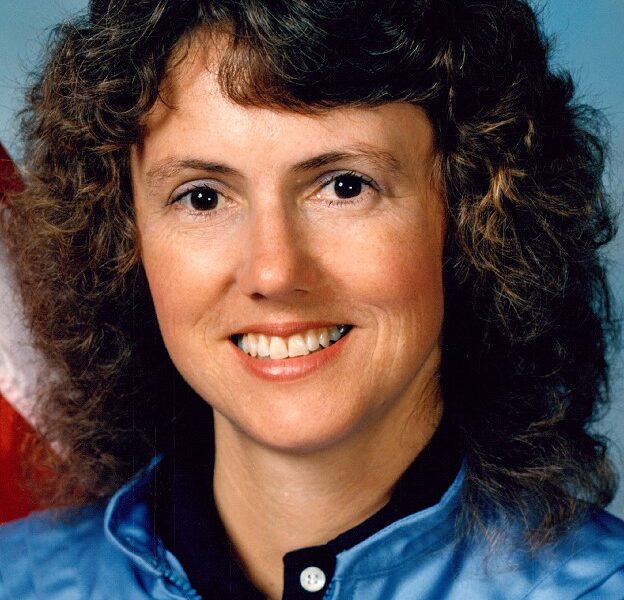

Quick answer: NASA’s Teacher in Space Project began in 1984 to bring a working classroom educator aboard the Space Shuttle and share lessons with students on Earth. NASA selected social studies teacher Christa McAuliffe as its primary participant in July 1985, with teacher Barbara Morgan as backup. Tragically, McAuliffe and the six other crew members died when Space Shuttle Challenger broke apart shortly after launch on January 28, 1986. Morgan later joined NASA as a full astronaut and reached space on STS-118 in August 2007. The project’s lessons lived on through NASA’s later education activities.
Teacher in Space Project: key dates
| Date | Milestone |
|---|---|
| August 27, 1984 | President Ronald Reagan announces the Teacher in Space Project |
| 1984–1985 | More than 11,000 teachers apply |
| July 1985 | Ten finalists are reviewed; Christa McAuliffe is selected and Barbara Morgan named backup |
| September 1985 | McAuliffe and Morgan begin mission training at Johnson Space Center |
| January 28, 1986 | Challenger STS-51L accident kills all seven crew members |
| 1998 | Morgan selected as a NASA astronaut candidate |
| August 2007 | Morgan flies aboard Endeavour on STS-118 |
| 2017–2018 | Astronauts Joe Acaba and Ricky Arnold film classroom demonstrations inspired by McAuliffe’s unrealized lessons |
Dates and roles are documented in NASA’s retrospective on the 1984 announcement and Christa’s Lost Lessons.
What did the Teacher in Space Project aim to do?
NASA wanted to show students and the public how science and engineering connect with everyday learning. The plan was to select a teacher who could train alongside astronauts and deliver educational demonstrations during an actual shuttle mission. Applications asked teachers to describe classroom interests and how they might use their flight to inspire other educators.
The chosen participant was known as a payload specialist rather than a career NASA astronaut. The original project was distinct from the later Educator Astronaut program, which trained professional classroom teachers as full astronaut corps members.
How was Christa McAuliffe selected?
More than 11,000 teachers applied. The selection process narrowed them to 114 semifinalists from U.S. states and related jurisdictions, then ten finalists. Medical evaluations and interviews were conducted before NASA selected McAuliffe, a social studies teacher at Concord High School in New Hampshire. Barbara Morgan, an elementary school teacher from Idaho, served as backup. The finalists also helped shape lesson ideas and communicated the project’s educational mission.
McAuliffe trained with the rest of the STS-51L crew in shuttle operations, evacuation procedures, spacecraft systems and zero-gravity aircraft flights. She was not simply a passenger who would board without preparation. NASA’s STS-51L crew history includes the selection and training context.
What lessons was McAuliffe supposed to teach?
Her planned demonstrations included basic physics concepts and how common phenomena behave in microgravity. NASA has preserved and revisited the educational material, with examples on Newton’s laws, liquid behavior, effervescence and chromatography. Teaching from orbit would have offered students a direct comparison between familiar classroom experiments on Earth and those performed aboard a spacecraft.
Why does microgravity change an experiment?
In orbit, astronaut and spacecraft are in continuous free fall. Fluids, bubbles and loose objects can therefore behave differently from the way they do on a laboratory desk. Surface tension, inertia, pressure and wetting effects can become more apparent when ordinary settling under gravity is reduced. Well-chosen demonstrations help children see basic physics in a new environment.
What happened to Challenger on January 28, 1986?
Space Shuttle Challenger launched from Kennedy Space Center on the STS-51L mission and broke apart 73 seconds into flight. All seven crew members were killed: Francis R. “Dick” Scobee, Michael J. Smith, Ellison S. Onizuka, Judith A. Resnik, Ronald E. McNair, Gregory B. Jarvis and Christa McAuliffe. An investigation traced the initiating failure to a joint in a solid rocket booster, with cold launch conditions contributing to the seal failure and resulting structural breakup.
The incident profoundly changed NASA’s shuttle operations, management and approach to launch risk. It also permanently changed plans for the original Teacher in Space Project. Describing McAuliffe as having taught lessons from orbit would be false: the accident occurred during ascent.
NASA maintains an official accident and crew resource collection that distinguishes established findings from later popular retellings.
Did a teacher ever actually fly in space?
Yes. McAuliffe’s backup Barbara Morgan subsequently completed NASA’s astronaut selection and flew on Space Shuttle Endeavour mission STS-118 in August 2007. She was a fully trained mission specialist and former teacher, not simply a 1986 backup who took over the Challenger flight. NASA’s program history records her flight.
| Person | Teacher in Space connection | Flight outcome |
|---|---|---|
| Christa McAuliffe | Original selected teacher | Died with the STS-51L crew in January 1986 |
| Barbara Morgan | McAuliffe’s backup; later astronaut | Flew on STS-118 in August 2007 |
| Joe Acaba | NASA astronaut and educator | Helped carry out later education-in-orbit projects |
| Ricky Arnold | NASA astronaut and former teacher | Helped film demonstrations based on McAuliffe’s lessons in 2018 |
What became of Christa McAuliffe’s Lost Lessons?
Decades after Challenger, NASA and the Challenger Center organized an initiative to complete demonstrations based on her proposed teaching. During the 2017–2018 school year, NASA astronauts Joe Acaba and Ricky Arnold spent time aboard the International Space Station and filmed classroom demonstrations that educators could use with lesson plans on Earth. The videos are not 1986 recordings by McAuliffe; they are later tributes developed from the educational idea she championed.
Teachers can access NASA’s free Lost Lessons collection to discuss topics such as forces, liquid behavior and simple chemical processes. These classroom resources are a practical connection between historic events and today’s students.
Teacher in Space versus NASA’s Educator Astronaut program
The original 1984 program aimed to send one participating teacher as a spaceflight participant who would return to school with a story to share. Later NASA selected professional educators as career astronauts. The difference affects training, flight duties and the ability to take part in several missions, not the value of the original project.
To understand another key role in missions conducted from orbit, see AVARIXO’s guide to the Gemini spacecraft program and its step toward more complex human operations in space.
Frequently asked questions
Who was the first teacher selected for NASA’s Teacher in Space Project?
Christa McAuliffe, selected in July 1985, with Barbara Morgan as her backup.
Did Christa McAuliffe go into orbit?
No. She and six crew members died in the Challenger disaster during launch on January 28, 1986.
Who was the first teacher to reach orbit after the Challenger disaster?
Barbara Morgan, originally McAuliffe’s backup, flew as a NASA mission specialist on STS-118 in August 2007.
How many teachers applied in 1985?
More than 11,000 teachers applied to the original project.
Can schools still use McAuliffe’s lesson plans?
NASA offers the later Christa’s Lost Lessons collection with classroom resources and orbit-based demonstrations.
Historical verification: October 2026. Sources: NASA Teacher in Space history, Challenger accident records, and NASA Lost Lessons.