
Quick answer (United States; reviewed October 13, 2026): A book in the public domain is one whose text is no longer protected by copyright in the country where you plan to use it. In the United States, books that were first lawfully published or copyrighted before January 1, 1931 are now in the public domain, subject to identifying the particular underlying work and edition correctly. That means a qualifying 1930 edition entered the U.S. public domain on January 1, 2026. You can generally reproduce, distribute, adapt or sell the public-domain text in the United States without paying the former copyright owner. But a newly written foreword, modern translation, recent cover design or audiobook recording can carry its own separate rights.
This guide explains the public domain for books with practical checks, a 2026 example list, a step-by-step permissions workflow, and what to do before republishing a scan or making a commercial edition. It describes U.S. copyright only; other countries may protect the same books for longer.
Which books are public domain in 2026?
The clearest U.S. starting point is publication or copyright date. The U.S. Copyright Office explains that different rules apply to material created before and after January 1, 1978. For books that secured copyright under the earlier statutory system, the maximum term is generally 95 years after the year in which copyright was secured; the first day of the following year is when eligible books join the public domain.
| First U.S. publication/copyright year | Typical U.S. status as of Oct. 2026 | When it became / becomes public domain* |
|---|---|---|
| 1929 or earlier | Public domain | No later than January 1, 2025 |
| 1930 | Public domain | January 1, 2026 |
| 1931 | Potentially still protected | January 1, 2027, if eligible for the maximum term |
| 1932 | Potentially still protected | January 1, 2028, if eligible for the maximum term |
| Works unpublished in 1977 or earlier | Different calculation | Generally depends on author’s death, authorship and special publication rules |
| Works created from 1978 onward | Usually protected for decades | Usually author lifetime +70 years; different rules for some company, anonymous and pseudonymous works |
*The table is a starting point, not a substitute for checking each particular edition. The earlier notice-and-renewal system and rules affecting foreign works mean some later-published titles became public domain before their maximum term, while an edition can include newer protected material. Confirm a disputed title with authoritative records.
The Cornell University copyright-term chart (updated January 1, 2026) and the Copyright Office’s Duration of Copyright circular provide detailed cross-checks. A quick online list is useful for screening, but copyright status depends on the specific work, the publication history and the legal territory—not just a Goodreads date.
Real examples: books that entered the U.S. public domain in 2026
Duke University’s Center for the Study of the Public Domain independently reviewed historical publication and renewal records for its Public Domain Day 2026 report. Its 1930 literary examples include the following original works:
| Book (original work) | Author / series | Important qualification |
|---|---|---|
| The Maltese Falcon | Dashiell Hammett | The original novel entered the U.S. public domain; later movie versions are separate works. |
| As I Lay Dying | William Faulkner | The original 1930 novel is public domain in the United States. |
| The Murder at the Vicarage | Agatha Christie | The original text qualifies in the United States; international rights can differ. |
| The Secret of the Old Clock | Carolyn Keene / Nancy Drew | Only material in the original 1930 text is confirmed by this date; later rewritten editions have new protected expression. |
| Swallows and Amazons | Arthur Ransome | Original 1930 book in the United States; check rights in other countries. |
| Last and First Men | Olaf Stapledon | Original 1930 text, not every later illustrated or translated edition. |
| The Conquest of Happiness | Bertrand Russell | Original 1930 book in the United States. |
These are examples, not a comprehensive database. A listing in the U.S. public domain does not mean every modern edition or every creative adaptation of a book is free for use.
What a genuine 1930 edition looks like
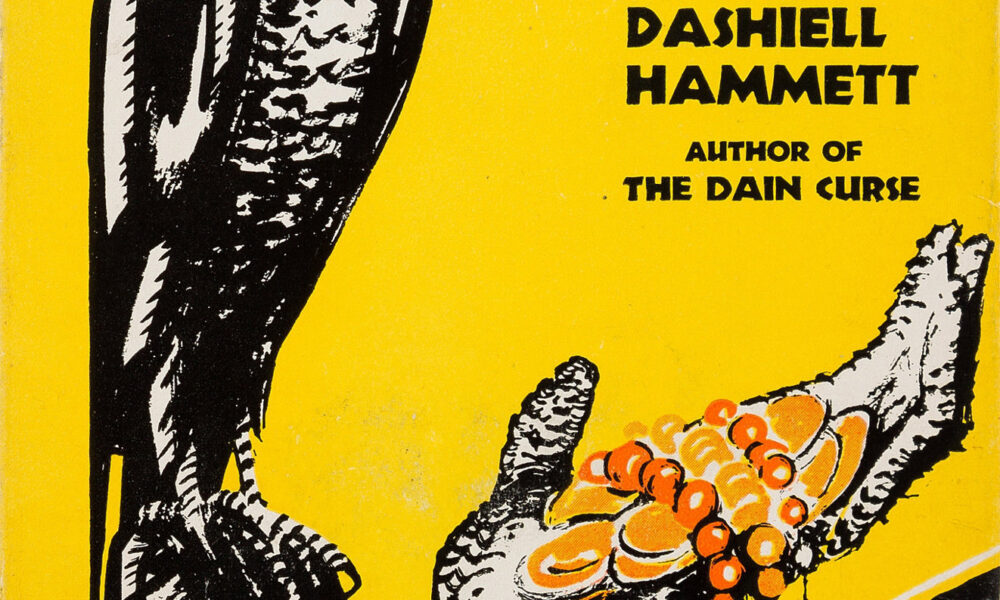
The The Maltese Falcon first-edition cover shown as this article’s featured image is a scan of an actual 1930 cover, not a generated mock-up. The original cover was published before 1931 and Wikimedia Commons identifies the mechanical scan as U.S. public-domain material. Modern cover art commissioned for newer editions would require a fresh rights analysis.
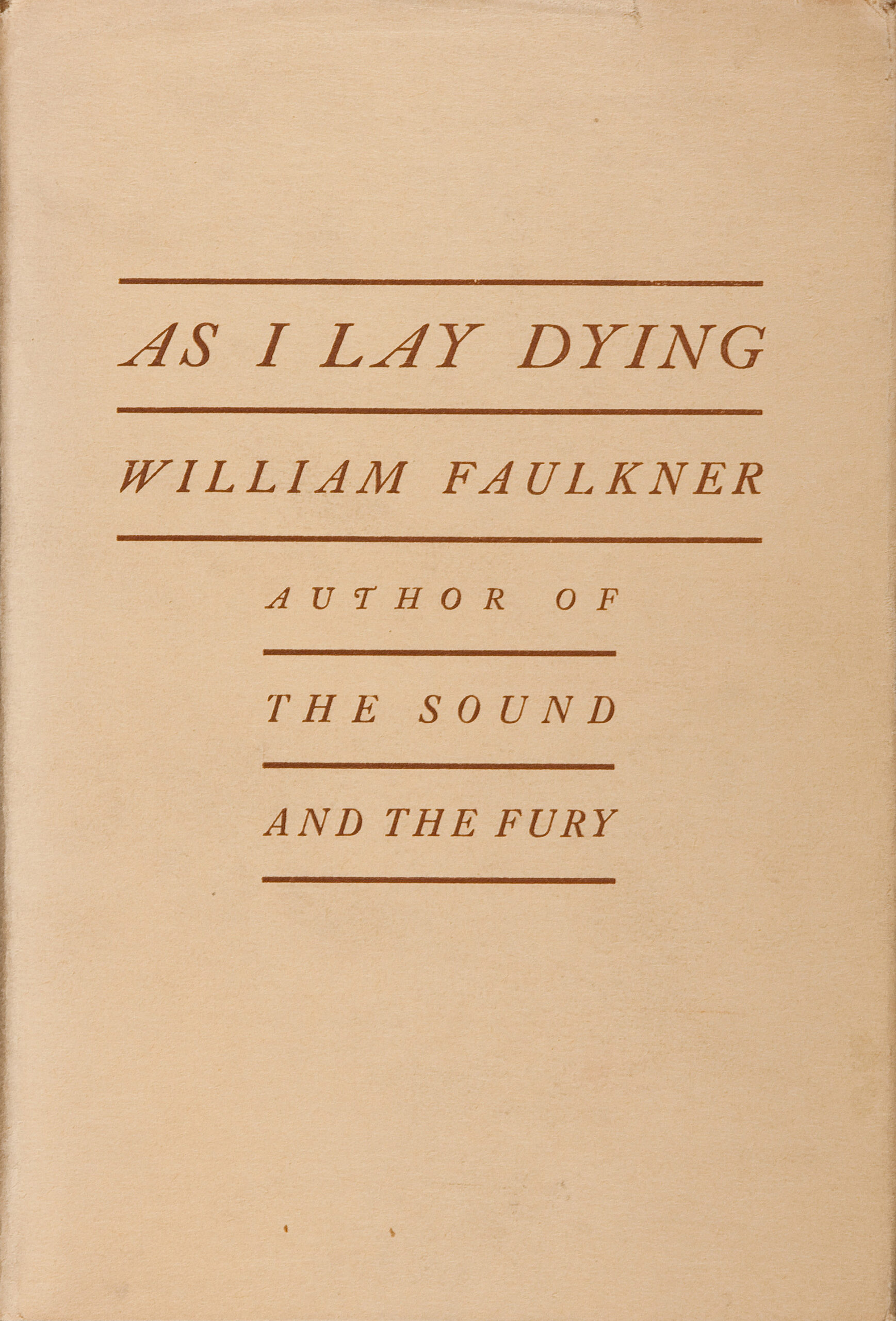
The photographically scanned As I Lay Dying dust jacket above is likewise the historical 1930 first-edition artifact, rather than a contemporary reissue or an illustrative AI rendering. Its original publication year is the relevant evidence for the underlying book, although cover-scans should be checked individually before reuse.
How to check whether a book is really public domain: six steps
1. Identify the exact work and edition
Write down the full title, author, publisher, publication country, year, edition and any translator, editor or illustrator. A modern copy may preserve the old narrative but add a new translation, commentary, illustrations or introduction. The cover copyright and the underlying story do not necessarily expire together.
2. Establish the date the work was first published with authorization
Look at the copyright page and compare historical library catalog records, scans of early editions or reliable bibliographic sources. A reprint published in 2024 can contain a public-domain 1930 text; conversely, a new translation of an old novel can still be protected. Do not confuse a story’s first appearance in a magazine with the date of a significantly revised later book edition.
3. Determine where you will publish or sell
Ask whether you need U.S. rights, United Kingdom rights, European Union rights or permission for worldwide distribution. The United States commonly uses a publication-based cutoff for historic books, while many other territories use a life-plus-70-years-after-death calculation. The same original book can be lawful to reproduce in America and still protected abroad.
4. Check the applicable legal rule and any historical record
For pre-1931 U.S. publications, the expiration calculation is generally straightforward. For later works from the notice-and-renewal era, search the Copyright Office registration and renewal records or consult a qualified rights researcher. Lack of an easily found renewal is not automatically proof that no valid copyright exists. For works originally from overseas, restoration rules can matter.
5. Separate the old book from new protected components
If you download a contemporary ebook or purchase an annotated edition, check whether it contains original editorial notes, an introduction, illustrations, audio narration or a new translation. Those layers could remain protected even where the author’s original words are not. Using your own clean transcription of a public-domain original can reduce uncertainty.
6. Keep an evidence folder
Save screenshots or stable URLs for the exact early edition, a library record proving date, the copyright guidance you relied on and the rights statement for any image you use. Record your jurisdiction and date checked. This is particularly important for commercial reprints, online stores, apps, audiobook projects and international distribution.
Where can you read and download public-domain books?
| Source | Useful for | What to verify |
|---|---|---|
| Project Gutenberg | Readable HTML, EPUB and other ebooks of older literature | The ebook’s in-file license and any restrictions for the country where you live. |
| Library of Congress | Historical editions, catalog records and digitized items | Individual item rights/advisories, edition, publication dates. |
| HathiTrust | Bibliographic and digitized collections from libraries | Access versus reuse permissions; digital availability alone proves neither. |
| Internet Archive | Scans of identifiable historical editions | Item rights, accuracy of metadata and whether the specific scan is reusable. |
| Google Books | Edition previews and publication-record cross-checks | Read-only preview access is not itself a commercial reuse license. |
A key caution: free to read does not necessarily mean public domain. Libraries often lend in-copyright ebooks for free. Platforms may lawfully host works under permission to distribute, but that permission does not give every reader commercial adaptation rights.
Can you sell public-domain books on Amazon, Etsy or your own site?
In general, yes: if you have established that the underlying text is in the public domain where your sale takes place, you may create your own edition, typeset it, print it, sell it or adapt it under copyright law without licensing the original text. But the right to sell the old text is distinct from a marketplace’s quality, content and rights policies. A retailer may reject duplicative, poor-quality or misleading editions. Check the current rules of the platform; copyright status does not guarantee listing approval, revenue, exclusivity or demand.
Offer real improvements: carefully proofread an authoritative edition; build a functional table of contents; disclose the original edition; add genuinely original scholarly notes or navigation; clearly label original versus revised text; and verify that any image on the cover is independently reusable. Do not describe an edition as an official author’s estate release without permission or present a new translation as if it were the 1930 original.
What about publishing an audiobook?
A public-domain literary text may be recorded in a new performance. You must create your own narration or obtain rights to someone else’s narration. The fact that the words are public domain does not make a recently recorded, professionally produced audiobook free to reupload.
What about movie versions and other adaptations?
The novel and the film are distinct protected works. The original 1930 The Maltese Falcon novel becoming public domain does not automatically make its later screen adaptation public domain. For the separate rules governing motion pictures, see our related guide to public-domain movies and U.S. reuse rights.
Five copyright mistakes to avoid
- Assuming “over 70 years old” means free: A book’s publication year, the author’s death year and the jurisdiction all matter, and different legal rules apply to different groups of works.
- Confusing an old book with a recent edition: A 2026 facsimile, translation, collection of essays or audiobook may add new protected material, even when the original words are public domain.
- Trusting a random PDF or online upload: A file’s presence online is not proof that its uploader owned the rights or provided accurate metadata.
- Using a new cover without checking rights: Commercial paperbacks frequently feature separately copyrighted artwork or photography. Choose an independently public-domain cover or design your own.
- Assuming American rules apply worldwide: International rights differ. For a global ebook storefront, investigate sales territories and the book’s original country of publication.
Practical decision examples
| Your project | U.S. rights assessment | Next check |
|---|---|---|
| Reprint the original 1930 As I Lay Dying text | The underlying original text is public domain. | Ensure the source transcription has no independently protected new content. |
| Use a 2024 original translation of an 1800s novel | Do not assume the new translation is public domain. | Find translation copyright owner or use an established public-domain translation. |
| Put a new audiobook recording of a 1929 book on your channel | The old text may be reusable; someone else’s audio is separate. | Record it yourself or obtain a recording license. |
| Sell a 1930 novel with 2026 publisher notes | Original novel can be public domain; new notes may be protected. | Author your own notes or get permission. |
| Translate a newly public-domain U.S. book and sell it overseas | U.S. text rights do not resolve rights in every other country. | Review each country’s law before distribution. |
Frequently asked questions about public-domain books
Are all books published in 1930 public domain in the United States in 2026?
Qualifying books published or registered in 1930 generally entered the U.S. public domain on January 1, 2026 after the maximum historical term. Verify the actual original work, edition and any new protected components rather than relying only on a date printed on a modern reprint.
Will books from 1931 become public domain in 2027?
Under the usual 95-year maximum term for the historical publication category, yes, January 1, 2027. Individual cases can be more complicated, and some later books may have entered public domain earlier through valid historical formalities.
Is the whole Nancy Drew series public domain now?
No. Duke identifies the first four 1930 Nancy Drew novels as entering the U.S. public domain in 2026. Later titles and revisions contain separately protected material. Compare the exact edition instead of assuming the character, later stories and modern branding can be copied wholesale.
Can I copy pictures from an old book?
Possibly, but determine whether the pictures were published with the book and whether the original illustrator’s work qualifies. Contemporary editions may contain additional protected artwork. The history of each image matters separately from the words.
Are Project Gutenberg ebooks safe for commercial republication?
Many underlying texts are unrestricted by U.S. copyright law. However, Project Gutenberg also distributes some works by permission, and its branding/license imposes conditions when its name and license remain attached. Read the official Gutenberg licensing explanation for the exact downloaded file before republishing.
What is the difference between public domain, Creative Commons and free access?
Public domain means that specified exclusive rights are absent or expired under the relevant law. Creative Commons describes voluntary permissions granted by copyright holders, sometimes with conditions such as attribution or noncommercial use. Free access merely means someone lets you read or view an item without payment; it says little about reuse rights.
Is a translated or illustrated edition automatically public domain?
No. A modern translation or genuinely original set of illustrations can have its own copyright, even where the underlying work is public domain. Verify each layer separately.
Sources and verification checklist
For primary research, refer to the U.S. Copyright Office: Duration of Copyright (Circular 15A, revised 2026), the Cornell copyright-term chart (January 1, 2026), Duke Public Domain Day 2026 for specific 1930 titles, and the Project Gutenberg license policy. A copyright dispute or large commercial reprint may justify a specialist review. This guide is general information, not individualized legal advice.