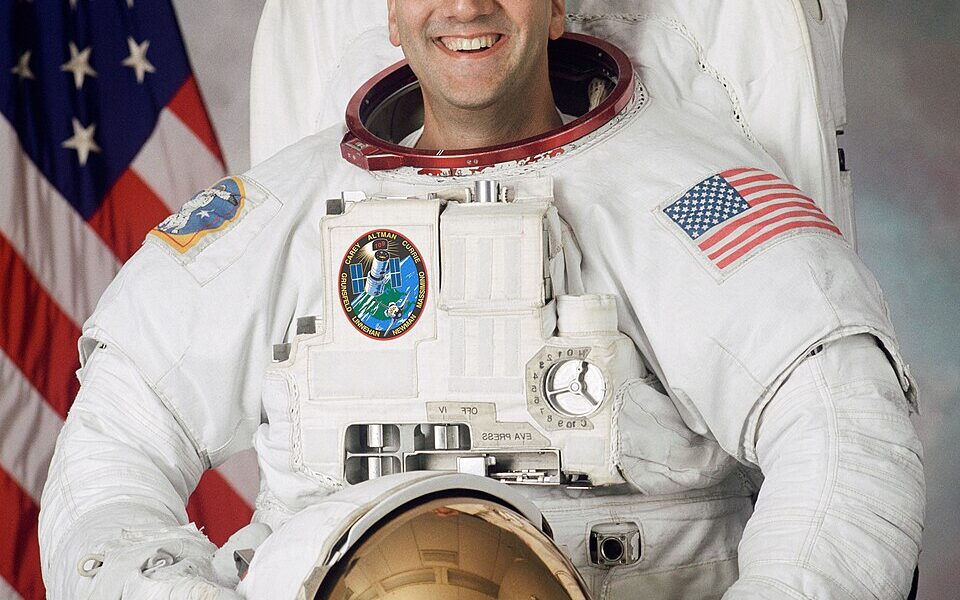
Mike Massimino: Four Hubble Spacewalks, Two Shuttle Missions and the First Space Tweet

Quick answer: Mike Massimino is a former NASA astronaut who flew on two space shuttle missions to repair the Hubble Space Telescope: STS-109 in 2002 and STS-125 in 2009. He completed four spacewalks totaling more than 30 hours, helped install and repair Hubble instruments, and became known for the first Twitter message sent from space in 2009. The message was relayed to the ground rather than posted directly from an onboard browser.
Who is Mike Massimino?
Michael J. Massimino trained as an engineer and worked on robotics and human-machine systems before NASA selected him as an astronaut in 1996. His work on shuttle robotic-arm displays and in astronaut spacewalk operations made him well suited to a mission in which crews would service a large observatory in orbit. He earned degrees from Columbia University and the Massachusetts Institute of Technology, including a doctorate in mechanical engineering.
Massimino left NASA in 2014 after an astronaut career that spanned two spaceflights. His focus became communicating space exploration and teaching engineering, including work at Columbia University. NASA’s 2014 departure announcement confirms his career, flight experience and post-NASA move.
Which space shuttle missions did Mike Massimino fly?
Both missions went to Hubble rather than to the International Space Station. Hubble was captured by the shuttle’s robotic arm, secured in the payload bay and serviced by astronauts wearing spacesuits outside the vehicle. Its sophisticated cameras and support equipment could be replaced or repaired in a way that robotic satellites generally could not perform on their own.
| Mission | Space shuttle | Dates | Massimino’s contribution |
|---|---|---|---|
| STS-109 | Columbia | March 1–12, 2002 | Two spacewalks to replace equipment including a solar array and install the Advanced Camera for Surveys |
| STS-125 | Atlantis | May 11–24, 2009 | Two more spacewalks on the final shuttle Hubble servicing mission, including difficult instrument repairs |
The full mission timelines are documented in NASA’s official STS-109 and STS-125 histories. STS-109 installed upgraded solar arrays, a power control unit and the Advanced Camera for Surveys. STS-125 fitted newer instruments, replaced aging equipment and returned failed science instruments to operation.
What did Massimino actually do during his four spacewalks?
Spacewalkers were not simply floating near the telescope: they operated specialized tools, managed tethers and followed tightly choreographed repair procedures. The shuttle crew inside handled the robotic arm, tools, camera documentation and coordination with mission control. One missed connector or an unexpectedly stubborn fastener could affect the entire service plan.
STS-109: New equipment for Hubble
On STS-109, Massimino worked with astronaut James Newman. Their first outing included a replacement solar array and a reaction wheel assembly that helped Hubble control its orientation. During a later spacewalk, they installed the Advanced Camera for Surveys, a major scientific improvement, and components of an experimental cooling system. NASA records his two STS-109 spacewalks at a combined 14 hours 46 minutes.
STS-125: A complicated repair in 2009
During the final Hubble servicing visit in 2009, Massimino and Michael Good had to work around a difficult handrail bolt while trying to revive the Space Telescope Imaging Spectrograph (STIS). The repair required a solution developed with specialists on the ground, a good example of how real space servicing can depart from a rehearsed checklist. The team eventually replaced the instrument’s failed power supply. NASA’s STS-125 mission-control report describes the handrail problem, work-around and STIS repair.
His two STS-125 outings totaled 15 hours 58 minutes, bringing his career spacewalk time to 30 hours 44 minutes. These are Massimino’s individual spacewalking hours, not the combined total for all astronauts on each mission. NASA’s biographical release separates the two figures.
Was Mike Massimino the first person to tweet from space?
NASA reported on May 13, 2009 that Massimino had become the first person to send a Twitter message from space. The wording matters: this was not the same as opening Twitter directly through unrestricted shuttle internet access. He sent an email from orbit to Johnson Space Center, where staff posted his message. NASA explained that the shuttle astronauts could send email during communication opportunities but did not have direct internet access onboard.
The event showed how human spaceflight was moving into the era of everyday social-media communication. For the historical account, read NASA’s contemporary report. It is more accurate to say a message originated in orbit and was published on Earth than to suggest an astronaut live-posted from a smartphone.
Why do his Hubble missions still matter?
The combined STS-109 and STS-125 work helped Hubble continue producing scientific observations long after its 1990 launch. These shuttle visits are also an unusually clear demonstration of engineering tradeoffs: servicing added risk and required expensive crewed missions, but the telescope could gain capability instead of being discarded when major components aged.
For examples of what the observatory revealed, see our Hubble Deep Field explainer and our guide to the Hourglass Nebula. Those articles discuss telescope observations, while this profile focuses on the astronaut and the engineering work that kept such observations possible.
Frequently asked questions
How many times did Mike Massimino go to space?
Twice: aboard Columbia on STS-109 in March 2002 and Atlantis on STS-125 in May 2009. Both were Hubble Space Telescope servicing missions.
How many spacewalks did he complete?
Four, with a combined duration of 30 hours and 44 minutes according to NASA’s career accounting.
Did Massimino repair Hubble alone?
No. Hubble servicing required coordinated work by multiple spacewalkers, astronauts inside the shuttle and engineering teams on Earth. Massimino was an important member of those teams, not the sole repairer.
Did he have Twitter access in orbit?
No direct onboard browser access was involved in his first orbital tweet. He emailed an update, and ground staff published it to Twitter.

Other Articles