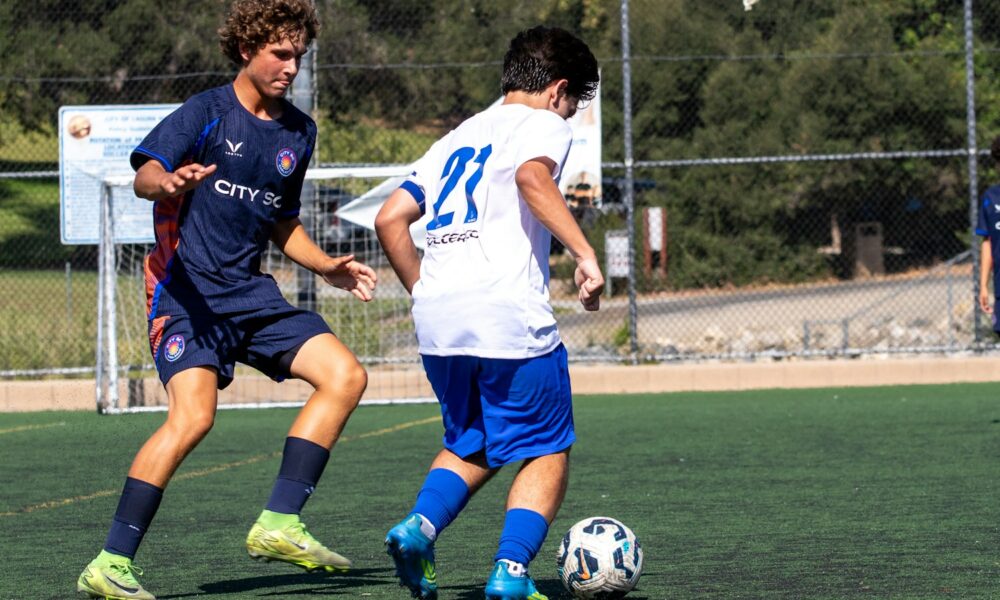

Quick answer: Effective defensive soccer drills should teach the first defender to slow the attacker, the second defender to cover the space behind, and the players away from the ball to protect dangerous passing lanes. Start with a short 1v1 closing-down exercise, progress to 2v2 cover and 3v2 overloads, then finish with small-sided transitions. The six activities below form a 40-minute sample session for youth teams and can be adjusted to ability and available space.
This is a practical coaching plan based on recognized defending principles, not a claim that a particular team has been tested by AVARIXO. Keep contact appropriate to your league and age group, and adapt the pitch dimensions to the players’ development.
The three defensive jobs players need to know
Pressure comes from the player nearest the ball, who closes space under control and prevents easy forward play. Cover is supplied by a nearby teammate, positioned to protect the goal or a passing lane if the first defender is beaten. Balance describes players away from the ball adjusting to protect central spaces and switches of play. These jobs change every time the ball moves.
The Football Association’s coaching resources explain the same relationships using England team examples: the nearest player presses, supporting players cover, and players on the far side balance the shape. See The FA’s official pressure-cover-balance guide.
Equipment, player numbers and safety
- Required: one ball per small group, four to eight soft markers, bibs or different shirt colors, and a clear safe playing area.
- Helpful: two small goals or cone goals; a coach or responsible adult to supervise younger players.
- Space: start with a small area that offers decisions without collisions, then enlarge it if attackers are crowded.
Check footwear and surface condition. Avoid hard tackles, body checks and unsafe sliding in instructional exercises. Start at walking or jogging pace before moving to live game speed.
Six defensive soccer drills
1. Angled close-down: steer a 1v1 attacker
Setup: 2 players, one ball, two cone gates about 5–7 yards apart, and a 10-by-12-yard practice zone. One attacker starts on the ball; the defender begins a few yards away.
How it works: On the coach’s signal, the attacker tries to dribble through either gate. The defender closes quickly at first, slows on approach and uses a side-on body position to discourage the central route. The defender scores a point for steering the attacker away from goal or delaying them for five controlled seconds. Rotate every minute.
Coaching cues: “Fast until close; slow enough to react.” Keep the feet moving, don’t dive into a tackle, and watch the ball and the attacker’s hips. For deeper individual technique, link this to our dedicated 1v1 defending guide.
2. Pressure-and-cover 2v2
Setup: a 14-by-18-yard rectangle, two attackers and two defenders, with a small goal or end line. Start with the ball on one side.
How it works: The defender nearest the ball provides pressure; their teammate stays slightly behind and inside to intercept a pass or challenge an attacker who breaks through. When the attackers switch the ball, the two defenders switch jobs immediately. Award defenders a point for forcing a back pass, winning possession cleanly or denying a shot for six seconds.
What to observe: a cover player standing directly level with the first defender leaves open space behind both; a cover player too far away cannot intervene. Ask players to explain where their support position should be before the next round.
3. 3v2 overload: delay instead of diving in
Setup: two defenders facing three attackers in a 20-by-18-yard area, with one target goal. Start each attack from the opposite end.
How it works: Attackers try to create a quick shot. Defenders aim to slow the attack, protect the goal-side central lane and encourage a sideways pass until help could arrive in a real match. A defender wins the round by a clean interception, a forced wide exit or a successful delay to the time limit set by the coach.
Progression: allow a third recovering defender to enter after three seconds. This makes the initial delay purposeful. Do not reward reckless attempts to win the ball immediately when outnumbered.
4. 3v3 triangle support and communication
Setup: six players in a 20-by-20-yard zone with two cone goals. Each side attacks and defends after changes of possession.
How it works: Teams play three-minute rounds. Freeze only briefly when the nearest defender pressures without cover, or when far-side players fail to close the lane toward goal. Restart quickly and ask the players to name who is pressing, covering and balancing. A point is earned for winning possession and completing a safe first pass out of pressure.
Coach’s question: “When the ball moves, who is the new first defender?” Listening to player answers is often more useful than repeating the command “press harder.”
5. 4v4 defend the middle, invite the wide pass
Setup: eight players in a roughly 30-by-24-yard area divided conceptually into a central channel and two wide channels. Do not need to mark channels with lines if players can understand them verbally.
How it works: Attackers try to reach a central scoring gate. Defenders maintain compact distances around the ball and offer less-dangerous outside space rather than allowing a direct pass through the middle. Allow the attacking group to switch sides; defenders shift together instead of following the ball individually.
Scoring idea: two points for a clean central interception, one for a forced wide pass; these are coaching incentives, not formal laws of soccer.
6. 5v5 transition: regain shape after losing the ball
Setup: ten players and two goals on a suitably sized small pitch. Use a goalkeeper if appropriate for the age group and activity.
How it works: Play a normal small-sided game. Each time a team loses possession, observe its first few seconds: who applies immediate pressure, who blocks the first forward pass, and who protects the goal-side space? If immediate recovery is unsafe or unrealistic, teach the team to delay and recover a compact shape.
Progression: let teams restart from realistic positions after an interception instead of repeatedly lining up defenders in identical positions.
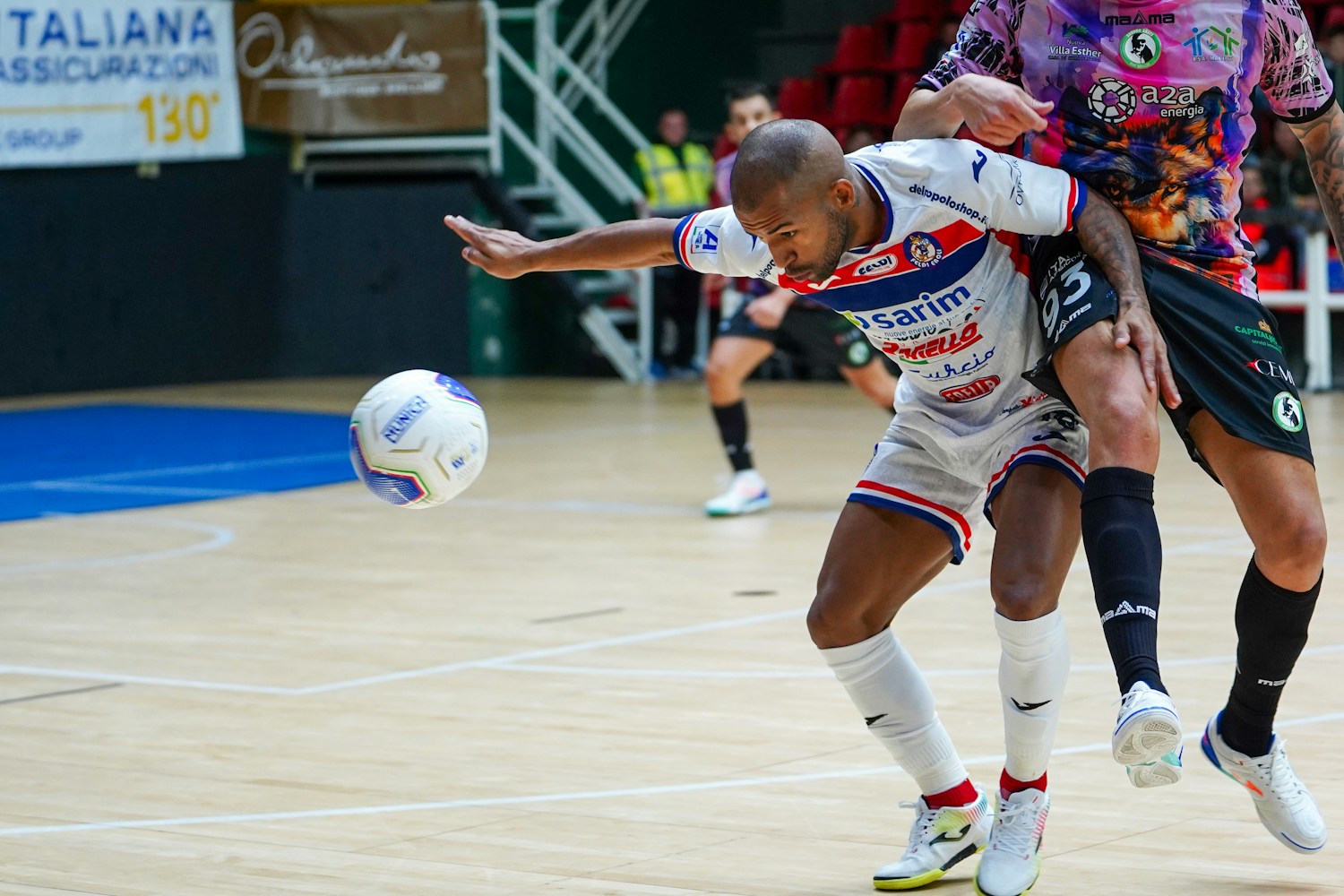
40-minute defensive soccer training plan
| Minutes | Activity | Primary focus |
|---|---|---|
| 0–5 | Dynamic movement and safe tackling reminders | Body shape and control |
| 5–10 | Drill 1: angled close-down | First defender |
| 10–16 | Drill 2: 2v2 | Pressure and cover |
| 16–22 | Drill 3: 3v2 | Delay and goal protection |
| 22–28 | Drill 4: 3v3 | Switching responsibilities |
| 28–34 | Drill 5: 4v4 | Compactness and balance |
| 34–40 | Drill 6: 5v5 | Realistic transitions |
These blocks add up to 40 minutes, including a short warm-up. Set aside extra time for water breaks, swapping groups and field transitions if your players need it; do not treat the schedule as a rigid physiological prescription.
How to adjust by age and ability
| Group | Recommended adjustment | Why |
|---|---|---|
| Young beginners | Use fewer players, short rounds, broad safe zones and clear goals | Teaches first-defender fundamentals |
| Developing youth teams | Add a second defender and rotating cover jobs | Builds cooperation without overloading attention |
| Experienced teams | Add 3v2 overloads, quick switches and realistic transitions | Challenges decisions under game-like pressure |
The FA advises youth coaches to build from first-defender ability before introducing supporting roles, and to use small-sided play so learners can win the ball cleanly and attack afterward. See The FA’s youth defending guidance.
Track team defense with useful observations
Record one or two consistent measures for each exercise: the percentage of attacks forced wide, the number of clean interceptions, and how often covering players recover goal-side after a pass. Consider match context and compare the same drill setup across sessions. Avoid calling every lost tackle a failure; an intelligent delay may be the best outcome in a numerical disadvantage.
Frequent coaching errors
- Pressing without cover: the first defender leaves a route behind them. Add a second defender and freeze the location of the nearest passing lane.
- Running straight at the ball: defenders get beaten by a simple change of direction. Teach controlled, angled approaches.
- All players chasing: central routes are left free. Give away-from-ball players balance responsibilities.
- No transition after winning possession: defending feels like a dead end. Finish drills with a safe first pass or counterattack.
- Too much coach interruption: long lectures reduce decision-making practice. Use short prompts and restart play.
Where team defending fits into your broader coaching plan
A team can perform good defensive drills and still concede chances if its structure during possession is poor. For how players can protect counterattacks while attacking, see AVARIXO’s rest defense 2-3 vs 3-2 shapes guide. The two topics complement each other but do not describe the same phase of play.
FAQ
What is the best soccer defending drill for beginners?
A simple 1v1 angled close-down exercise teaches the first defender to approach under control and steer play away from danger before adding more players.
How do you teach pressure and cover?
Play 2v2. One defender approaches the ball while the other positions behind and inside. Switch responsibilities when the ball changes sides.
Can these drills be done without full-size goals?
Yes. Cones can mark exit or scoring gates. The learning objective is defending space and decisions, not the exact goal frame.
Is defending always about winning the ball instantly?
No. In numerical disadvantages, delaying an attack, denying a dangerous pass and buying recovery time are legitimate defensive successes.
Will one 40-minute session fix team defending?
No. Repeat a manageable progression across multiple practices and evaluate whether communication and positioning transfer to matches.
Coaching sources: The FA: roles and responsibilities, The FA: defending in pairs, and The FA: youth defensive techniques. The sessions and table here are new editorial arrangements rather than copies of those lessons.