
Queen’s Gambit Chess Opening — a practical guide to the opening’s moves, strategy and common mistakes.
What is the Queen’s Gambit?
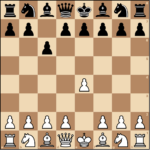
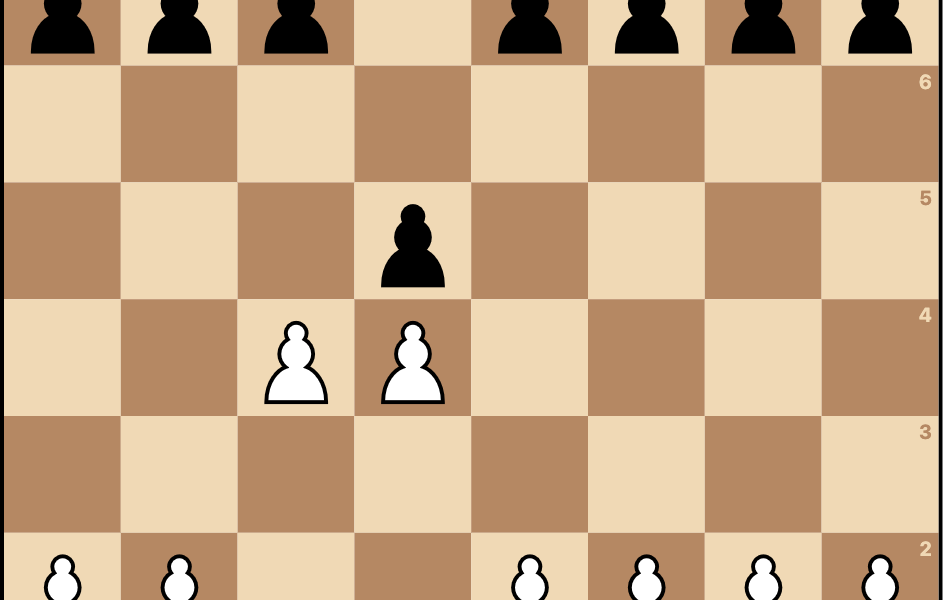
The Queen’s Gambit is a chess opening that begins 1. d4 d5 2. c4. White offers the c-pawn to challenge Black’s central d5 pawn. The idea is to gain central influence and develop pieces efficiently, not to sacrifice material recklessly. It is one of the most established openings in classical chess.
The name can be confusing: the queen does not move during the first two moves, and the offered pawn is not always a true long-term sacrifice. Black may capture it, defend d5 or adopt a different setup.
The starting position and move order
1. d4 d5
2. c4
White’s d-pawn controls e5 and c5, while the c-pawn pressures d5. Black now decides whether to accept the pawn with …dxc4 or maintain the central pawn with …e6, …c6 or another defense. The decision shapes the middlegame more than the opening’s name.
Queen’s Gambit Accepted vs. Declined
| Black reply | Common name | Basic idea |
|---|---|---|
| 2…dxc4 | Queen’s Gambit Accepted | Black takes the c-pawn and usually plans to challenge White’s center later |
| 2…e6 | Queen’s Gambit Declined | Black supports d5 and accepts a temporarily restricted light-squared bishop |
| 2…c6 | Slav Defense | Black supports d5 with the c-pawn and may develop the light-squared bishop outside the pawn chain |
Not every 1. d4 d5 2. c4 game stays in one named variation. Subsequent moves and transpositions can lead to other structures.
Why the c4 pawn offer makes sense
In the Queen’s Gambit Accepted, after 2…dxc4, Black’s d-pawn leaves the center. White can use the time to build a strong pawn center and later recover the c4 pawn with a bishop or another piece in many lines. Black is not obligated to keep the pawn at all costs, and trying to defend it with unnecessary pawn moves can fall behind in development.
The gambit’s main purpose is strategic: challenge Black’s central pawn chain and gain space for White’s pieces. Whether the pawn is recaptured depends on the exact position and move order.
The Queen’s Gambit Declined
After 2…e6, Black supports d5 and keeps a solid central structure. White can develop with Nc3 and Nf3, while Black often uses …Nf6 and …Be7. The opening can lead to positions involving a minority attack on the queenside, central pawn breaks and pressure on the c-file.
A frequent issue for Black is the c8 bishop, temporarily blocked by the e6 pawn. That is a structural tradeoff, not a fatal weakness. Black can find ways to develop or exchange the bishop while maintaining central control.
The Slav Defense
The Slav begins with 2…c6, supporting d5 with a pawn rather than immediately placing the e-pawn on e6. That can give Black’s light-squared bishop more flexibility. The Slav is a substantial opening family in its own right, with quiet and tactical lines.
White should not automatically use the same plan against the Slav and the Queen’s Gambit Declined. Black’s bishop development and pawn structure are different, and these differences influence central breaks.
White’s beginner plan
- Start with d4 and c4 to challenge Black’s center.
- Develop knights toward f3 and c3 when the position permits.
- Support central control without overextending pawns.
- Castle when legal and safe.
- Understand whether Black has accepted or declined the c-pawn.
- Prepare a central break or queenside play based on the resulting pawn structure.
There is no need to memorize dozens of moves at first. Knowing the purpose of c4 and the main Black replies is a strong foundation.
Black’s beginner plan
Black should choose a coherent defense to the c4 pressure. In the Accepted variation, focus on development and central counterplay rather than holding the extra pawn with risky moves. In the Declined variation, keep the d5 pawn supported and plan how to activate the light-squared bishop. In the Slav, watch for tactical issues around the c4 pawn and the timing of …e6.
Black’s best response depends on the specific position. A pawn grab that is harmless in one line may be dangerous in another.
Queen’s Gambit versus King’s Gambit
The Queen’s Gambit begins with 1. d4 d5 2. c4. The King’s Gambit begins with 1. e4 e5 2. f4. Both offer a pawn early, but they lead to very different structures. The Queen’s Gambit is usually a positional challenge to the center; the King’s Gambit often opens the f-file and can expose White’s king.
The opening featured in the television series The Queen’s Gambit is a real chess opening, but the fictional story is separate from the theory of the moves.
Common mistakes
- Assuming Black must accept the pawn: Black can decline it with several established setups.
- Trying to win back c4 immediately at any cost: Development and central control may be more valuable.
- Confusing the Slav with the Declined: The bishop and pawn structures differ.
- Ignoring Black’s …c5 break: It is often an important challenge to White’s center.
- Memorizing moves without understanding the pawn tension: The strategic point is pressure on d5.
Queen’s Gambit FAQs
What are the first moves of the Queen’s Gambit?
1. d4 d5 2. c4.
Is the Queen’s Gambit a real sacrifice?
Not always. White can often recover the pawn, and the main aim is to challenge the center.
What is the difference between accepted and declined?
Accepted means Black plays 2…dxc4; declined usually refers to setups such as 2…e6 that do not immediately capture the c-pawn.
Is it suitable for beginners?
Yes. It teaches pawn tension, development and long-term plans, although its deeper variations can be complex.
Takeaway
The Queen’s Gambit starts with 1. d4 d5 2. c4 and challenges Black’s central pawn. Learn the differences between Accepted, Declined and Slav structures, then practice developing pieces and timing pawn breaks. To read the move sequences confidently, use our chess notation guide.