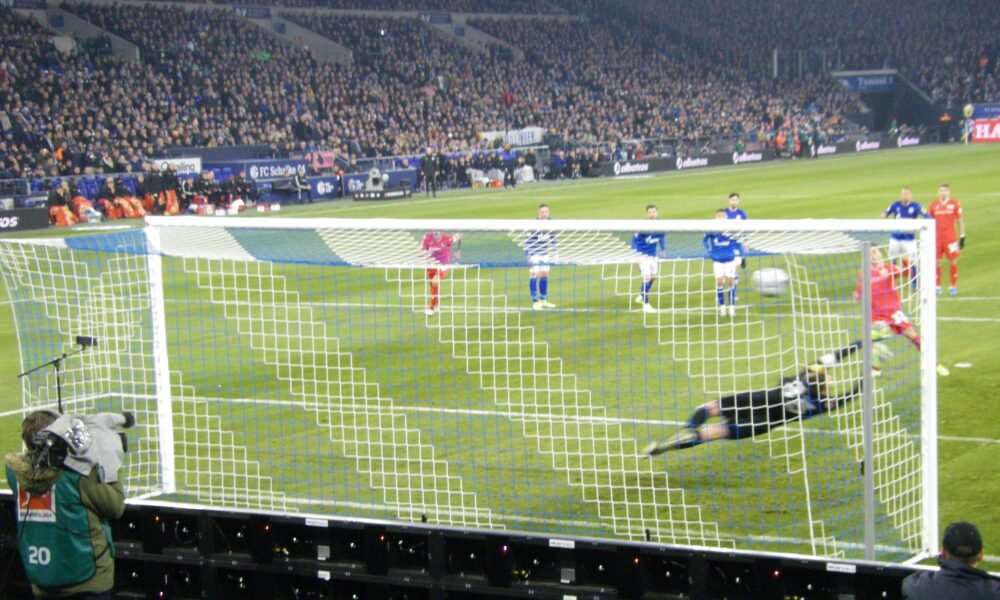

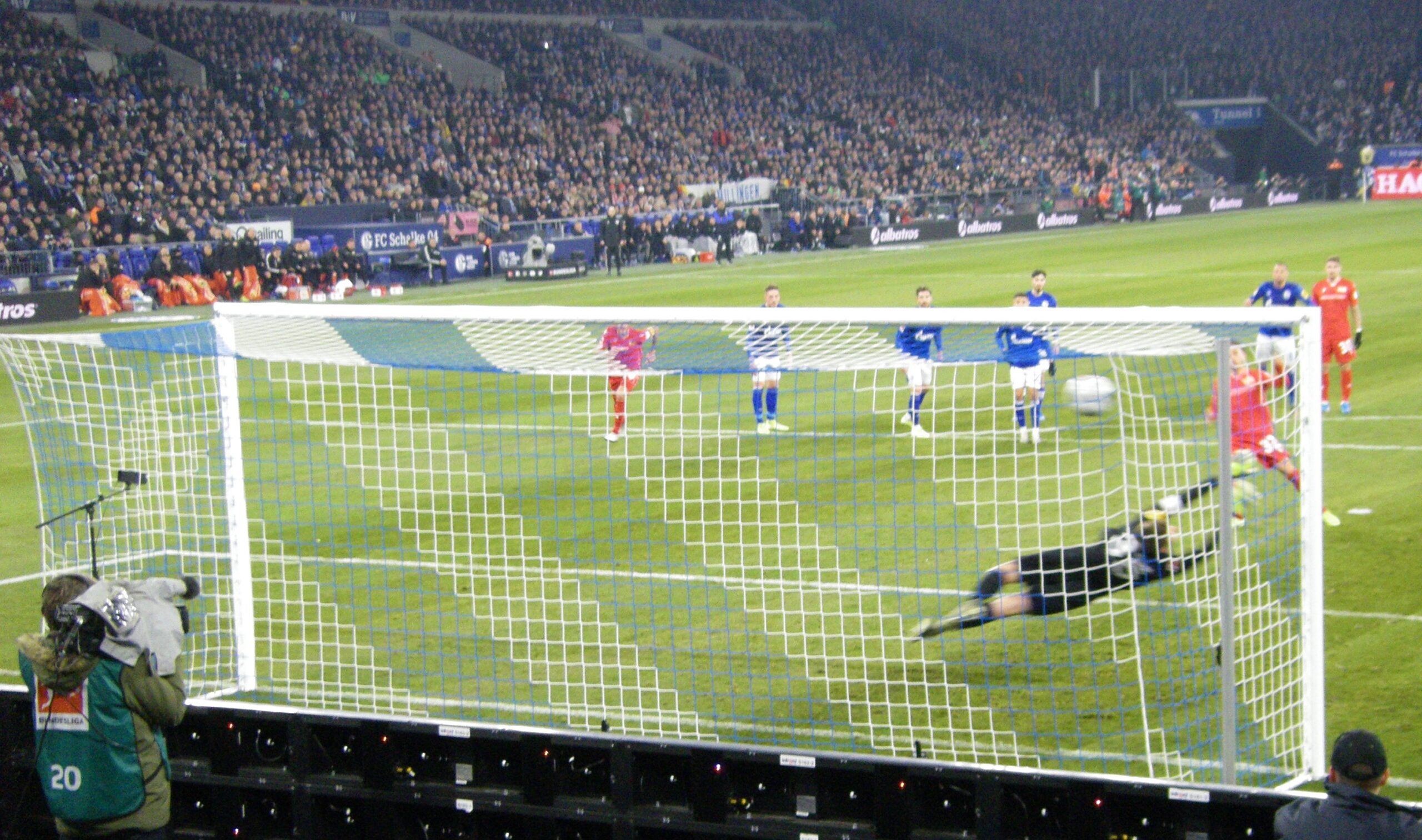
A soccer penalty kick is awarded for a direct-free-kick offense by a defender inside their own penalty area. The ball is taken from the penalty mark, 12 yards (11 meters) from the goal line. Under IFAB Law 14, the kicker must be identified, the ball must move forward and the goalkeeper must observe the goal-line rule.
When is a penalty kick awarded?
The defending team must have committed a direct-free-kick offense within its penalty area while the ball was in play. Examples include a careless trip, holding, pushing or a punishable handball. Contact alone does not automatically mean a penalty: the referee applies the ordinary foul criteria under Law 12.
A penalty is not given simply because an attacker falls in the box. It depends on whether a punishable incident occurred and where it occurred. Likewise, the goalkeeper’s usual right to handle the ball in their own area does not give them permission to commit other fouls, such as unlawfully holding an opponent.
Penalty kick procedure: who stands where?
- The ball is stationary, touching or overhanging the center of the penalty mark.
- The player taking the kick is clearly identified.
- The goalkeeper faces the kicker between the goalposts.
- All other players remain outside the penalty area, behind the penalty mark, inside the field and at least 10 yards from the mark.
- The referee signals for the kick.
- The player kicks the ball forward; it is in play once kicked and clearly moving.
The kicker cannot play the ball a second time until another player touches it. For instance, a shot that hits only the goalpost and rebounds directly to the kicker cannot legally be struck again without another player making contact. If the goalkeeper saves it, that is another player’s touch and the normal rules of open play apply.
Can the goalkeeper move before the shot?
Yes, but there is a key limit: at the moment the ball is kicked, at least part of one foot must touch, be in line with, or be behind the goal line. The goalkeeper must face the kicker between the posts. They may move laterally. Unfair distractions, deliberate delays and manipulating the goalposts or net to distract the kicker are not permitted.
Not every early movement produces the same result. If a goal is scored, the goal may stand despite a goalkeeper infringement. If the goalkeeper saves the ball after a goal-line offense, the referee can order a retake. IFAB’s current Law 14 clarifies cases involving shots that miss and whether goalkeeper conduct actually affected the kicker.
What causes a retake or indirect free kick?
| Situation | General decision |
|---|---|
| Legal shot goes into goal | Goal |
| Kicker deliberately kicks backward | Indirect free kick to defending team |
| Kicker feints during approach | May be legal |
| Kicker illegally feints after completing run-up | Indirect free kick and caution |
| Ball hits post and same kicker immediately kicks again without another touch | Indirect free kick |
| Accidental immediate double contact and ball enters goal | Retake under the current Law 14 provision |
Penalty incidents can involve several overlapping offenses. For example, modern encroachment rules assess whether a player entering early affects the goalkeeper, the kicker or a resulting opportunity. IFAB also distinguishes accidental simultaneous contact with both feet from a deliberate second touch. A simple list cannot replace the official law’s complete decision table.
Penalty kick vs penalty shootout
A penalty kick during normal play follows a qualifying foul and can contribute to the actual match score. A penalty shootout is a way to determine a winner after a tied match when competition rules require one. Shootout goals are counted separately from the match score, and rebounds are not played in the normal way.
For the shootout sequence, eligibility and sudden-death cases, see our separate penalty shootout rules guide. The Panenka penalty is a kicking style, not a separate type of penalty under the Laws.
Can you pass a penalty to a teammate?
Yes. IFAB says the ball must be kicked forward, but it does not require a direct shot on goal. A teammate can play a short forward kick once the ball is in play and the teammate has legally entered the area. The original kicker cannot immediately touch it again before another player does.
Penalty kick practice: beginner routine
Choose a reachable target within the goal, use a repeatable approach, plant your non-kicking foot next to the ball and aim for clean contact. For the first ten attempts, focus on hitting the chosen area rather than maximum force. Once accuracy is consistent, add a goalkeeper and gradually increase pressure. Young players should prioritize balance and safe technique over elaborate deception.
For finishing exercises beyond penalties, read our soccer shooting drills.
Frequently asked questions
How far is the penalty mark from the goal?
It is 12 yards (11 meters) from the goal line.
Can a penalty go backwards?
No. The ball must be kicked forward to be in play from the penalty.
Can a goalkeeper leave the line early?
At the instant of the kick, at least part of one foot must still touch, align with or be behind the goal line.
Can a kicker score from a rebound?
During ordinary play, a rebound may be played after another player—such as the goalkeeper—touches the ball. The original kicker cannot play a rebound directly from only the goal frame.
Are penalty shootout kicks ordinary match goals?
No. Shootout totals determine a winner separately from the match score.
Is every encroachment an automatic retake?
No. The current Law 14 procedure evaluates whether particular encroachment actions affect play.
Bottom line
A penalty gives the attacking side a regulated scoring chance from the 12-yard mark. The kicker must move the ball forward, the goalkeeper must respect the goal-line requirement and other players must wait until the kick. Check the official IFAB Law 14 for the exact decision in unusual cases.