Soccer Penalty Shootout Rules (2026/27): Five Kicks, Sudden Death and Who Can Shoot

A soccer penalty shootout is a separate procedure used to choose a winner when competition rules require one after a match finishes tied. Usually each side takes up to five alternating kicks. If the score is still level after five apiece, the teams continue in matching pairs until one has scored more than the other from the same number of attempts. That last phase is commonly called sudden death.
The details can be surprisingly different from a penalty awarded during open play. This guide explains the 2026/27 rules on kick order, eligibility, goalkeeper replacements, missed kicks and the moments when a shootout ends. The primary reference is IFAB Law 10, checked October 11, 2026.
How a penalty shootout works, step by step
- After the final whistle, the referee establishes that the competition requires a winner and a shootout is necessary.
- The referee normally holds one coin toss to select the goal and a second toss. The team winning the second toss chooses to take the first or second kick.
- The teams alternate attempts, with five initial kicks available to each side.
- A shootout stops early if one team has an insurmountable lead—for example, a three-goal lead when the other team has only two kicks left.
- If neither team has won after the initial five rounds, attempts continue in pairs. The first unequal score after both teams have taken the same number of kicks decides it.
Here is a simple illustration: A scores four of its five kicks and B scores three. A wins 4–3. But if A leads 3–0 after each side has taken three attempts, the procedure has already ended: B cannot catch up with only two remaining kicks. If both sides finish their first five kicks at 4–4, a sixth round is necessary.
What exactly does “sudden death” mean?
Despite the name, the first goal after the opening five rounds does not automatically win. Both teams must have taken an equal number of attempts. If Team A scores its sixth kick, Team B still takes its sixth: B can equalize. If Team B misses, A wins; if B scores, the shootout proceeds to the next pair. This prevents the side kicking first from winning solely because it has taken one extra attempt.
Who is allowed to take a penalty?
Usually only the players on the field at the final whistle, including players temporarily off for injury treatment or equipment adjustment, can participate. A player sent off during the match is ineligible. Coaches cannot simply bring on a specialist penalty taker after the match ends because they still have an unused substitution; there is a narrow exception for replacing a goalkeeper who cannot continue.
If one team has more eligible players than its opponent, it must reduce its numbers to match. The referee must be told which players are excluded. These eligibility rules apply before and, when necessary, during the shootout, not just when the five initial names are chosen.
Can the same player take two kicks?
Yes, but only after every other eligible player on the team has taken a kick. The order can change for a second rotation; it does not have to be the same as the first. A team does not have to submit a fixed shooting order to the referee, but the referee keeps a record of who has kicked. The goalkeeper is an eligible kicker unless excluded under the applicable rules.
Can a substitute goalkeeper join after the match?
When a goalkeeper is unable to continue, IFAB allows certain replacements: an eligible teammate, a player excluded to equalize numbers, or, where an unused substitution remains, a named substitute. The outgoing goalkeeper is finished and cannot return to take a kick. If the replaced goalkeeper has already kicked, the replacement must wait until the next round of kicks before taking an attempt. A regular outfield player who cannot continue generally cannot be replaced during the shootout.
What happens if the goalkeeper moves early?
Ordinary penalty-kick requirements still apply unless Law 10 provides a special shootout rule. The goalkeeper must comply with the goal-line requirements at the moment the ball is kicked. Where a goalkeeper infringement requires a retake, the goalkeeper is warned for a first offense and cautioned for subsequent offenses. The outcome depends on the specific infringement and its consequences; a goalkeeper merely moving sideways along the goal line is not the same thing as unlawfully advancing.
Can a kicker take a rebound in a shootout?
No. During a shootout kick, the taker cannot deliberately touch the ball again. Once the ball stops moving, goes out of play or the referee stops play for an offense, the kick is complete. Unlike an ordinary in-match penalty where play can continue after a save or rebound, there is no follow-up tap-in. A shot that rebounds off the bar or keeper and then enters the goal before the kick is complete can count, provided there is no other infringement.
What if the player accidentally touches the ball twice?
Under the 2026/27 IFAB text, an accidental simultaneous kick with both feet—or an accidental immediate touch off the taker’s other foot or leg—is treated differently depending on the result. If the kick enters the goal, it is retaken; if it does not, the attempt is recorded as missed. This is distinct from a deliberate second touch or other offenses. The latest wording matters more than old highlight clips that may use a previous interpretation.
Do yellow cards carry over into the shootout?
Warnings and cautions issued during the match are not carried into the shootout. A player who had one yellow during extra time does not automatically receive a red because of a separate first caution in the shootout. A player already sent off during the match, however, cannot take part. Serious misconduct can still produce a sending-off during the shootout itself.
Does every tied soccer game go to penalties?
No. Many league games end as draws. Competition rules determine whether a knockout match may require extra time or a shootout, and the sequence can differ by event. A penalty shootout can therefore follow 90 minutes in some competitions or two extra-time periods in others. For the match clock, see AVARIXO’s guide to extra time in soccer. To understand the official match duration itself, see how long a soccer game lasts.
Penalty shootout strategy: what actually helps?
The rules don’t prescribe which five players should shoot first. Teams usually weigh technical quality, composure, injury status and whether a player feels ready, rather than choosing a lineup exclusively by position. Kicking first or second is decided by the second coin toss, not by the home team or the team that scored last. For viewers, tracking how many attempts each team still has is more useful than looking only at the current tally.
Quick FAQ
How many penalties are taken in a shootout?
Up to five per side initially, but the procedure can end earlier if the outcome is certain. If it remains level after five each, there is no fixed maximum: additional kicks continue in pairs until a winner emerges.
Can the shootout end 3–0?
Yes. If both sides have already taken three kicks and one is ahead 3–0, the trailing team has only two initial attempts remaining and cannot catch up.
Is a shootout goal added to a player’s official match-goal total?
No. Shootout attempts are a tie-breaking procedure after the match, not regular goals in the match score. Statistics providers may separately record shootout attempts and conversions.
Can a goalkeeper take a penalty?
Yes, if eligible. A team can choose when its goalkeeper kicks, subject to the rule that every eligible teammate must take a kick before anyone takes a second.
Can a coach substitute a star striker just before the shootout?
The substitution has to have been completed before the match ended. Merely requesting it before the final whistle does not make a newly substituted outfield player eligible afterward.
Sources and image credit
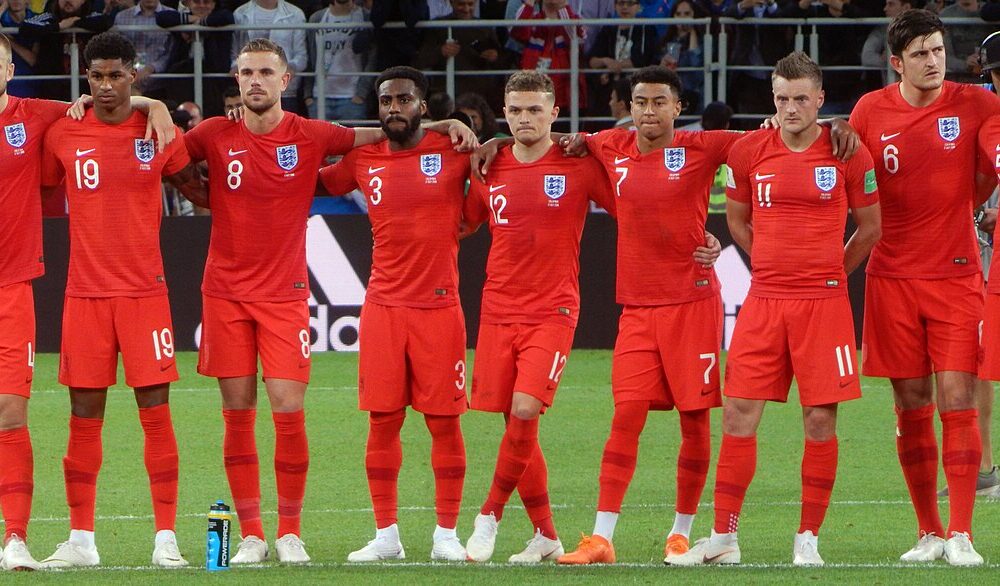
Rules verified against IFAB Law 10: Determining the Outcome of a Match (Laws of the Game 2026/27). The featured photograph shows England during the 2018 World Cup shootout with Colombia: Voltmetro / Wikimedia Commons, CC BY 3.0; image scaled for display. Rules checked October 11, 2026.