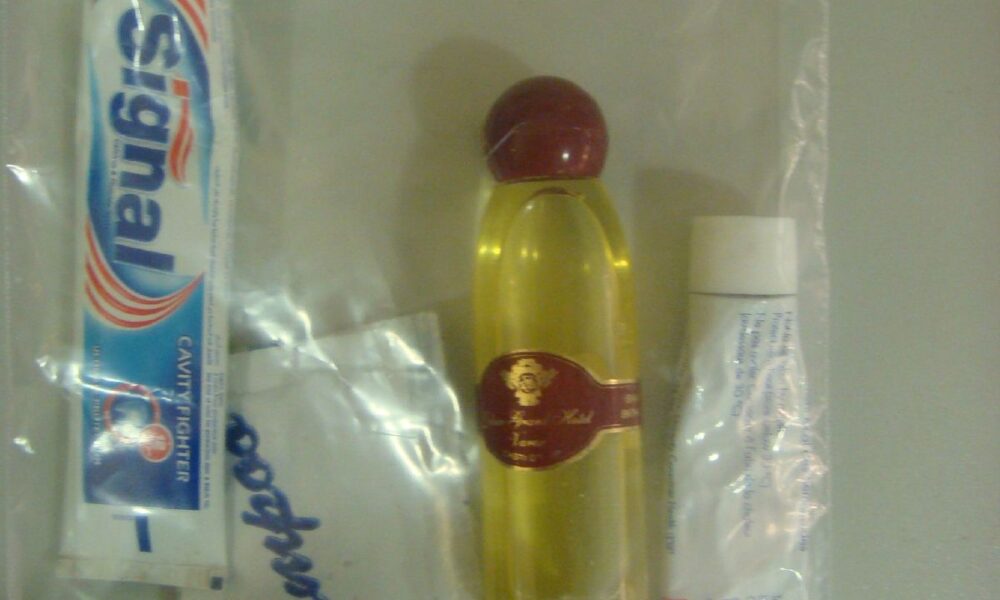

TSA’s carry-on liquids rule is 3-1-1: most liquids, gels, aerosols, creams and pastes must be in containers holding 3.4 US fluid ounces (100 mL) or less, and those containers must fit inside one quart-sized, clear, resealable plastic bag per passenger. The limit is based on each container’s stated capacity, not how much product remains in it. Important exceptions exist for medically necessary liquids and baby or toddler food.
If you are flying from a US airport, pack for the published rule rather than rumors that newer security scanners automatically allow full-size bottles. The latest TSA travel tips and official packing checklist describe 3-1-1 as the standard for ordinary carry-on liquids. Screening procedures can vary by checkpoint, and TSA officers make final security decisions.

TSA carry-on liquid limits at a glance
| What you are packing | Ordinary carry-on rule | What to do |
|---|---|---|
| Shampoo, body wash, lotion, liquid cosmetics | Each container no larger than 3.4 fl oz / 100 mL | Put travel-size containers in the quart bag |
| Toothpaste, gel, cream and paste products | Usually subject to the same 3-1-1 limit | Use a qualifying travel-size tube or container |
| Hair spray and other permitted toiletry aerosols | 3-1-1 screening rule plus any applicable hazardous-material restrictions | Check the product and TSA/FAA guidance |
| Liquid medication and other medically necessary liquids | Can exceed 3.4 oz in reasonable quantities | Tell the officer and separate for additional screening |
| Breast milk, formula, toddler drinks and baby food | May exceed 3.4 oz; need not fit in the quart bag | Tell TSA and screen separately |
| Empty refillable bottle | Not a liquid-filled container at screening | Carry it empty and refill after the checkpoint |
| Ordinary liquid bottle labeled 150 mL, even half empty | Over the standard container limit | Check it, decant into smaller permitted containers or leave it behind |
Most of these items are covered by TSA’s What Can I Bring? item-by-item reference. A product being sold in a travel aisle does not prove that its container meets the 100 mL limit: inspect its label.
What does TSA’s 3-1-1 rule mean?
The shorthand tells you how to organize ordinary liquids at security:
- 3: Each container holds no more than 3.4 fluid ounces or 100 milliliters.
- 1: Put permitted containers into one quart-sized, clear, zip-top plastic bag.
- 1: Use one of those bags per passenger.
The rule applies to the container. A half-empty 200 mL shampoo bottle is still a 200 mL bottle; the passenger cannot treat its remaining contents as a 100 mL container. By contrast, several separate 100 mL bottles may be carried as long as they genuinely fit inside the single permitted quart-sized bag. The bag must close; it is not permission to bring an unlimited collection of travel bottles.
Which toiletries count as liquids?
Common examples include toothpaste, shampoo, conditioner, liquid or gel deodorant, sunscreen lotion, hair gel, perfume, liquid foundation, mascara and most spray or cream products. Travelers sometimes overlook food items with a spreadable or gel-like consistency. Solid deodorant sticks, many solid cosmetics and bar soap are different from gels or liquids, but individual products and unusual consistencies can still require examination.
To avoid guessing, use TSA’s official searchable items list. The name of a cosmetic does not decide everything: its form and whether it can be poured, sprayed or squeezed are what matter for screening.
Does toothpaste count as a liquid?
Yes. Toothpaste is a paste and typically follows the ordinary container limit. A labeled 100 mL tube can go in your quart bag; a 150 mL tube should be packed in checked luggage or replaced with a smaller tube unless some specific exemption applies.
Does solid deodorant have to fit in the bag?
Solid stick deodorant is generally permitted outside the 3-1-1 liquids bag. Liquid, gel, spray and cream deodorants are different and may be subject to the limits and aerosol restrictions. The official TSA list distinguishes liquid and solid deodorant.
Medication exceptions: when more than 100 mL is allowed
TSA permits medically necessary liquids, medications and creams in quantities greater than 3.4 ounces or 100 milliliters in carry-on luggage. Such items do not have to fit inside your quart bag. Tell a TSA officer at the beginning of the screening process, and make these items available for separate inspection or testing.
For example, a passenger who needs liquid medication during travel should keep it accessible rather than forcing it into an undersized container. TSA says medications in solid and liquid forms must still undergo security screening. You may be asked to open or present containers for inspection. The precise screening process depends on the item and security procedures. See TSA’s medication guidance and its items database.
If you use contact lens solution, check its specific TSA entry rather than assuming every bottle will pass. Some large solutions can trigger further screening, and TSA advises packing certain larger containers in checked baggage when possible. Labels can facilitate the process even where TSA does not require a prescription bottle.
Baby formula, breast milk and toddler food: special rules
Formula, breast milk, toddler drinks and baby or toddler food—including puree pouches—may be brought in quantities larger than 3.4 ounces. They are treated as medically necessary liquids and do not need to fit inside the quart-sized bag. An infant or child does not need to be traveling with you for the breast milk or formula exception to apply.
Tell TSA about these items when screening starts and remove them for separate inspection. TSA may use testing procedures for security screening, and cooling accessories such as qualifying ice packs or gel packs may also be permitted. TSA recommends clear or translucent bottles when practical to streamline screening but does not require a particular bottle for all situations. See the TSA entry for baby formula and food for current details.
Can you bring water through airport security?
An ordinary filled water bottle exceeding 100 mL does not meet the standard TSA liquid-container rule. The simplest alternative is a completely empty reusable water bottle that you fill after passing through screening. You can also buy permitted drinks inside the secure terminal area, subject to your next airport’s rules if you must clear security again.
Some frozen liquids are treated differently when frozen completely solid at the checkpoint, but partially melted or slushy contents may be screened as liquids. Because that exception is specific and subject to officer inspection, an empty bottle is the more predictable packing choice.
Does TSA PreCheck change the liquid quantity limit?
Not by itself. TSA PreCheck can change the flow at a checkpoint and whether you need to remove items from your bag. It is not general permission to pack ordinary oversized shampoo or water bottles. Likewise, newer computed tomography security scanners may change how bags are examined, but do not assume that having one at a particular airport cancels the national 3-1-1 rule.
Read the signs and listen to the officers in your actual lane. Keeping liquids accessible makes it easier to respond if they ask you to take a bag out for inspection.
Carry-on liquids vs checked luggage
Ordinary toiletries in checked baggage generally are not subject to the carry-on quart-bag rule. However, checked luggage has its own safety restrictions, particularly for aerosols, flammable liquids and medicinal or toiletry articles subject to FAA quantity limits. Do not assume that moving an item to checked luggage makes an otherwise prohibited hazardous product acceptable.
| Question | Carry-on | Checked baggage |
|---|---|---|
| Must ordinary liquids fit in a quart bag? | Yes, under 3-1-1 | No general quart-bag rule |
| Can an ordinary 200 mL shampoo bottle go here? | Generally no | Generally yes, subject to applicable restrictions |
| Should essential medicine be kept accessible? | Yes, with exceptions and separate screening | Possible for many items, but avoid relying only on checked luggage for essential doses |
| Are hazardous aerosols automatically allowed? | No | No; separate restrictions can apply |
The security screening rules for US airports are separate from airline carry-on size or weight rules. Airlines may impose stricter limits on bag dimensions. International security, customs and immigration are also distinct procedures: for example, AVARIXO’s UK eGates overview concerns border entry, not the US TSA liquid quantity rules.
A seven-step carry-on packing checklist
- List every liquid or gel. Include toothpaste, face cream, sunscreen, hair products, liquid makeup and beverages.
- Check container labels. The bottle’s capacity, not just its remaining contents, is what matters.
- Use containers of 100 mL or less. Do not rely on a half-empty oversized bottle.
- Fit them into one clear quart-sized resealable bag. Close it rather than overfilling.
- Keep medical and baby-liquid exceptions accessible. Tell security officers when required and be ready for separate screening.
- Pack large ordinary toiletries in checked baggage if allowed. Double-check FAA restrictions for aerosols and other special items.
- Bring your water bottle empty. Refill it after security, and recheck the rules if connecting through another screening checkpoint.
Common mistakes that slow down the TSA checkpoint
Putting liquids in a gallon bag: A bigger transparent bag does not replace the specified one-quart bag. Using a half-empty oversized bottle: Screening limits refer to container size. Forgetting toothpaste and sunscreen: Pastes and creams count, even when they do not look like drinks. Hiding medically necessary liquids: Instead, tell the officer and request the applicable exception. Assuming all checked items are unlimited: Aerosols and hazardous goods have separate rules. Assuming an international connection follows US rules: Follow the checkpoint rules where you are actually screened.
Frequently asked questions
How many 100 mL bottles can I take through TSA?
There is no universal fixed count of bottles stated in the 3-1-1 shorthand. You can carry multiple permitted-size containers only if they all fit inside the single clear quart-sized bag allotted to you, subject to screening.
Can I use two liquids bags if I have two carry-on suitcases?
No. Under the standard 3-1-1 rule, the allowance is one quart-sized bag per passenger, not per suitcase. Medically necessary and qualifying baby liquids have separate rules.
Can I bring 3.4 ounces of liquid in a 6-ounce bottle?
Not under the normal rule. The container is larger than the permitted maximum even if partly empty. Transfer ordinary toiletries to a bottle labeled 3.4 fluid ounces or 100 milliliters or smaller.
Can I bring breast milk without my baby?
Yes. TSA’s rules say that an infant or child does not have to travel with you for the formula or breast-milk exception to apply. Declare these items for additional screening.
Are makeup wipes considered liquids?
Wet wipes are generally listed as permissible, unlike bottled liquid products. When uncertain about a product, check its specific entry in TSA’s current What Can I Bring database.
Do TSA liquids rules apply to connecting flights?
They apply when you pass through a TSA security checkpoint. If you clear security again abroad, that checkpoint’s different national or airport rules may apply. Duty-free purchases can have additional tamper-evident-bag rules; do not assume they will pass every onward screening.
Who makes the final decision at the checkpoint?
A TSA officer makes the final screening decision. When you need a firm answer about an unusual item before departure, consult the official What Can I Bring list or TSA’s traveler support channels.
Bottom line
For ordinary TSA carry-on liquids, pack containers no larger than 3.4 fl oz (100 mL) in one clear quart-sized zip-top bag per passenger. Don’t mistake a partly empty oversized bottle for a small container. Declare medically necessary liquids and qualifying baby products separately, and verify the current guidance on TSA.gov before flying. Clear packing and straightforward exceptions help you avoid surprises at US airport security.