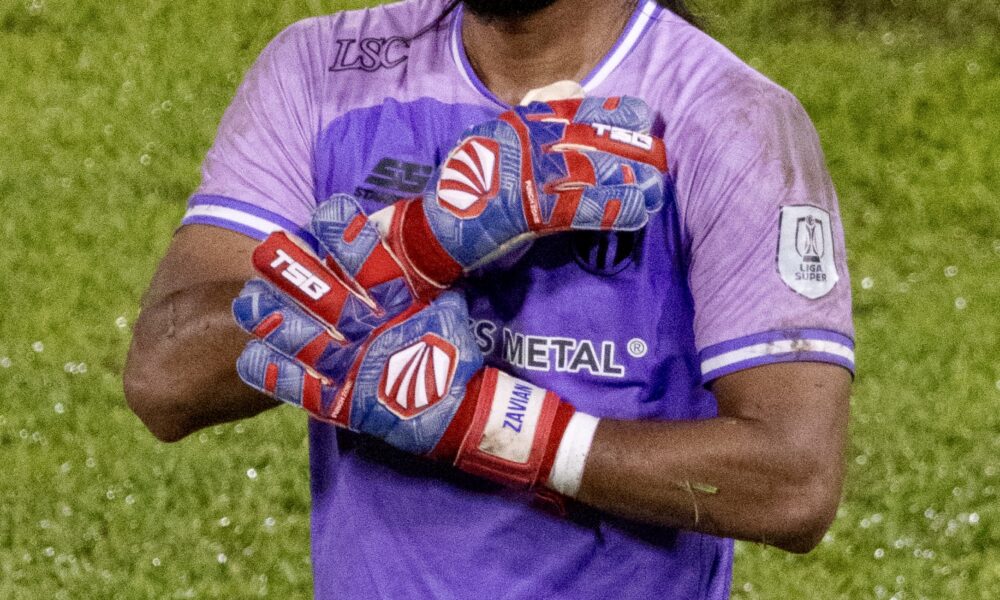

The soccer back-pass rule prevents a goalkeeper from handling the ball inside their penalty area after it was deliberately kicked to them by a teammate. The restriction also applies when the keeper receives the ball directly from a teammate’s throw-in. Contrary to a common myth, the rule is about how the ball was played, not whether the pass traveled backward.
This guide follows IFAB Law 12 as checked on October 11, 2026.
What counts as a back-pass offence?
Suppose a defender deliberately kicks the ball toward the goalkeeper, who bends down and picks it up inside their own penalty area. The referee awards an indirect free kick to the opponents. The goalkeeper may receive, dribble and kick the ball with their feet, but cannot simply use the hands after that deliberate teammate kick.
“Back-pass” is popular shorthand, not a requirement that the ball literally goes backward. A sideways or forward deliberate kick by a teammate may still create the restriction. The referee evaluates whether the action was a deliberate kick rather than an accidental rebound or deflection.
Does the rule apply to headers, throw-ins and deflections?
A normal header or chest pass by a teammate does not trigger the deliberately-kicked-ball restriction. However, players may not deliberately invent a trick—such as flicking the ball up with a foot to head it to the goalkeeper—to bypass the law. Law 12 separately penalizes such deliberate circumvention.
Throw-in exception: a keeper must not use the hands on a ball received directly from a teammate’s throw-in. That is a distinct restriction even though the ball was not kicked. An unexpected rebound off a teammate is different from a deliberately kicked pass; circumstances and the referee’s judgment matter.
What if the goalkeeper has already tried to kick the ball?
IFAB includes an important exception: a keeper may handle the ball after a teammate’s deliberate kick when the goalkeeper has clearly kicked or attempted to kick it to release it into play and the attempt fails. This wording protects an identifiable attempt to clear the ball; it is not permission to fake a kick to create a handball loophole.
For example, if a keeper swings to clear a deliberate teammate pass, makes an obvious genuine attempt and mishits it, the referee applies the Law 12 exception. A simple touch to control the pass, followed by picking it up, should not be treated as the same thing.
What is the penalty and where is it taken?
The normal restart is an indirect free kick for the opponents from the relevant position of the handling offence, subject to the special location rules for offences in the goal area. An indirect free kick must touch another player before a goal can be scored directly from it. The goalkeeper is not automatically cautioned simply for the prohibited handling inside the penalty area.
Compare this with ordinary handball offences and our explanation of direct versus indirect soccer free kicks; the distinction changes what the attacking team can do at the restart.
Quick decisions you can make while watching
- Defender intentionally kicks it to keeper; keeper catches it: normally indirect free kick.
- Teammate takes throw-in straight to keeper; keeper catches it: indirect free kick.
- Genuine header from teammate; keeper collects: generally allowed unless it was part of a deliberate trick to evade the restriction.
- Defender’s accidental deflection reaches keeper: not automatically a back-pass offence.
- Keeper tries to boot a deliberate pass clear but mis-kicks: the specific attempted-clearance exception may apply.
Frequently asked questions
Can a goalkeeper use their feet after a back pass?
Yes. The rule restricts handling with the hands or arms, not ordinary footwork.
Is every pass toward your own goal a back pass?
No. A keeper-handling offence requires the relevant deliberate teammate kick or direct teammate throw-in, subject to the wording of Law 12.
Is a prohibited back pass a penalty kick?
No. The standard restart is an indirect free kick for the opposing team.
Official sources and photo credit
- www.theifab.com official rules or guidance (checked October 11, 2026)
- www.theifab.com official rules or guidance (checked October 11, 2026)
- Featured photo by Chin Yu Chu. Original Wikimedia Commons file; Creative Commons license. No modifications made.

Other Articles
Advantage Rule in Soccer: Why Referees Let Play Continue
Goal-Line Technology in Soccer: How It Decides if the Ball Crossed
