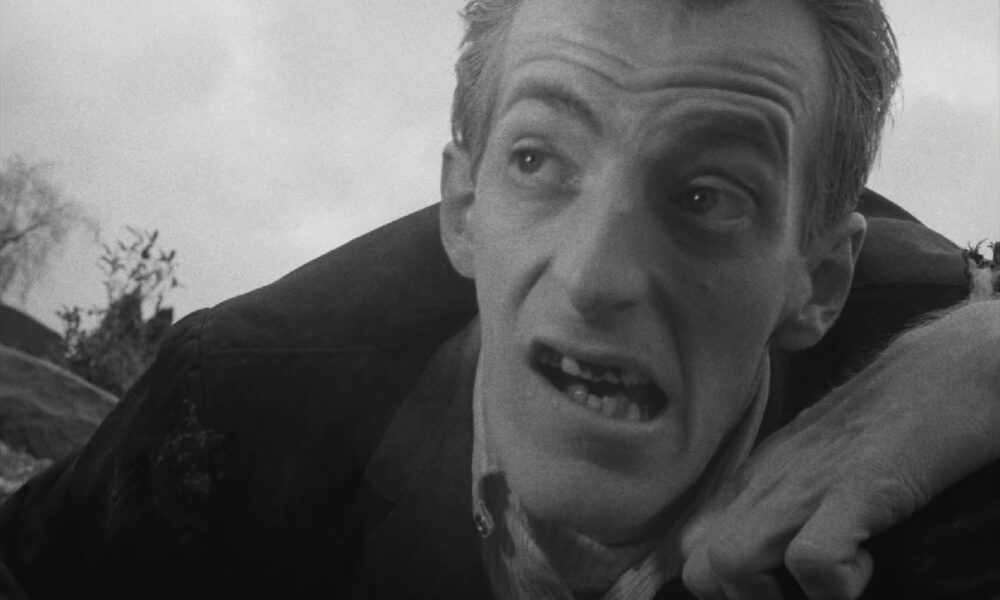

Quick answer: Night of the Living Dead (1968) is George A. Romero’s original black-and-white zombie horror film, not the 1990 remake or a modern colorized edition. It follows survivors sheltering inside a Pennsylvania farmhouse as reanimated, flesh-eating attackers gather outside—and disagreements inside the house become nearly as dangerous as the threat outdoors. The feature runs approximately 96 minutes, stars Duane Jones as Ben and Judith O’Dea as Barbra, and was selected for the United States National Film Registry in 1999. The original 1968 U.S. release is in the U.S. public domain, but you should not assume that every restoration, remake or colorized edition has the same rights status.
This guide helps you identify the authentic 1968 film, recognize the cast, decide whether it is suitable for you, understand the film’s historical importance, and avoid confusing its public-domain status with a license to reuse any newer edition. The details have been checked against the Library of Congress catalog, Criterion’s release information, and the 1999 National Film Registry announcement.
Night of the Living Dead (1968): key facts
| Detail | Original 1968 film |
|---|---|
| Original title | Night of the Living Dead |
| Release year | 1968 |
| Director | George A. Romero |
| Writers | George A. Romero and John A. Russo |
| Lead characters | Ben (Duane Jones) and Barbra (Judith O’Dea) |
| Genre | Survival horror / early modern zombie cinema |
| Original presentation | Black-and-white feature film |
| Typical duration | 96 minutes (1 hour 36 minutes) |
| Country and language | United States; English |
| U.S. original film rights | Public domain due to publication without the required copyright notice |
| Historic preservation | Added to the National Film Registry in 1999 |
| Original documentation | Library of Congress and Criterion Collection |
These facts describe the 1968 original. Many platforms and video uploads use similar cover art for edited, recolored or newly distributed copies. To identify the movie reliably, check the year, director, black-and-white presentation and cast instead of relying on the poster alone.
What is Night of the Living Dead (1968) about? Spoiler-light summary
The story begins with siblings Barbra and Johnny visiting a rural cemetery. A frightening encounter forces Barbra to flee to a nearby farmhouse. A stranger named Ben arrives and takes an active role in defending the building as reports suggest that the dead are somehow moving and attacking people across a larger area.
The farmhouse is not empty. Other people have hidden there, and they disagree about where they should take shelter, how to secure entrances, and who should lead. The survivors must decide whether to trust one another while receiving incomplete and sometimes contradictory information from broadcasts outside.
Unlike a conventional adventure that moves through dozens of locations, much of the film’s tension is concentrated in a single building. The threat comes from three directions: the attackers outside, the practical limits of the group’s defenses, and the distrust among the people inside.
What this introduction does not reveal: the outcome of the farmhouse confrontation or the fate of individual survivors. The film’s ending is a major part of its reputation, so first-time viewers may prefer to avoid detailed plot summaries before watching.
Does the movie explain where the living dead come from?
Characters hear speculative explanations through news coverage, including references to radiation. The movie, however, is more concerned with how its characters respond than with proving a complete scientific mechanism. Treat speculation by characters as story-world claims, not as a real-world or fully verified cause.
Is it a zombie movie if the characters say “ghouls”?
Yes in the broad modern genre sense. The dead are reanimated, hungry and threatening, even though the film’s own vocabulary differs from modern zombie franchise terminology. The success and influence of this movie helped shape the later popular image of zombies. It is misleading to demand that a 1968 script use every term found in today’s zombie games and series.
Who is in the 1968 cast?
Criterion’s published cast and credits give a reliable reference for distinguishing the actors from performers in later editions.
| Performer | Role | Why the character matters |
|---|---|---|
| Duane Jones | Ben | A determined survivor whose decisions drive the defense of the farmhouse |
| Judith O’Dea | Barbra | The cemetery visitor whose terrifying escape begins the story |
| Karl Hardman | Harry Cooper | A survivor who disputes the best strategy for safety |
| Marilyn Eastman | Helen Cooper | A family member caught in the escalating conflict |
| Keith Wayne | Tom | A younger survivor helping with practical decisions |
| Judith Ridley | Judy | Tom’s companion during the crisis |
| Russell W. Streiner | Johnny | Barbra’s brother in the cemetery opening |
| Kyra Schon | Karen Cooper | The Coopers’ daughter |
| S. William Hinzman | Cemetery ghoul | The recognizable first attacker seen near the cemetery |
Duane Jones as Ben is a particularly significant casting choice in the history of American horror. Criterion describes the film as a groundbreaking example of a Black actor leading an independent horror picture during an era when Hollywood lead roles were far less racially diverse. Discussions about what that choice means should distinguish the casting itself, the events depicted in the movie, and the intentions later described by its filmmakers.
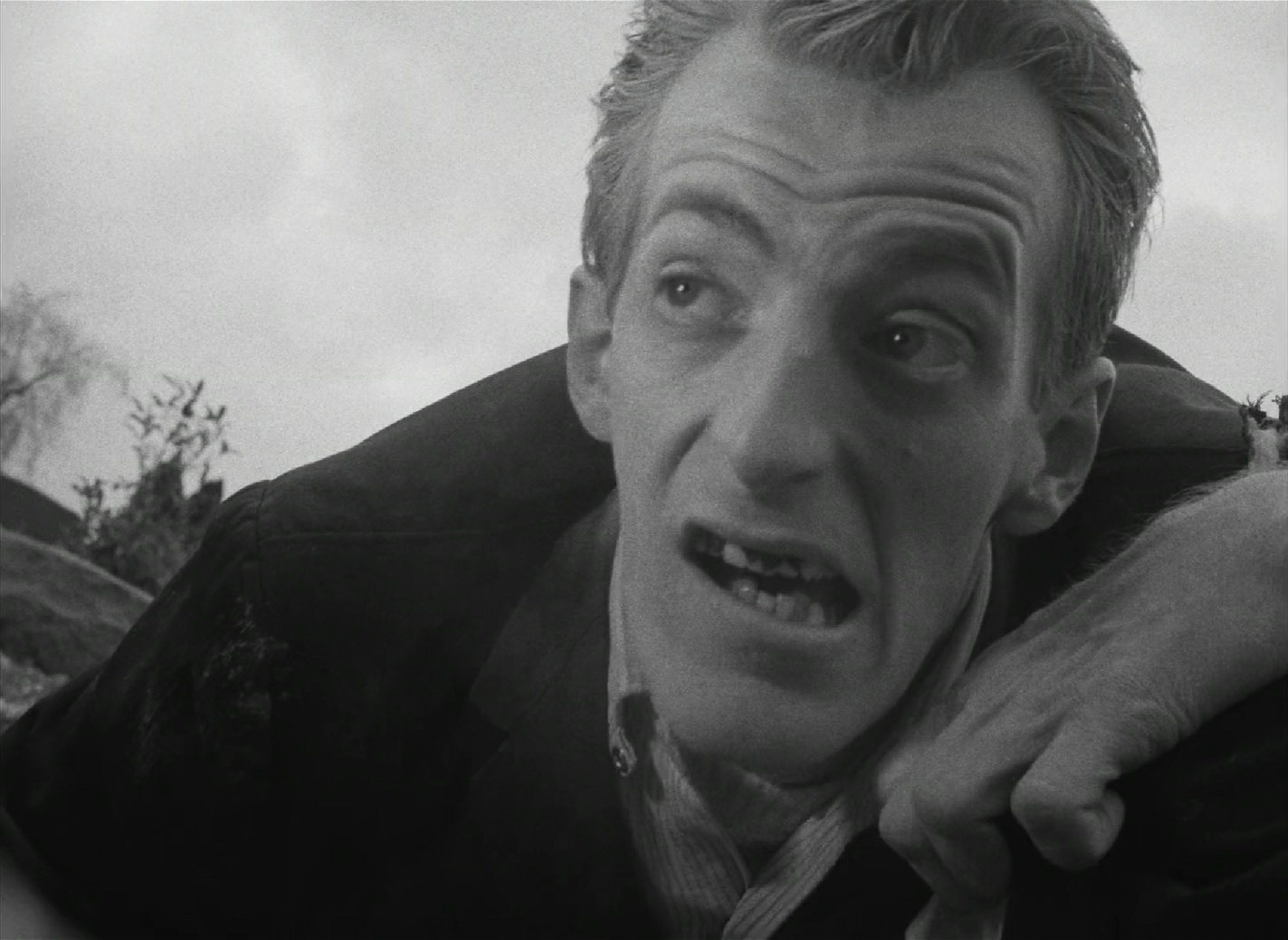
Who is the man shown in the article photograph?
The photograph above is an actual black-and-white frame from the 1968 film, showing S. William “Bill” Hinzman portraying the early cemetery ghoul. It is not promotional art made to imitate the movie, a frame from a modern remake, or a fictional composite. The 1968 film’s original U.S. public-domain status is documented by the Library of Congress.
Why was the 1968 movie so important?
Its reputation is not only about displaying frightening monsters. The film combines three creative decisions that made it markedly different from many earlier horror productions: a contemporary-feeling emergency, ordinary people with clashing personalities, and a relentless approach to suspense that does not give viewers an easy escape.
1. It makes the crisis feel local and plausible
Rather than staging the threat in an elaborate gothic castle, Romero centers the action on a seemingly normal rural farmhouse. Radio and television news reports help make the danger feel much larger than the story’s main location. A small, vulnerable group suddenly faces a problem that appears to be spreading beyond the neighborhood.
2. The characters cannot agree on a survival plan
The disagreements between Ben and Harry Cooper turn practical questions—whether to hold the ground floor, retreat to another area, or attempt an escape—into dramatic decisions. The movie makes tension from human behavior rather than treating the survivors as a perfectly coordinated team.
3. It uses striking black-and-white photography
The sharp light, shadow and texture reinforce a newsreel-like intensity, even when the events are fictional. The film’s budget was modest compared with large studio productions, but its restricted locations and monochrome photography helped form a cohesive aesthetic. Criterion notes that it was shot outside Pittsburgh by a small independent filmmaking team.
4. It refuses a comfortable horror-movie structure
Many classic monster movies reassure viewers by keeping threat and safety clearly separated. Here, the vulnerability continues, and apparently reasonable decisions can produce difficult consequences. The story’s grim tone is part of why it remains relevant even to viewers familiar with modern zombie shows.
Night of the Living Dead and race: what can we say confidently?
The film arrived in 1968, a historically charged year in the United States. Its leading character, Ben, is played by Duane Jones, a Black actor whose role is portrayed seriously rather than used simply as comic relief or a supporting stereotype. Criterion connects the film to the social tensions of late-1960s America.
Readers frequently interpret the movie’s conflicts and ending through the lens of race, distrust and authority. Such interpretations are valid subjects of criticism, but they should not be flattened into a single claim that the filmmakers set out to deliver one fixed allegory. The events on-screen can support several readings, and a responsible explanation distinguishes what the film depicts from what later audiences infer.
To engage with those themes without ruining the ending, notice how the survivors talk to one another, who claims leadership, and which characters are listened to. After watching, Criterion’s supplemental essays and interviews provide richer historical context than an unverified social-media summary.
Is Night of the Living Dead (1968) public domain?
In the United States, the original 1968 black-and-white film is public domain. This is not simply a claim made by free-video uploaders. The Library of Congress copyright catalog explicitly records that the original registration, PA46-101, was canceled because the movie was published before 1978 without the copyright notice then required by U.S. law.
That point is important because multiple later editions have very different legal situations. The same Library of Congress record separately documents registrations for later colorization work. You must not assume that the rights status of the 1968 black-and-white images extends automatically to new color work, added footage, a different soundtrack, an edited presentation or the separate 1990 remake.
What can “public domain” mean for viewers?
For viewers in the U.S., the 1968 original may be legally accessible in free public-domain archives. However, a video uploaded by an unknown account could still be mislabeled, cut down, low-quality or bundled with advertisements or malware. A reputable archive and clear identification of the film version are more useful than a claim of “free HD” in a random search result.
Does the copyright status apply everywhere?
No universal claim should be made. Copyright law differs by country. The Library of Congress documentation establishes the original film’s specific U.S. history; it does not certify public-domain status in every territory. If you intend to distribute, commercially reuse or transform material outside the United States, check the rules in the relevant jurisdictions before relying on the U.S. status.
Does the Criterion 4K edition become public domain too?
Do not assume that. Criterion describes its modern version as a 4K restoration supervised by filmmakers and including extensive bonus material, a remastered soundtrack and additional features. The underlying 1968 film and added creative work, technical restoration, supplemental interviews or physical presentation should not be treated as interchangeable for reuse purposes. See Criterion’s specific release details.
How to watch the authentic 1968 version
Start by deciding whether your priority is free access to the original film or the best authorized restoration and supplemental material. The two goals may lead to different providers, versions and prices.
- Check the year and director. The listing should say 1968 and George A. Romero.
- Confirm the format. The original is black and white, with a widely listed runtime of about 96 minutes. Slight differences in playback speed or opening material can change displayed duration.
- For curated restoration, consult Criterion. Its official title page describes the 4K restoration, cast and special features. Its Criterion Channel listing identifies the same 1968 film.
- For archived copies, use identifiable sources. A public-domain hosting description should name the original film, not a recently released remake. Prefer established archives with clear file details and avoid downloaders that ask for browser extensions or account credentials.
- Check availability at the time you watch. Streaming licenses, regional availability and fees change. This article does not claim that a particular streaming subscription is currently free or included in every country.
A useful comparison: a low-resolution archival copy can introduce you to the story at no extra cost where permitted; a professionally restored presentation may be worth using if you are studying the cinematography or soundtrack. Paying for a new edition does not imply that the original movie itself is copyrighted in the United States.
Original 1968 film vs the 1990 remake
Searching for Night of the Living Dead can return the 1990 film directed by Tom Savini alongside the 1968 Romero original. They are related, but they are separate productions, not merely two versions of the same restoration.
| Question | 1968 original | 1990 remake |
|---|---|---|
| Director | George A. Romero | Tom Savini |
| Release year | 1968 | 1990 |
| Style | Black-and-white original | Later color production |
| Lead performers | Duane Jones and Judith O’Dea | Different performers; do not use the 1968 cast list for this edition |
| U.S. public domain? | Yes for the original 1968 release | Do not assume the 1990 movie is public domain |
| Best entry point for film history | The original that influenced later zombie cinema | A later reinterpretation viewed after the original |
Both films are about surviving an outbreak in an isolated building, but their performances, staging and creative decisions differ. An item titled “Night of the Living Dead Remastered” is not automatically the 1990 remake. Verify the original production year and director.
What about colorized copies labeled “1968”?
Some releases keep the original 1968 actors and story but add color. Those are not the original theatrical black-and-white presentation. The Library of Congress specifically records colorized editions whose newly added color work was registered separately. Whether the additional expressive elements of any particular edition can be reused requires looking at that edition, not only at the original title.
What about 30th-anniversary edits?
Some later anniversary presentations incorporated newly produced scenes or modified sound and editing. They are not necessarily equivalent to the original 1968 cut, and a right to reuse original material does not create a license to reuse newly filmed additions. If historical accuracy matters, choose an edition that clearly explains what footage and audio it contains.
Is the 1968 movie still scary today?
That depends on what unsettles you. Viewers used to extremely fast action and modern computer-generated effects may find the pacing deliberate. The camera often stays with people waiting, arguing or listening to unsettling reports. The dread comes from uncertainty and increasingly limited options.
For viewers who enjoy unsettling survival stories, claustrophobic settings and disturbing social conflict, the 1968 film remains an important experience. It is not primarily a jump-scare montage. Its violence was shocking for its time, and the consequences have emotional weight even when the practical makeup effects look older by today’s standards.
Content warnings
Expect graphic violence, cannibalistic imagery, blood, frightening undead attackers, death and sustained psychological distress. The movie is in black and white, but monochrome photography does not remove the disturbing nature of its subject. Parents and sensitive viewers should consult a detailed age or content guide before deciding whether it is appropriate.
Is it appropriate for children?
Do not treat the film as child-friendly simply because it is old or legally available in public-domain collections. The disturbing material and bleak atmosphere warrant adult judgment. Services may display different advisory categories by territory or edition; the movie itself has consistently been described as horror with graphic violence.
What did the National Film Registry recognize?
The Library of Congress lists Night of the Living Dead (1968) among the 25 films selected for the National Film Registry in 1999. The Registry exists to recognize moving images of cultural, historical or aesthetic significance. It does not mean the film was newly released that year, nor does selection make every print or distribution copy freely licensed.
The recognition illustrates a broader shift in how independent horror cinema was evaluated. A movie made outside a major studio, originally received in part as sensational entertainment, came to be studied as part of U.S. film history. The original can be approached as horror entertainment, a case study in low-budget filmmaking, and an entry point to discussions of 1960s America.
The Library of Congress 1999 announcement provides the official date and selection list, rather than relying on a modern website that may have confused the original movie with one of its remakes.
What to watch for in the farmhouse scenes
The film becomes more rewarding when you look beyond whether a survivor makes a “smart” choice. Notice how the characters’ limited knowledge makes every choice uncertain:
- Information versus rumor: Radio and television reports provide clues, but no character has a complete picture of what is happening beyond the house.
- Leadership under pressure: Ben, Harry and others disagree about which plan provides the best odds of survival.
- Interior versus exterior: Doors, windows and the cellar transform ordinary parts of a home into points of strategic conflict.
- Sound design: Broadcasts, movement and abrupt silence contribute as much to suspense as visible attackers.
- Character perspective: The movie does not give each survivor equal information or equal influence over the group.
Those details help explain why the movie has been studied across genres. Horror can be about monsters, but it can also dramatize how groups communicate when the outside world becomes suddenly unpredictable.
If you are interested in a more modern horror story in which a home and family tensions become central to dread, see our published spoiler-light guide to The Haunting of Hill House. It is a different production and medium, not a continuation of Romero’s 1968 movie.
Frequently asked questions
What year did the original Night of the Living Dead come out?
1968. It was directed by George A. Romero and stars Duane Jones and Judith O’Dea. The 1990 movie is a separate remake.
Is the original movie black and white?
Yes. The authentic 1968 presentation is black and white. Later colorized editions exist, but they are not the original theatrical color treatment.
Who plays Ben in Night of the Living Dead (1968)?
Duane Jones. His leading performance and the film’s late-1960s social context are both major subjects in scholarly and critical discussions of the movie.
Who plays the cemetery ghoul?
S. William “Bill” Hinzman. He appears early in the movie. A genuine frame showing Hinzman appears in this article.
Is the 1968 Night of the Living Dead free to use?
Its original black-and-white release is public domain under U.S. copyright law, as documented by the Library of Congress. Other countries can apply different rules, and newer colorization, soundtrack additions, remakes, artwork and other creative contributions can have separate rights.
Can I watch the film for free legally?
In the United States, reputable public-domain collections can legally make original copies available. Confirm the version, the legitimacy of the host and the applicable rules in your location. A paid, newly restored version may offer better image and sound plus supplements.
Does the 1968 movie have a happy ending?
The ending is widely considered bleak and important to the movie’s impact. To avoid spoilers for first-time viewers, this guide deliberately does not reveal its final events.
Is the 1990 film the same as a colorized 1968 movie?
No. The 1990 title is a remake directed by Tom Savini. A colorized copy of the 1968 movie is an alteration of the original footage; they are not the same kind of production.
How long is Night of the Living Dead (1968)?
Approximately 96 minutes, or 1 hour 36 minutes, per Criterion and other established film listings. Different transfers can display small timing differences.
Why is the 1968 film historically important?
It helped define later zombie horror, combined independent filmmaking with blunt suspense and social themes, and was selected for the U.S. National Film Registry in 1999.
Primary references and further reading
- Library of Congress — original 1968 film, cast and copyright-registration details.
- Criterion Collection — director, cast, 96-minute runtime and modern restoration.
- Library of Congress — National Film Registry selections announced in December 1999.
- Criterion Channel — current title listing (availability may vary by region).
Editorial review: October 13, 2026. This is a researched guide to the 1968 film, not a claim that our editors attended a screening or tested a particular streaming service. For rights questions involving a specific new edition or country, seek qualified legal guidance rather than treating the U.S. public-domain finding as a worldwide license.

Other Articles
Hubble Deep Field Explained: What the 1995 Image Really Shows