Under the NFL’s 2026 rules, a team may declare an onside kick at any point in a game, but only if it is trailing its opponent. The attempt must still be announced to the officials in advance. It is not a surprise short kickoff hidden inside the normal kickoff formation.
This is a meaningful change from older explanations that limited declared onside kicks to the fourth quarter. The NFL’s 2026 rulebook allows a trailing team to declare one at any time during the game under Rule 6, Section 1, Article 6.
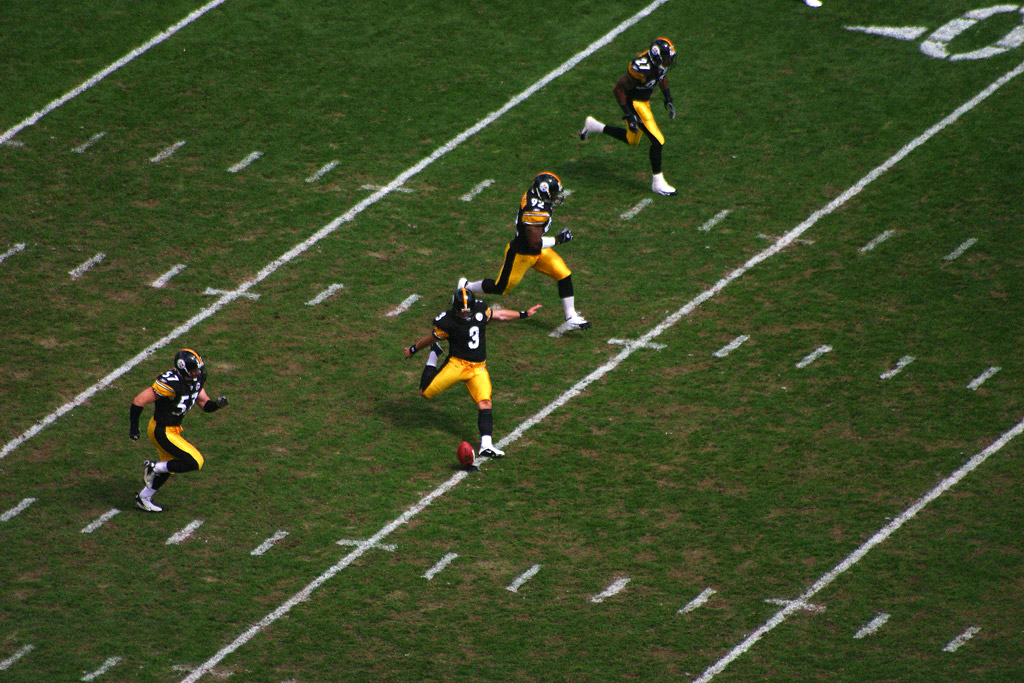
What is an onside kick?
An onside kick is a free-kick attempt in which the kicking team tries to recover the ball itself instead of kicking deep for a conventional return. The reason is simple: a legal recovery gives the kicking team a new possession, but a failed attempt often gives its opponent the ball with advantageous field position.
Unlike a fourth-down offensive play, an onside kick comes from a kickoff situation. Its setup, timing and recovery requirements are governed by the NFL’s specific free-kick rules.
When can an NFL team try an onside kick in 2026?
Any time during the game, after a permitted onside-kick declaration, provided the kicking team is trailing. The change expanded when a trailing team may declare the attempt; it did not remove the requirement that the team be behind on the scoreboard.
That means the key 2026 change is timing: a trailing team no longer has to wait until the fourth quarter. A team that is tied or leading is not eligible to declare the onside kick under this rule.
How is that different from older onside kick rules?
Under the early dynamic-kickoff arrangement, declared onside attempts were restricted more tightly. The conditions changed across subsequent seasons, which is why an older article may correctly describe a past season yet be wrong for a 2026 game. Check the year of the rulebook rather than relying on an undated highlight or video.
Why must the kicking team declare it?
Declaring the attempt lets officials inform the receiving team and enforce the special onside alignment before the kick. The onside formation is not the same as an ordinary dynamic kickoff. Teams cannot simply line up for a normal kickoff and claim they were making a legal surprise onside attempt afterward.
In practical terms, viewers should look for the officials organizing an onside-kick formation. The declaration is part of the procedure, not a ceremonial announcement that can be skipped.
When may the kicking team recover the ball?
The key concepts are the receiving team’s restraining line and the first touch by a receiver. In the usual setup, the receiving restraining line is ten yards beyond the kicking team’s line.
- Ball travels the required distance: Once it reaches the receiving team’s restraining line, an eligible kicking player can recover, subject to the other free-kick rules.
- Receiving team touches first: An eligible kicking player may recover after that touch even if the ball has not traveled the full ten yards.
- Kicking team touches early: If an eligible recovery condition has not been met, early touching is not converted into valid possession merely because a kicking player falls on the ball.
For an easy yard-line example, imagine the teams’ restraining lines are ten yards apart. If an untouched ball moves only seven yards and a kicking player grabs it, the attempted recovery is too early. If a receiving player first touches the ball at seven yards, the recovery analysis changes.
These examples explain the basic rule, not every possible foul. Blocking, player position, an out-of-bounds ball and other conditions can still alter the result. The source of authority is the official 2026 NFL playing rules, not a fixed rule that every ball must always travel exactly ten yards regardless of receiver contact.
Can a player run after recovering an onside kick?
A legal kicking-team recovery ends the onside-kick play at the point of recovery; the kicking side does not simply pick up the ball and run for an additional touchdown on that same recovery. A receiver who secures a live ball is treated differently and may have a return opportunity under the applicable conditions.
Why is an onside kick risky?
It intentionally gives up the field-position benefits of a deep kickoff to seek an extra possession. A failed recovery can leave the opponent relatively close to scoring range. Coaches therefore balance the chance of getting the ball back against the cost of granting a short field.
An onside kick is also different from a team’s choices in NFL overtime, when possession and scoring rules affect late-game strategy. For a separate explanation of how breaks and stoppages work, see our NFL game-length guide.
Onside kick FAQ
Can a team winning the game try an onside kick in 2026?
No. The 2026 rule allows a team to declare an onside kick at any time during the game only when it is trailing its opponent.
Are surprise onside kicks back?
No. Teams still have to declare an onside attempt and use the special onside procedure.
Must the ball travel ten yards every time?
Not unconditionally. The receiving team’s touch can make an otherwise eligible kicking-team recovery possible before the usual restraining-line distance is reached.
Is an onside kick a fourth-down play?
No. It is a special free kick following the rules for kickoffs and their declared onside variant.
Rule status: reviewed against the NFL’s adopted 2026 rulebook. Specific penalties and unusual plays are ultimately decided by officials applying the full rulebook.

Other Articles

David Baszucki: The Roblox Co-Founder Behind the Platform
Indirect Free Kick in Soccer: Rules, Signals and Goals