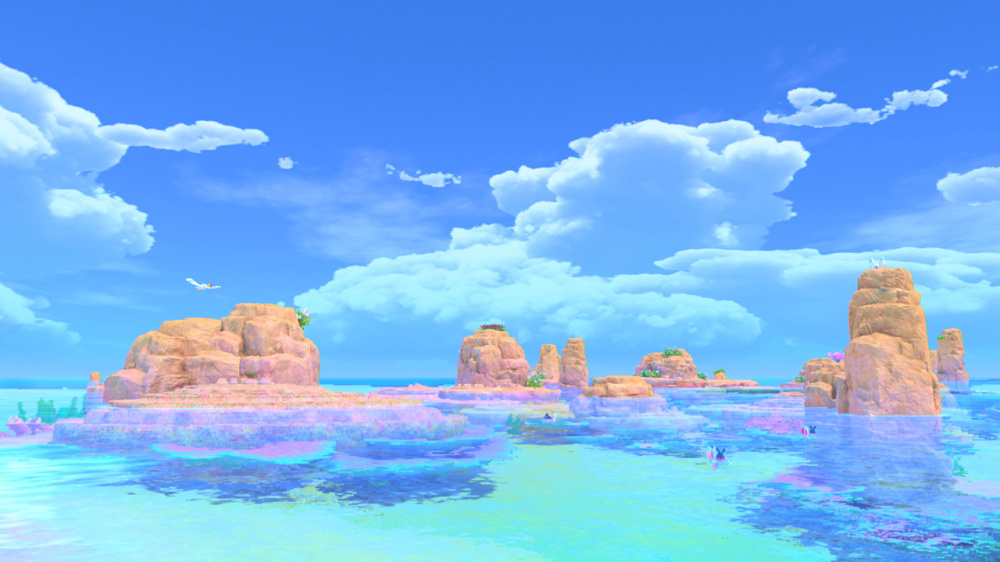

Quick answer: New Pokémon Snap is a Nintendo Switch photography adventure set in the Lental region. You travel in the automated NEO-ONE, take photos of wild Pokémon and gradually fill a Photodex. Professor Mirror judges photos based on pose, size, direction, placement and other factors. One to four stars describe different Pokémon behaviors, not a simple bad-to-good score for how pretty an image looks.
new pokemon snap at a glance
| Feature | Information |
|---|---|
| Original release | April 30, 2021 |
| Platform | Nintendo Switch |
| Main activity | Photographing Pokémon in natural habitats |
| Research area | Lental region |
| Transport | Auto-moving NEO-ONE |
| Photo evaluation | Professor Mirror |
| Star categories | One to four behavior categories |
What the game asks you to do
Instead of throwing Poké Balls or fighting Gym Leaders, you observe Pokémon in natural environments. Professor Mirror oversees a survey of Lental’s ecosystems, and your pictures contribute to a Photodex. Each route has a sequence of places and creatures to notice while the NEO-ONE moves automatically. This changes the challenge from direct combat into careful observation, timing and experimentation. The goal is not merely to photograph everything once: repeat visits can reveal different expressions and actions.
How the NEO-ONE controls exploration
Your research vehicle moves along a route, so you spend more attention on turning the camera and reacting to scenes than on steering. Look left, right, behind and above instead of focusing only on the middle of the path. Pokémon may appear for a short time, then leave the frame as the vehicle advances. When a moment passes, remember where it happened and replay the course. A successful second attempt is often the result of knowing when to turn the camera before a creature enters view.
What a four-star Pokémon photo really means
Professor Mirror uses one-, two-, three- and four-star categories to represent different kinds of behavior. Four stars can indicate an unusual action or more special interaction, but a four-star picture is not automatically sharper or better composed than a one-star shot. Photos also receive a points evaluation using pose, size, facing direction and placement, among other criteria. Each Pokémon can have separate Photodex slots for these star categories. This explains why taking a beautifully centered ordinary picture may still fill the one-star category rather than the four-star slot.
Get higher photo scores
Wait for a recognizable pose, keep the Pokémon large enough in the frame and try to photograph it facing toward the camera when possible. Include important parts of the Pokémon instead of chopping its head off at the edge. A crowded scene may add context, but if the subject is tiny or obscured your evaluation may suffer. Try several shots of the same interaction and submit the one with the clearest positioning. The scoring system rewards specific criteria, so steady practice beats taking a random stream of photos without checking what improved.
Fluffruit encourages different behavior
Fluffruit is an item you can throw to attract a Pokémon’s attention or encourage it to eat. A creature may turn its head, approach a new area or perform an action you would otherwise miss. The best timing depends on the scene: throwing too late may leave no time for the Pokémon to react before your vehicle moves away. Experiment with one Fluffruit at a time in a familiar location to understand its effect. A thrown item is a way to observe behavior, not the same thing as catching or battling the Pokémon.
Scan and other tools as they become available
The game’s research equipment expands as the story progresses. Scanning the environment can identify relevant objects or points of interest, while other unlocked tools may encourage new reactions. Learn what each does before rapidly using every option on every route. When a research objective hints at a specific behavior, choose the tool most likely to trigger it. If nothing happens, alter the timing or your viewing angle on the next expedition. New tools can make earlier areas worth revisiting.
The Illumina phenomenon
Some Pokémon and vegetation in Lental display a special glow connected with the Illumina phenomenon. Investigating this mystery is part of the story alongside routine wildlife photography. Special Illumina-related interactions become important as you unlock the relevant mechanics. Not every glowing particle is a new Pokémon or a rare encounter by itself. Observe the game’s prompts and photograph the actual subject when it reacts. The story provides more context as you research additional locations.
Research levels and new route opportunities
Repeated expeditions and research progress can unlock changes in how a course plays, including different Pokémon appearances and behaviors. If you cannot find an image shown in somebody’s guide, they may be using a higher research level or a different time-of-day version of the same environment. Check your available route options before assuming the game is bugged. Repeating an expedition with a better understanding of the area can reveal more than immediately advancing to the next island. This makes familiar courses meaningful rather than disposable tutorial stages.
Day and night matter
Different times of day can produce distinctive lighting, Pokémon behaviors and encounters. A species that is difficult to observe on a daytime route may appear in another context, or may act differently after dark. Use this to plan visits when chasing a missing Photodex category. Do not assume the game uses a real-world clock matching the current time on your Switch. Select the appropriate in-game expedition or route conditions when those choices are available.
Photo requests are clues, not random chores
The game can give you research requests connected with particular Pokémon actions or interactions. Read the wording carefully: it often hints at an unusual behavior to look for. Use a previous normal photo to establish where the creature appears, then try a tool or timing change. If you get a promising shot but the request does not register, consider whether the required action was fully visible or whether you submitted the appropriate frame. Requests become more manageable when treated as small puzzles grounded in animal behavior.
Choose the best Photodex photo for each category
At the end of an expedition you choose which photos to submit. If you captured several shots of one Pokémon, prioritize a behavior category you have not filled or a higher-scoring entry for an existing slot. You generally cannot treat every near-identical shot as a completely new Photodex accomplishment. Learn to compare the stars and score rather than selecting only the picture with the most colorful background. Keeping track of gaps in the Photodex gives you clear goals for the next expedition.
Editing and sharing photographs
New Pokémon Snap also provides ways to decorate saved photographs with effects, frames or stickers and to share them through supported online features. These fun presentation tools do not necessarily improve the underlying research score that Professor Mirror assigned. Keep the distinction clear between a scientific-looking Photodex entry and a stylized image intended for friends. Online sharing eligibility depends on current Nintendo services and account conditions. Avoid third-party websites requesting your Nintendo password merely to display a picture.
What to expect from the free content update
Nintendo introduced additional locations and Pokémon in a free update after launch. The existence of this content does not mean every area becomes accessible as soon as you open the game for the first time. Follow the ordinary progression and consult the version currently installed. Older walkthroughs may omit the update’s routes, which is one reason different guides can show inconsistent course lists. For another Nintendo adventure built on exploration instead of fighting, compare our Rescue Team DX guide, though its mechanics are very different.
Best beginner routine
On your first pass through a course, concentrate on seeing where Pokémon appear. On the second, aim for better framing of a few common species. On the third, experiment with an item or scan to see whether a rare behavior emerges. After every run, examine Professor Mirror’s feedback and your missing star slots. This approach avoids the frustration of trying to get perfect four-star entries for every species before you understand the region. One well-planned picture often teaches more than twenty hurried ones.
Official guides and platform facts
The official New Pokémon Snap website explains the Lental region and Photodex, and its photo scoring guide describes evaluation and star categories. If you are choosing among Pokémon Switch adventures, our Pokémon Mystery Dungeon overview illustrates the contrast between photography and turn-based rescue missions.
Frequently asked questions
Is New Pokémon Snap a battle game?
No. The core gameplay is observing and photographing Pokémon.
Does four stars mean the highest-scoring photo?
No. Star count represents behavioral rarity while points evaluate photo composition and other criteria.
Can I drive the NEO-ONE anywhere?
No. It follows research routes while you control your camera and use tools.
Can I revisit earlier routes?
Yes. Revisiting is essential for discovering behaviors and completing the Photodex.