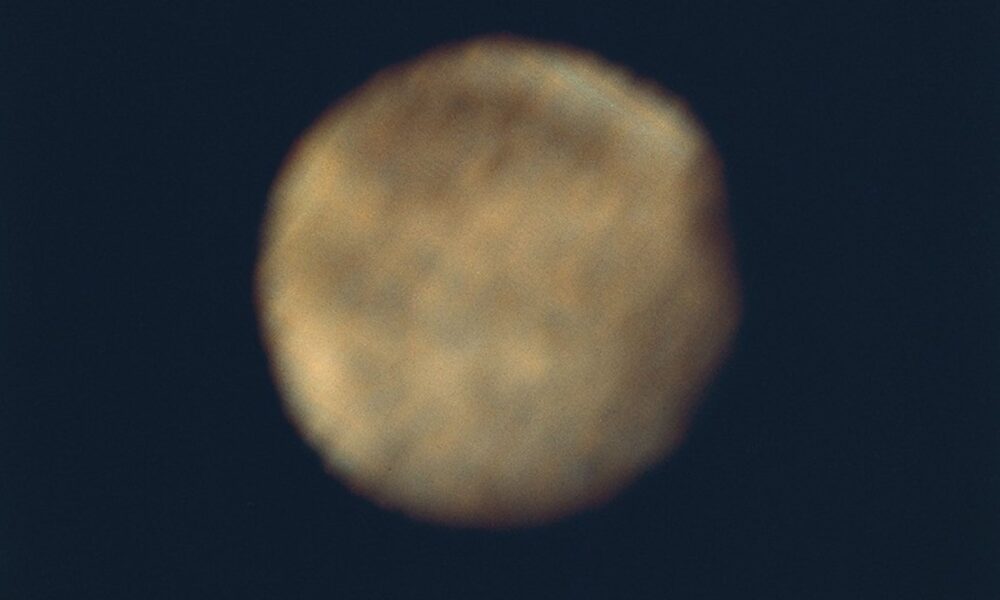

Quick answer: Ganymede is Jupiter’s largest moon and the largest moon in the entire solar system. It is about 5,268 kilometers (3,273 miles) across, making it wider than the planet Mercury. It has an icy surface, a likely salty ocean beneath its crust, and its own magnetic field—the only moon known to generate one internally.
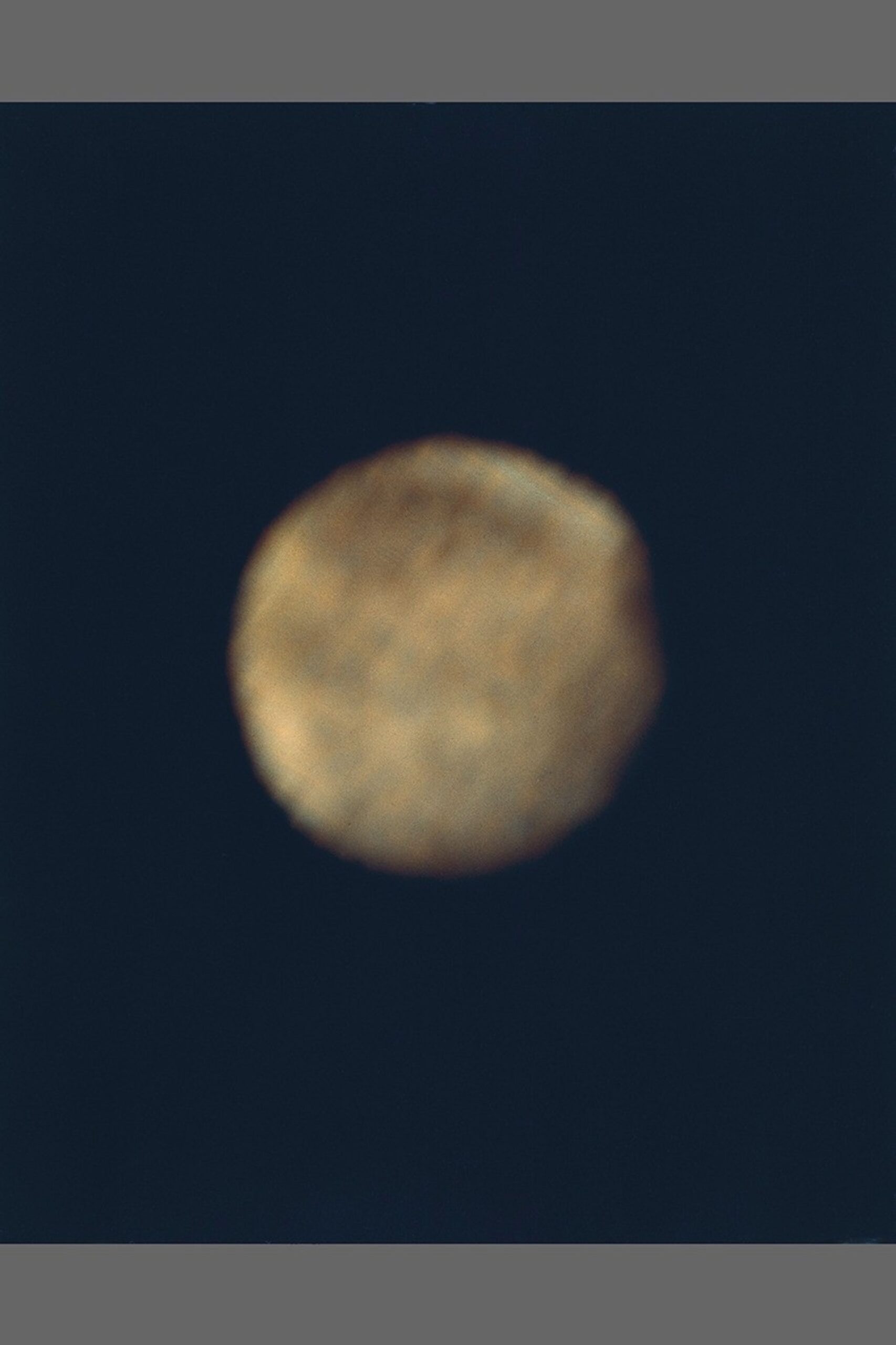
What is Jupiter’s largest moon?
Jupiter’s largest moon is Ganymede. It was discovered in 1610 and is one of the four large Galilean moons, along with Io, Europa and Callisto. All four are visible through modest telescopes, although they appear as points of light rather than detailed disks to most backyard observers.
Ganymede is larger in diameter than Mercury, but it has substantially less mass. That distinction matters: being wider does not automatically make it heavier. Ganymede contains significant amounts of water ice and rock, whereas Mercury is a much denser, metal-rich planet.
Ganymede facts at a glance
| Property | Ganymede |
|---|---|
| Orbits | Jupiter |
| Approximate diameter | 5,268 km (3,273 miles) |
| Orbital period | About 7.15 Earth days |
| Discovery | 1610 |
| Surface | Water ice and darker rocky material |
| Subsurface ocean | Strong scientific evidence |
| Magnetic field | Internally generated |
| Atmosphere | Extremely thin oxygen-bearing exosphere |
Why is Ganymede bigger than Mercury but not a planet?
The formal distinction is about what a world orbits and how it is classified, not just size. Ganymede orbits Jupiter and is classified as a natural satellite. Mercury orbits the Sun and is classified as a planet. Ganymede is slightly larger in diameter than Mercury, but Mercury has much greater mass because of its dense rocky and metallic interior.
Ganymede’s low average density relative to Mercury reflects its substantial ice content. It is an excellent example of why size, composition and mass must be considered separately.
Does Ganymede have an ocean?
Scientists have strong evidence that a salty liquid-water ocean exists beneath Ganymede’s icy crust. Observations of the moon’s magnetic environment and auroras have helped constrain models of the interior. The water is not an open sea visible on the surface; it is buried beneath ice.
Researchers continue to study how deep the ocean lies, whether multiple liquid and icy layers exist, and how the ocean interacts with the rocky interior. A subsurface ocean makes Ganymede interesting for astrobiology, but there is no confirmed evidence of life there.
What makes Ganymede’s magnetic field special?
Ganymede is the only moon known to have an internally generated magnetic field. NASA’s Galileo mission identified the field in the 1990s. Scientists believe it is produced by motion in a conductive layer within the moon’s interior, likely involving a liquid metallic core.
The moon’s magnetic environment interacts with Jupiter’s much larger magnetic field. That interaction creates complex effects, including auroral features, and provides researchers with indirect clues about Ganymede’s interior.
What does Ganymede’s surface look like?
Ganymede’s surface includes two broad types of terrain: darker, heavily cratered regions and brighter, grooved regions shaped by ancient geological processes. The grooves and ridges suggest that its icy crust experienced extensive deformation. Impact craters provide evidence of a long history of collisions.
Real spacecraft images reveal these patterns. Some online illustrations show a dramatic ocean under the ice, but those cutaway views are models, not direct photographs of the buried water.
How does Ganymede compare with Jupiter’s other large moons?
| Moon | What makes it notable |
|---|---|
| Ganymede | Largest moon; magnetic field; evidence for buried ocean |
| Callisto | Heavily cratered surface and possible deep ocean |
| Io | Extremely active volcanoes driven by tidal heating |
| Europa | Icy shell above a global ocean; important habitability target |
Which spacecraft have visited Ganymede?
NASA’s Pioneer and Voyager missions observed Jupiter’s moons during their flybys. The Galileo orbiter later provided close observations and magnetic measurements that transformed understanding of Ganymede. NASA’s Juno spacecraft also conducted a close flyby of Ganymede in June 2021.
The European Space Agency’s JUICE mission—Jupiter Icy Moons Explorer—is designed to investigate Ganymede, Callisto and Europa, with a particular emphasis on Ganymede. Its schedule and milestones should be checked against current ESA mission updates rather than inferred from older launch plans.
Can you see Ganymede from Earth?
Yes. Under favorable conditions, binoculars or a small telescope can show Ganymede as one of the bright points near Jupiter. It may disappear from view when passing behind Jupiter or crossing in front of the planet. Astronomy apps and published moon-position charts help identify which point is Ganymede on a particular night.
Most small telescopes will not reveal Ganymede’s surface details. Those detailed images come from spacecraft and major astronomical observatories.
Frequently asked questions
What is the biggest moon in the solar system?
Ganymede, which orbits Jupiter.
Is Ganymede larger than Earth?
No. Earth is much larger. Ganymede is slightly wider than Mercury, not Earth.
Could humans live on Ganymede?
Not without extraordinary life-support technology. Its surface is extremely cold, it has no breathable atmosphere, and Jupiter’s radiation environment is a major hazard.
Has life been found on Ganymede?
No. Scientists are investigating its ocean and chemistry, but no life has been detected.
Bottom line
Ganymede is a remarkable world: a moon bigger than Mercury, with an icy crust, probable underground ocean and internally generated magnetic field. Studying it can reveal how ocean worlds work far from the Sun.
Further reading: NASA Ganymede overview; NASA Juno mission; ESA JUICE mission.