
Icing in hockey usually occurs when a team sends the puck from its own side of center ice all the way beyond the opponent’s goal line, without a qualifying touch or another exception. In the NHL, officials use hybrid icing: they judge which player would reach and play the puck first rather than forcing a dangerous race right to the end boards. When icing is called, play stops and the next faceoff is in the offending team’s defensive zone. That team is ordinarily not allowed to change its players before the faceoff.
Icing helps prevent a team from repeatedly firing the puck the length of the rink simply to escape pressure. It is not an offside violation, a goal, or a penalty that sends a player to the penalty box. Here is how to spot it in a game and understand the most common exceptions.
How icing happens: a typical play
- Team A controls the puck in its own defensive half, behind the center red line.
- A Team A skater shoots or directs the puck down the length of the ice.
- The puck crosses Team B’s goal line outside the net, without a touch or circumstance that cancels the potential icing.
- The linesperson judges the race for the puck under the NHL’s hybrid-icing procedure. If the defending player would reach it first, or the race is too close to determine under the applicable rule, icing is called.
- The whistle stops play. The puck comes back for a defensive-zone faceoff against Team A, and Team A ordinarily must keep the same skaters on the ice.
The center red line is crucial: a puck sent from beyond it generally does not meet the normal ‘shot from your own half’ element. Officials also evaluate deflections, contact by the opposing team, goalkeeper behavior and whether a shorthanded exception applies.
Hockey icing rule at a glance
| Situation | Likely NHL result | Why |
|---|---|---|
| Five-on-five team shoots from its own half past the far goal line; opponent would win the race | Icing | Long clearance satisfies the relevant location and race conditions. |
| Puck crosses the far goal line after a shot from beyond center ice | Normally not icing on that basis | Shot originated beyond the relevant side of the center red line. |
| Penalty-killing team is shorthanded and clears the puck | Generally not icing under the NHL exception | The numerical-strength exemption applies, with important timing details. |
| Goalkeeper elects to play, attempts to play, or moves toward the puck in a way described by the rule | Potential icing waved off | Goalkeeper action can nullify the call. |
| Opponent touches the puck before it crosses the goal line | Potential icing may be canceled | Contact by the opposing team is one of the listed no-icing scenarios. |
| Shot enters the net for a legal goal | Goal, not an icing stoppage | A scoring play is different from an untouched clearance beyond the goal line. |
These are simplified cases, not a substitute for officials applying the complete rulebook. In particular, shorthanded status is checked under the competition’s stated procedure and cannot always be judged from a single screenshot of the scoreboard.
What is hybrid icing?
Older ‘touch icing’ systems could require players to race hard toward the puck near the boards, increasing the risk of high-speed collisions. The NHL uses hybrid icing so that the linesperson can make a decision earlier.
Under the NHL’s Rule 81 guidance, the official first establishes that the puck will cross the goal line. The official then judges which skater would play it first. The end-zone faceoff dots provide the latest point for making that judgment; officials do not simply award the race to whichever skate reaches a dot first. The relevant prediction is who would touch the puck first.
If the result is too close to call at the decision point, icing can be whistled. The whistle can therefore come before anyone actually touches the puck. This is why watching a game on TV may make an icing call appear early.
What happens after an icing call?
The puck returns to the offending team’s defensive zone for a faceoff. In the NHL, the attacking team has the choice of which end-zone faceoff spot will be used, under the rulebook’s listed procedures. The offending team is normally prohibited from replacing its skaters before play restarts.
This second consequence is strategically important. Players who iced the puck may have already been trapped through a long defensive shift. They now have to defend an immediate faceoff near their goalkeeper without a routine line change. A good opposing center can create an instant scoring opportunity from that draw.
There are specific exceptions permitting substitutions, including certain injuries and circumstances related to a goalkeeper or a penalty affecting strength. Do not simplify the rule to ‘no player can ever be changed after icing.’ The official rulebook defines when the usual restriction can be lifted.
Why isn’t every long puck clearance icing?
A team is shorthanded
In the NHL, a team below its opponent’s numerical strength due to a penalty is generally allowed to clear the puck the length of the ice. Rule 81.6 includes details for a penalty expiring while the puck travels; the relevant release timing matters. Do not automatically carry this exemption into leagues with different rulebooks.
An opponent could have played the puck
The rulebook allows the linesperson to wave off potential icing if an opposing skater reasonably could have played the puck but declined to do so. Relevant deflections or touches can also cancel the call.
The goalkeeper acts on the puck
If the goalkeeper attempts to play or moves toward the puck in the way specified by the rules, the potential icing may be canceled. The goaltender does not necessarily have to pick it up for this to matter.
The puck originated on the other side of center
A clearance sent from the attacking half is different from shooting it the entire length of the ice from behind center. Watch where the puck leaves the player’s stick, not just where it ends up.
Icing versus offside and a delayed penalty
Offside concerns an attacking team’s entry over the offensive blue line. Icing concerns a puck sent too far down the ice from the shooter’s own side of center. A delayed penalty concerns an infraction for which a referee has signaled enforcement but play has not yet stopped. These can happen during the same shift, but they are different decisions with different restarts.
For another basic hockey question, see Avarixo’s guide to NHL periods, overtime and game length.
Frequently asked questions
Is icing a penalty in hockey?
It is a rule violation that normally causes a whistle, a defensive-zone faceoff and a restriction on the offending team’s line change. Ordinary icing does not itself assign a two-minute penalty.
Can you score a goal from your own half of the rink?
Yes, if a legal shot enters the opponent’s net. The resulting goal is not automatically replaced by icing merely because the shot came from far away.
Why do officials sometimes cancel icing with a wave of the arms?
They may judge that an opponent could play the puck, an eligible contact occurred, the goalie intervened or another exception applies. The action tells players to continue.
Does icing apply while killing a penalty?
The NHL generally exempts a properly shorthanded team, but exact timing and personnel exceptions exist. Check the competition-specific rules rather than assuming all amateur leagues match the NHL.
Does the team that iced the puck get to change lines?
Usually no in the NHL. Limited exceptions are specified in the rulebook, and the attacking side’s faceoff choice can compound the tactical disadvantage.
Official rules and photo credit
Rule details checked against NHL’s official Video Rulebook, including its icing explanation and the downloadable current rules; the NHL 2025–26 written rules set out Rules 81.1–81.6 for the hybrid-icing procedure and exceptions. Rules can differ in IIHF, youth and recreational hockey.
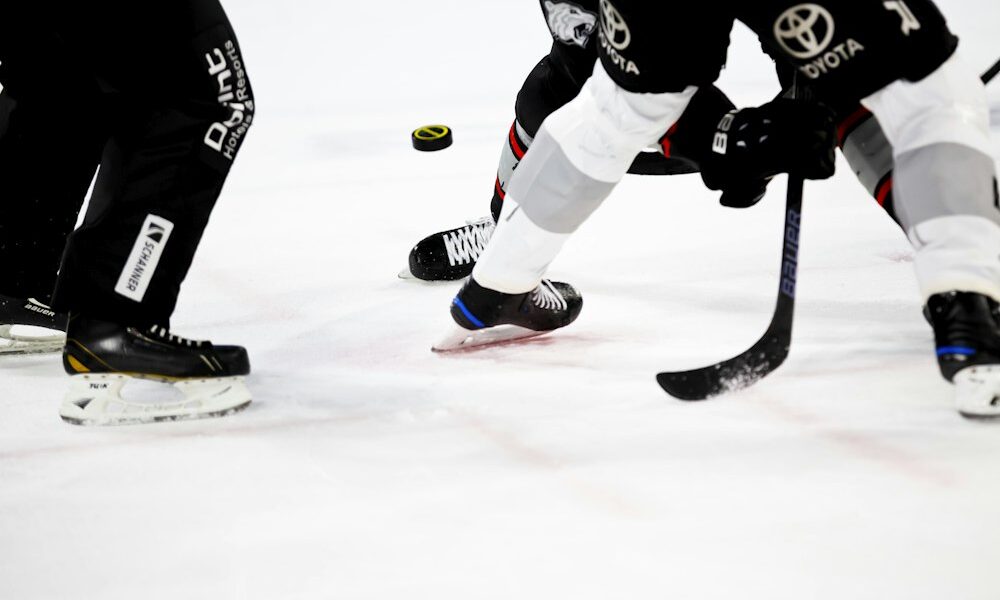
Photo by Markus Spiske / Unsplash, Unsplash License. The image illustrates ice hockey play; it is not presented as footage of a particular icing call.

Other Articles

F1 Overtake Mode in 2026 Explained: How It Replaces DRS
