Quick answer (checked October 14, 2026): George Washington Carver National Monument in Diamond, Missouri, is free to enter. The National Park Service lists the monument and visitor center as open 9 a.m. to 5 p.m. daily, except Thanksgiving Day, December 25 and January 1. Start at the museum, then explore the Carver Trail to see landscapes connected with Carver’s childhood and the historic Carver family property. Most first-time visitors can plan an unhurried 90 minutes to three hours, depending on exhibits and whether they join a ranger program.
George Washington Carver National Monument: 2026 visit facts
| Planning question | Verified answer |
|---|---|
| Where is it? | 5646 Carver Road, Diamond, Missouri 64840. |
| Entrance fee | $0; no America the Beautiful pass is needed for admission. |
| Park and visitor center hours | 9 a.m.–5 p.m. daily, excluding the three listed holidays. |
| Visitor center | Indoor museum, exhibits, theater, park store and information. |
| Main walk | Carver Trail; described as a roughly one-mile loop in the NPS visitor guide. |
| Ranger-guided trail tours | Generally advertised for 10 a.m. and 2 p.m.; confirm that day’s program upon arrival. |
| Reservations | No general admission reservation requirement is listed. Check arrangements for special programs. |
Do not confuse the national monument with the larger George Washington Carver Museum at Tuskegee University in Alabama. The Missouri site interprets Carver’s childhood landscape; Carver later became a professor and agricultural scientist at Tuskegee.
What will you see at the monument?
1. Visitor center: the best first stop
Begin inside the visitor center to understand why this landscape mattered. Exhibits explore Carver’s life, education, experiments and legacy, while a park film provides context. The NPS visitor guide describes a 26-minute orientation film. Ask at the desk whether the film and any ranger talks are running when you arrive; published daily schedules can change without warning.
The center includes accessible exhibits and restroom facilities. Its displays cover more than the familiar peanut-related stories: Carver’s work involved scientific education, agricultural diversification and the relationship between soil health and practical farming.
2. Carver Trail: woodland, prairie and historic places
The Carver Trail takes visitors through woodland and tallgrass prairie restoration areas, across streams and toward places associated with Carver’s early life. Landmarks include the Boy Carver statue, the location associated with his birth, the 1881 Moses Carver house and the Carver family cemetery. These locations are historic stops, not amusement-park exhibits, and should be approached respectfully.
The park uses slightly different distance descriptions for different purposes: its general visitor page calls the self-guided loop one mile, while its accessibility guidance describes roughly three-quarters of a mile of trail with boardwalk, aggregate and asphalt surfaces. For planning, allow at least 30–60 minutes for the walk rather than relying on a single exact distance. Trail surfaces and weather affect pace.
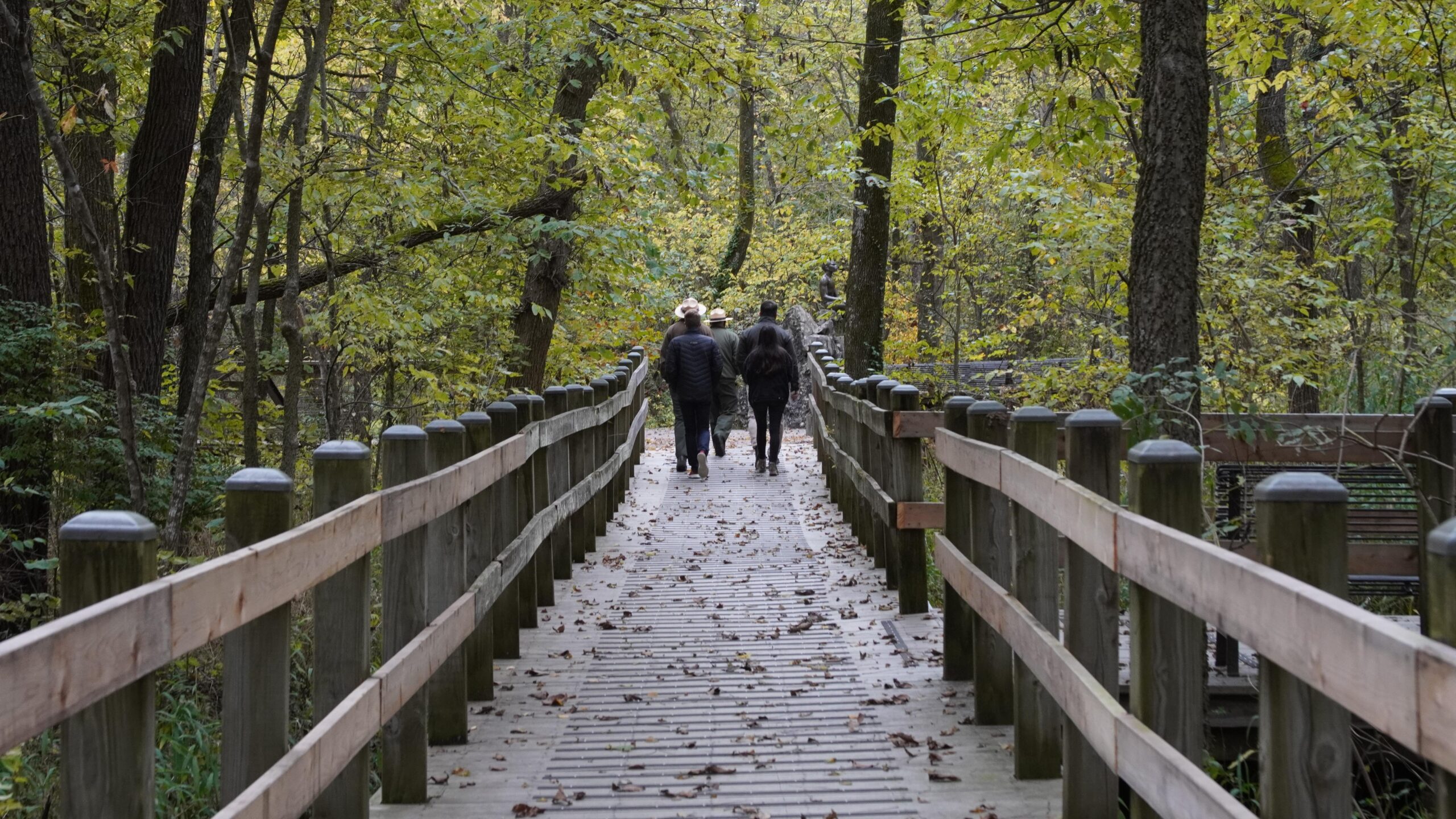
3. The historic Moses Carver house and cemetery
The 1881 Moses Carver house provides an important connection with the families and farm associated with Carver’s upbringing. It is not the same as claiming Carver’s original birth cabin remains intact. Visitors can view the property along the interpreted route; the NPS accessibility page notes that access to the historic house requires stairs.
The nearby cemetery marks the graves of Moses and Susan Carver. George Washington Carver himself is buried at Tuskegee University, not at this Missouri monument. That distinction is useful if your primary interest is biographical history rather than hiking.
Should you walk independently or join a ranger tour?
| Option | Best for | What to expect |
|---|---|---|
| Self-guided Carver Trail | Flexible schedules, photographers, families | Visit the historic landscape at your own pace, following posted interpretation. |
| Ranger-guided walk | Visitors who want deeper historical context | Typically about 60–90 minutes with stops; NPS advertises morning and afternoon departures. |
| Museum-focused visit | Bad weather, limited walking time | Indoor exhibits and film, with shorter outdoor stops as time and ability allow. |
Guided-tour times cited on NPS pages are 10 a.m. and 2 p.m. These are published program times, not a guarantee that a particular tour will run on the day of your visit. Ask at the visitor center or check the official ranger-tour information.
Is George Washington Carver National Monument wheelchair accessible?
Most public facilities at the visitor center are accessible. The NPS also describes accessible parking, an elevator, accessible exhibits, restrooms and assistive-listening options for some programs. The Carver Trail includes boardwalk, compacted aggregate and asphalt, but grades and the historic property’s steps matter. The smaller Contemplative Loop uses wood-chip surfacing and may not suit all mobility devices. Wheelchairs may be borrowed from the visitor center for use within the park; ask staff about availability and specific route suitability.
Accessibility should be judged by the route you intend to use, not by assuming that the entire historical site is uniformly level. The official accessibility page provides the most relevant details.
How much time should you allow?
| Time available | Suggested plan |
|---|---|
| 30–45 minutes | Visit the center, orient yourself and see one nearby outdoor stop. |
| About 90 minutes | Browse key exhibits, walk a substantial part of Carver Trail and return for a final museum stop. |
| Two to three hours | Combine the museum and film with the full self-guided walk and extra time for interpretation or a ranger program. |
Those time blocks are suggested itineraries, not official park requirements. The National Park Service recommends starting at the visitor center, where staff can point out any temporarily closed features.
Practical tips before driving to Diamond, Missouri
- Navigate to the visitor center: 5646 Carver Road, Diamond, Missouri, rather than searching only for the scientist’s name.
- Travel light on the trail: carry water, comfortable walking shoes and sun or rain protection as conditions require.
- Respect the landscape: remain on established trails and leave plants, artifacts and cemetery features undisturbed.
- Check the calendar: the monument is closed on Thanksgiving Day, December 25 and January 1; program schedules may also change.
- Keep children engaged: ask about Junior Ranger opportunities and educational exhibits at the visitor desk.
If you are building a broader national-monument itinerary, compare this historical stop with AVARIXO’s Pipe Spring National Monument guide for a very different heritage landscape, or our Fossil Butte National Monument guide for a museum-centered fossil trip.
Frequently asked questions
Is George Washington Carver National Monument free?
Yes. The National Park Service specifically lists the entrance charge as free. You do not need to buy a federal annual pass to visit this park.
What time does the monument open in October 2026?
The official schedule lists 9 a.m. to 5 p.m. daily, except its named holiday closures. Check current official hours before travel.
How long is Carver Trail?
The main self-guided loop is described by NPS as about one mile, while accessibility information discusses roughly three-quarters of a mile of developed trail surfaces. Allow about an hour for a relaxed walk with interpretive stops.
Where is George Washington Carver buried?
At Tuskegee University in Alabama. The cemetery on the Missouri Carver Trail contains Carver family graves, not George Washington Carver’s own burial site.
Are ranger tours offered?
NPS lists guided Carver Trail walks at 10 a.m. and 2 p.m., generally taking around 75 minutes. Confirm availability for your visit.
Visitor information reviewed October 14, 2026 against the National Park Service’s operating-hours, fee, planning and accessibility pages. Temporary changes may occur.

Other Articles

Sol’s RNG Codes (October 2026): Free Potion Chests and Rare Chests