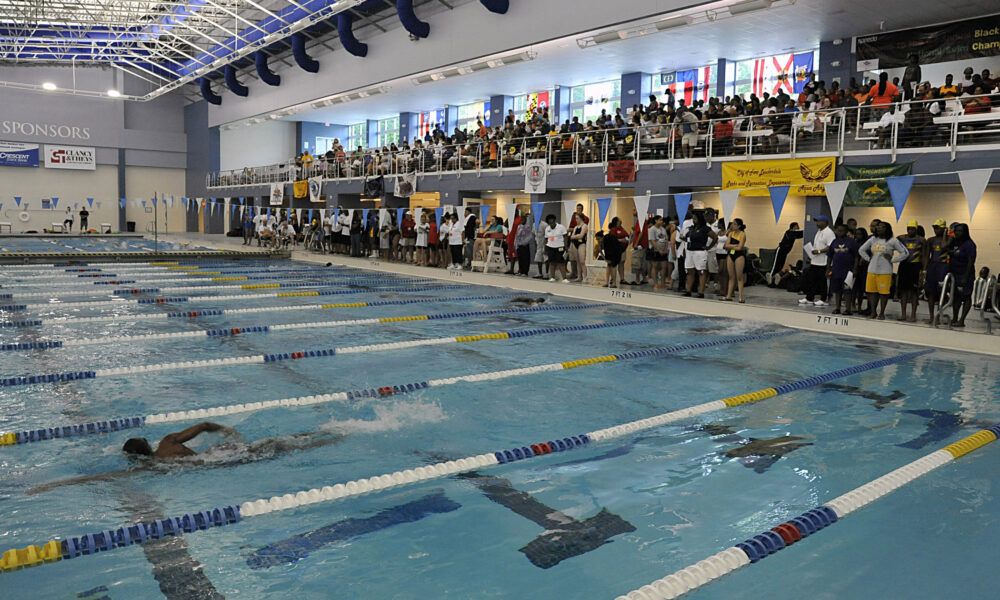

Quick answer: A swim meet is a competition in which swimmers race by event (a set distance and stroke), then by heat (a smaller group swimming at once) and lane. If you’re going to your first swim meet, your most useful information is the meet announcement, warm-up time, event number, heat and lane assignment. Arrive early, confirm check-in rules, warm up only where instructed and ask your coach where your team gathers. Meets vary widely, so a posted example timeline should never override your own meet’s instructions.
This first-time swim meet guide explains the terms parents and beginner swimmers will hear on deck, how to find the right race, what to pack, and why a heat win is not always the overall event win.
How does a swim meet work?
Meet organizers publish a meet announcement showing the pool location, eligibility, entry deadline, distances, event order, warm-up rules and any entry or spectator charges. Swimmers or clubs enter races by the stated deadline. Organizers then place entered swimmers in heats and lanes, generally considering submitted or qualifying times. Officials supervise starts, turns, finishes, and rule compliance; timing staff or electronic systems record results.
A 50 freestyle is one event. If 48 swimmers enter and the pool has eight usable lanes, the organizer may schedule six heats. The order of heats and other details depend on the particular meet; this is a math illustration, not a prediction for your venue. A swimmer’s time is normally compared with all eligible competitors in their event, not just the seven people in the adjacent lanes.
| Term | Plain-English meaning | What to do |
|---|---|---|
| Event | One stroke and distance, such as 100 breaststroke. | Find its number in the meet schedule. |
| Heat | One set of swimmers racing the same event at the same time. | Watch which heat is being called. |
| Lane | One assigned racing space within a heat. | Report to the correct lane or marshal. |
| Seed time | Entry time used to arrange heats, when available. | Check that the entry is correct before entries close. |
| NT | No time submitted for an event. | Ask your coach if a first-time entry is permitted. |
| Heat sheet | The listing of events, swimmers, heats and lanes. | Save or photograph your assignments. |
| DQ | Disqualification for breaking an applicable race rule. | Ask the coach which rule to practice next time. |
| Scratch | A swimmer’s withdrawal from an entered event. | Follow the meet’s stated scratch policy. |
These definitions match the terminology used in U.S. Masters Swimming’s Swimming 101 guide. Exact rules differ by governing organization, meet type, age group and course length.
Events, heats and lanes: read your first heat sheet
Suppose the published program includes Event 5, the 50 freestyle, and a swimmer is listed as Heat 3, Lane 6. This means they belong to the third scheduled grouping of that event and the sixth lane of that heat. The exact layout of the heat sheet will differ by software. Some meets post updated electronic versions, so don’t assume a printed sheet from the previous evening remains final.
Example swim meet card
| Field | Illustrative assignment | Where to confirm |
|---|---|---|
| Event | 5 — 50 Freestyle | Official program or app |
| Heat | 3 | Posted heat sheet |
| Lane | 6 | Posted heat sheet or clerk of course |
| Seed | 42.10 seconds | Entry list |
| Warm-up | Example: 7:30 a.m. | Meet announcement — never assume |
All numbers in this example are illustrative, not details from an upcoming or actual competition. Some meets have preliminaries and finals; others determine places from timed-final heats. Some distance races require a separate positive check-in even when the swimmer has already registered. Read the meet packet carefully.
Your first swim meet timeline: the night before and race day
The evening before
- Confirm the venue address, parking and entrance used by swimmers rather than spectators.
- Check the official meet announcement and latest heat sheets. Record event numbers and estimated session times.
- Ask the coach whether the swimmer must check in personally, and whether distance races have special deadlines.
- Pack equipment, water and meals. Avoid experimenting with unfamiliar foods or new racing equipment just before the event.
- Get enough rest; organize transport so you can reach the pool before the assigned team warm-up.
When you arrive
- Check in: Find the team and coach. Locate the restrooms, pool deck entrance and first-aid staff.
- Warm up as directed: Follow designated lanes and coach/official instructions. Racing starts or dives may be allowed only in particular lanes or time windows; never dive into a general warm-up lane unless expressly authorized.
- Track the event order: Check how heats are being announced and how swimmers are staged. Pools may be loud, and event schedules can run ahead or behind predictions.
- Report early: Find the clerk of course, marshal or starting area well before your heat; do not wait for the swimmer immediately ahead of you to finish.
- After racing: Clear the pool as instructed, talk to the coach, record the official time and prepare for the next event.
Safety first: A swim meet is not a substitute for a swimming lesson. Competitors should have the water competence required by the meet and follow pool rules at all times. Young participants should remain with their coach or responsible adult as required by the organizer.
What to pack for a swim meet
| Item | Why it matters | Practical tip |
|---|---|---|
| Swimsuit | Appropriate clothing for the event and governing rules. | Bring a spare if practical; meet restrictions vary. |
| Goggles | Comfort and vision in the pool. | Bring a reliable backup pair. |
| Swim cap | May be used for hair management or team identification. | Check the team’s cap requirements. |
| Two towels | Dry off between events and after racing. | Keep one dry in a bag. |
| Water and snacks | Support hydration and nutrition during long sessions. | Choose familiar foods and follow the site’s rules. |
| Warm layers and sandals | Stay comfortable on deck between races. | Check the facility’s footwear policy. |
| Schedule and team contacts | Find event numbers and the correct people. | Save an offline copy in case mobile reception is weak. |
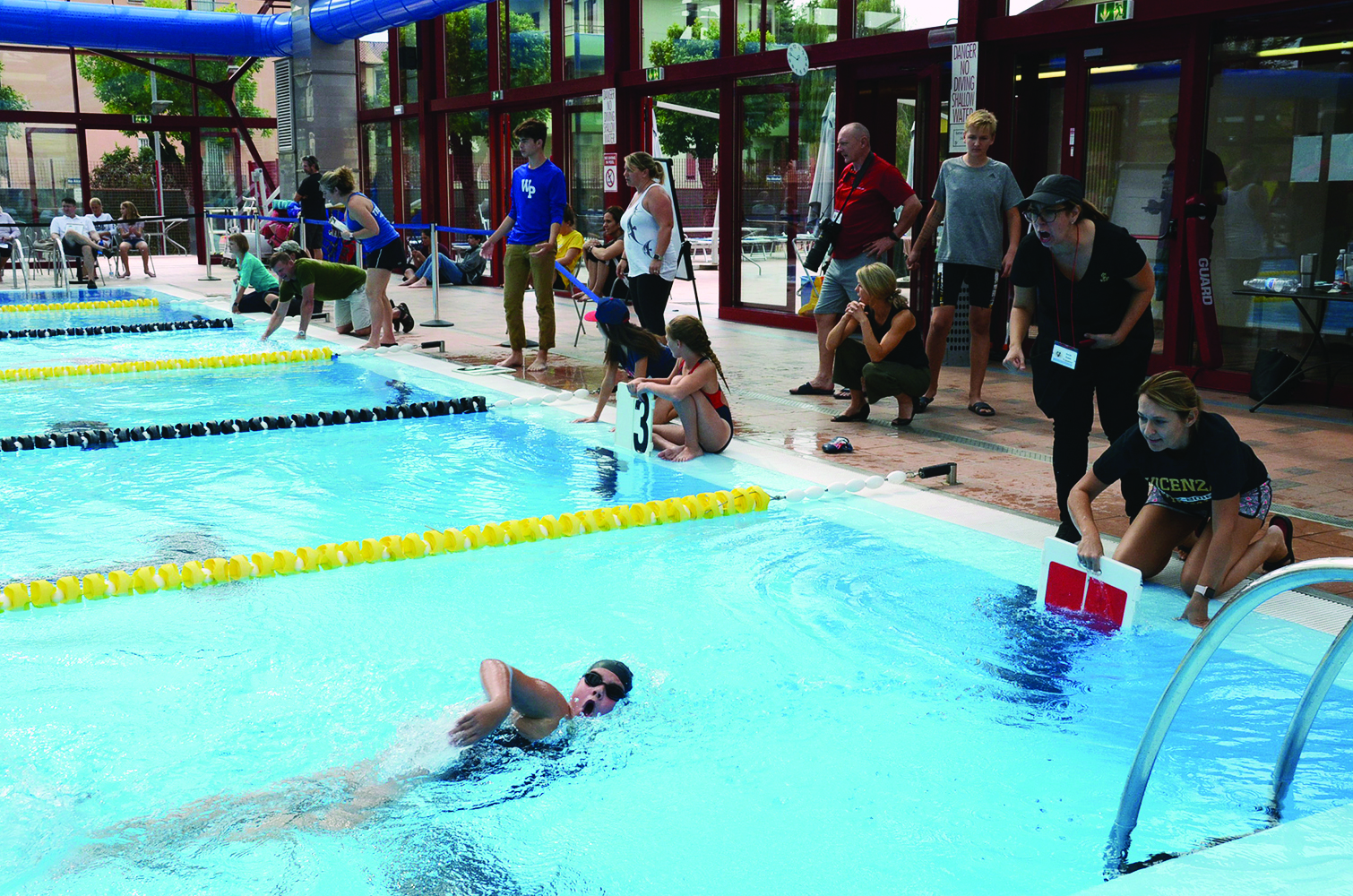
This is a photograph of an actual 2018 youth swim meet, not an advertisement or image of a 2026 event. Beginners can see why team supervision, correct turns and clear lane directions matter.
Swim meet timing: personal bests, places and DQs
A personal best (PB) means the swimmer improved on their own previous time in that event and course type. It can be a real success even without a medal. Final placing depends on the competition’s results and eligibility rules; someone who finishes first in an early heat may be beaten by swimmers in later heats.
Timing may be handled electronically with backup manual timing, depending on meet facilities and sanctioning. Wait for official results; a parent’s stopwatch or a display immediately after a race may not be the final recorded time.
DQ means the swim did not meet a rule, perhaps involving the start, stroke, turn, finish or relay exchange. A DQ is a coaching opportunity, not evidence that the athlete should stop competing. Listen for the official reason and practice the correct skill. Rules for each stroke matter: swimmers new to competition can review our separate guides on freestyle technique, backstroke technique and breaststroke timing and kicks.
How parents can make the first meet less stressful
Focus on controllable actions rather than medals: getting to the pool on time, listening to the coach, finding the correct lane, racing safely and noting one skill to improve. Ask your swimmer which part they enjoyed. Avoid coaching strokes from the bleachers when official instructions are being given.
For long sessions, adults should check spectator access, parking restrictions, food rules, photography guidelines and expected session lengths. Some facilities limit where photographs can be taken or where spectators can enter. Respect privacy, especially around changing areas and minors.
Frequently asked questions
What is the difference between an event and a heat?
An event is a stroke and distance. A heat is one grouping of swimmers competing within that event. One event may have many heats.
How do swimmers know their lane?
The official heat sheet or meet management team assigns a heat and lane. Coaches usually help newer swimmers find their place and notice any updates.
Does winning a heat mean winning the event?
Not necessarily. In a timed-final format, results may be ranked by official times across all heats and applicable age or division groups.
What if I have no previous race time?
Some meets accept an NT entry (no time), while others require entry standards or qualifying times. Check the meet announcement and ask the club.
Can I dive during warm-up?
Only if the coach and meet officials authorize it in a designated lane or period. Many sessions require feet-first entry except during controlled racing-start practice.
How long does a swim meet last?
It depends on the number of swimmers, events, heats, available lanes and whether finals are held. A small dual meet may be much shorter than a multi-session championship. Use the official timeline, which remains an estimate.
Editorially checked October 14, 2026. This is a practical orientation guide, not a replacement for your competition’s rules or the supervising coach’s safety instructions. See U.S. Masters Swimming’s first-meet preparation guide for further context.


