
Quick answer: Terraria on Nintendo Switch is a two-dimensional sandbox adventure about building, exploring and fighting. A good first day begins with shelter, basic workstations and simple gear, followed by underground exploration and preparation for early bosses. Online multiplayer and certain platform services require an eligible Switch Online subscription.
At a glance
| Topic | Essential point |
|---|---|
| Terraria is more than a two-dimensional Minecraft | Terraria uses a side-scrolling world of blocks and resources, but progression places significant emphasis on finding equipment, fightin |
| Choose a sensible first world | When creating a character and world, consider how comfortable you are with the controls and combat. A smaller world can make early trav |
| Your first evening: wood, workbench and shelter | Begin by cutting nearby trees, collecting wood and placing a workbench. Make a small home with a background wall, entrance, light and f |
| Basic tools and crafting stations | Tools have different roles: a pickaxe removes many blocks and ores, an axe handles trees and a hammer changes or removes certain walls |
| Safe mining beats rushing into deep caves | Underground areas contain ores, treasure and useful accessories, but they also feature traps, enemies and dangerous falls. Bring torche |
Terraria is more than a two-dimensional Minecraft
Terraria uses a side-scrolling world of blocks and resources, but progression places significant emphasis on finding equipment, fighting enemies and defeating bosses. You can also build elaborate structures, fish, explore unusual biomes and customize your character. The Nintendo Switch edition launched in 2019 and has received substantial content updates. Its eShop listing now describes the 1.4.5 Bigger and Boulder era, including new crossover features. Because updates alter recipes and game balance, confirm that any very specific older tutorial matches the version installed on your console.
Choose a sensible first world
When creating a character and world, consider how comfortable you are with the controls and combat. A smaller world can make early traversal more manageable for a beginner, while larger worlds offer more distance and exploration. Difficulty selections influence how punishing mistakes will feel. If you are new, prioritize a normal learning experience rather than selecting a hard mode simply because a video calls it the only legitimate way to play. You can explore more ambitious settings later after learning resource management and boss preparation.
Your first evening: wood, workbench and shelter
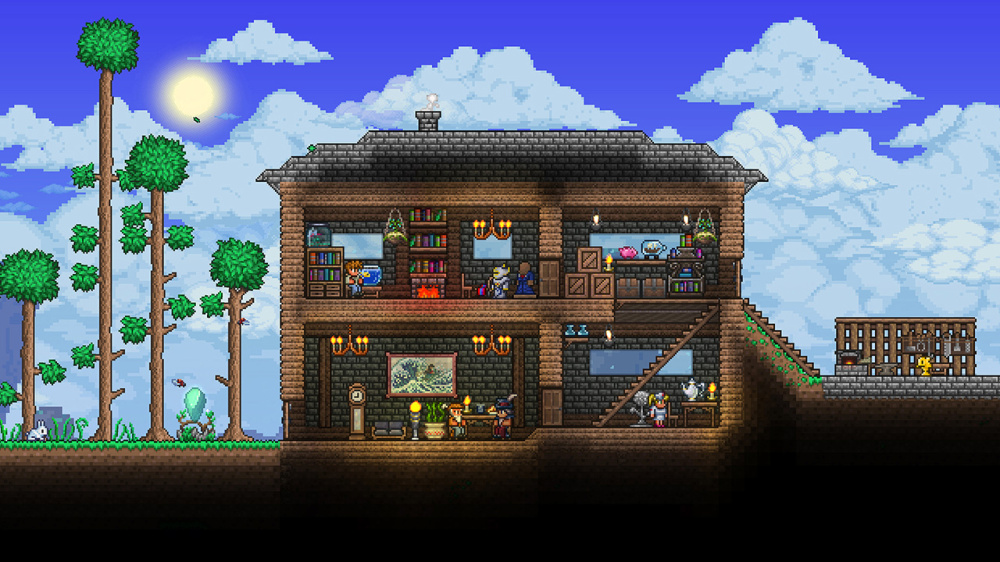
Begin by cutting nearby trees, collecting wood and placing a workbench. Make a small home with a background wall, entrance, light and furniture appropriate for NPC housing rules. A protected interior makes the early night less stressful because enemies become more threatening after sunset. Do not worry about elaborate decoration on day one. Build enough usable space to craft, store materials and retreat safely. If a friendly NPC cannot move into an apparent room, check the in-game housing requirements instead of assuming every enclosure with a roof counts as valid accommodation.
Basic tools and crafting stations
Tools have different roles: a pickaxe removes many blocks and ores, an axe handles trees and a hammer changes or removes certain walls and objects. Crafting gradually introduces specialized stations that let you make better gear from the materials you gather. Watch the item tooltips and pay attention to which ingredients belong to which recipe. The Guide NPC can help point you toward crafting uses for some items. A useful habit is to carry a small set of common resources and leave rare materials in organized storage until you know what upgrade you intend to create.
Safe mining beats rushing into deep caves
Underground areas contain ores, treasure and useful accessories, but they also feature traps, enemies and dangerous falls. Bring torches, platforms, suitable tools and some recovery supplies before descending. Build a recognizable route back up rather than dropping blindly into every opening. Water, lava and dark chasms can turn a profitable expedition into an unexpected death. A cautious first trip should improve your tools or armor and teach you how cave hazards work. Repeatedly digging straight down without a return plan is a poor beginner strategy.
Increase survival through health and defense
Some underground discoveries can expand your maximum health, and better equipment can reduce the damage you take. Defensive progress matters because surviving a boss requires more than dealing damage quickly. Look for accessories that improve mobility, protect against environmental dangers or help with fighting, and choose them based on what has been causing trouble. Don’t sell an unusual accessory simply because its direct damage number looks low. The ability to avoid attacks or reach a safe platform can be more useful than a small increase in raw attack.
Biomes change the kind of danger
Terraria’s forests, deserts, snow fields, underground caverns and corruption-related regions each have distinct resources and threats. You do not have to explore every biome at once. Treat a sudden spike in enemy difficulty as a sign that you entered an area designed for later progression. Mark interesting locations and return with better armor and tools. If you encounter unusual blocks that cannot be mined with your current pickaxe, that is often a progression limitation rather than a game-breaking glitch.
A practical first-boss checklist
Before intentionally summoning an early boss, build a simple arena with several platform levels, enough light and room to maneuver. Bring a reliable weapon, suitable ammo if needed, healing supplies and reasonably updated armor. Learn the boss’s movement before focusing on perfect damage output. The Eye of Cthulhu is a familiar early milestone, but your world and progression may produce encounters under different circumstances. The best preparation is to keep escape routes clear and fight when you can understand the attack patterns rather than under the pressure of an unplanned night.
Different combat styles emerge over time
Melee, ranged, magic and summon-focused gear become increasingly distinct as you advance. At the beginning, it is normal to use any effective weapon you find instead of rigidly committing to a later-game class. As better armor and accessories appear, choose equipment that supports the style you actually enjoy. A ranged player may benefit from movement space and ammunition preparation, while a melee player needs good positioning. Avoid endgame build lists intended for equipment you have not unlocked yet; they rarely explain what a new player should do after building the first house.
Multiplayer on Nintendo Switch
The current Nintendo eShop describes online support for one to eight players and warns that eligible online features require a paid Nintendo Switch Online membership. Local cooperative options and controller arrangements can depend on the version and console, so verify your chosen play mode before inviting friends. If you are buying to play with someone on PC or another console, do not assume cross-platform play is automatically supported simply because those systems also sell Terraria. Compare the exact version, device and networking rules. For a general explanation of online subscriptions, see our Nintendo Switch Online overview.
What’s in the Bigger and Boulder update
Nintendo’s product information highlights Terraria’s 1.4.5 Bigger and Boulder content, including crossover items, new decorative furniture and special world-seed features. The update is not a separate requirement for starting an ordinary first world, and some items are designed for experienced players. If an online guide shows a recipe that doesn’t match your inventory, verify your installed version and the relevant progression requirements. Don’t start over immediately merely because a newly announced item is unavailable. Version-specific content often becomes meaningful after substantial normal progression.
Keep a clear next objective
Terraria can feel directionless if you gather resources without knowing what they are for. Set small milestones: prepare shelter, upgrade a tool, explore a particular cavern, build one extra NPC room or defeat an early boss. Make a storage area for frequently gathered materials. Once one objective is completed, choose another that introduces a new system. This gives the game structure without removing its freedom. For a different sandbox with account-specific multiplayer systems, see our Minecraft cross-play guide. The official Nintendo Terraria product page is the best place to confirm current platform features.
Frequently asked questions
Is Terraria on Switch the full game?
Yes, it is a console edition of Terraria, with its supported updates and platform-specific controls.
What should I build first?
Make a workbench and a safe basic house with correct NPC housing features.
Can you play with friends?
Supported online play is available subject to the required Nintendo account services; check local options for your console.
Does every boss need to be summoned manually?
No. Encounter conditions vary by boss and world progression.
Is 1.4.5 relevant for beginners?
It adds content, but learning basic building, equipment and survival should come first.