Quick answer: The best soccer moves for beginners are the inside cut, outside cut, drag-back, body feint, step-over, Cruyff turn and fake shot. Each one creates a change of direction or pace. Practice the move slowly without a defender, then use it in a 1v1 when a defender is close enough to react. A trick without an acceleration afterward usually creates little advantage.
Learning a handful of reliable soccer moves is more useful than memorizing dozens of flashy tricks. The goal is to move the defender’s weight in one direction, keep the ball within playing distance and escape into open space. These seven skills work with a single ball, a few markers and a small patch of grass or turf.
Which soccer move should you learn first?
| Move | Main purpose | Best situation | Learning level |
|---|---|---|---|
| Inside cut | Change direction sharply | Defender approaches your outside shoulder | Beginner |
| Outside cut | Accelerate around a defender | You have room down the line | Beginner |
| Drag-back | Retreat from a challenge | Opponent blocks the route ahead | Beginner |
| Body feint | Shift the defender without moving the ball | Defender waits in front of you | Beginner |
| Step-over | Sell one route, take the other | Isolated 1v1 with room to burst away | Beginner to intermediate |
| Cruyff turn | Reverse after a fake pass or shot | Chased toward the sideline | Intermediate |
| Fake shot | Draw a block or lunge | Near the box or crossing position | Intermediate |
How to do seven useful soccer moves
1. Inside cut
Move toward a marker at walking pace. Open your hips slightly and use the inside of your right foot to send the ball across your body to the left. Push off the planted foot and follow the ball. Repeat in the other direction with your left foot. The common mistake is cutting the ball too far away, letting the defender recover.
2. Outside cut
Approach the defender as if you might move inside. Touch the ball away with the outside of your nearest foot, angle your body between the defender and the ball, and accelerate into the free lane. Start with small touches. The outside cut is often more practical than a complicated feint when you already have space to run.
3. Drag-back
Place the sole of your foot lightly on top of the ball. Pull it backward, pivot your hips and push the ball into a new direction. Do not stand straight over the ball for too long. This is an escape move when a direct route forward closes, not necessarily a way to sprint past someone.
4. Body feint
Dribble toward a defender, sink one shoulder and shift your body weight to suggest a move to one side. Keep the ball almost stationary during the fake, then take it away with your opposite foot. Practise the fake at half speed before adding acceleration. Watch the defender’s hips; move when they begin to commit.
5. Step-over
Circle one foot across the front of the ball without striking it. Transfer your weight as though you will dribble that way, then use your other foot to touch the ball into the opposite channel. The terms step-over and scissors overlap in different coaching traditions; what matters is the feint, the exit touch and a quick first step. A slow step-over from too far away rarely moves the defender.
6. Cruyff turn
Shape your body as if preparing a shot, pass or cross. Plant your supporting foot beside the ball. Instead of kicking it, use the inside of the other foot to pull the ball behind your planted leg, turn your shoulders and move away in the opposite direction. Begin with no opponent until you can turn without losing balance. The classic Cruyff turn is linked to Johan Cruyff’s famous 1974 World Cup use of the move, although feinting turns existed earlier.
7. Fake shot
Use the same final steps you would take to shoot, but stop short of striking the ball. When the defender braces or lunges to block, move the ball into the new passing or shooting lane. Protect your balance and avoid swinging your foot at another player. Do not repeat the fake if the defender has already recovered; pass or shoot when the opening appears.
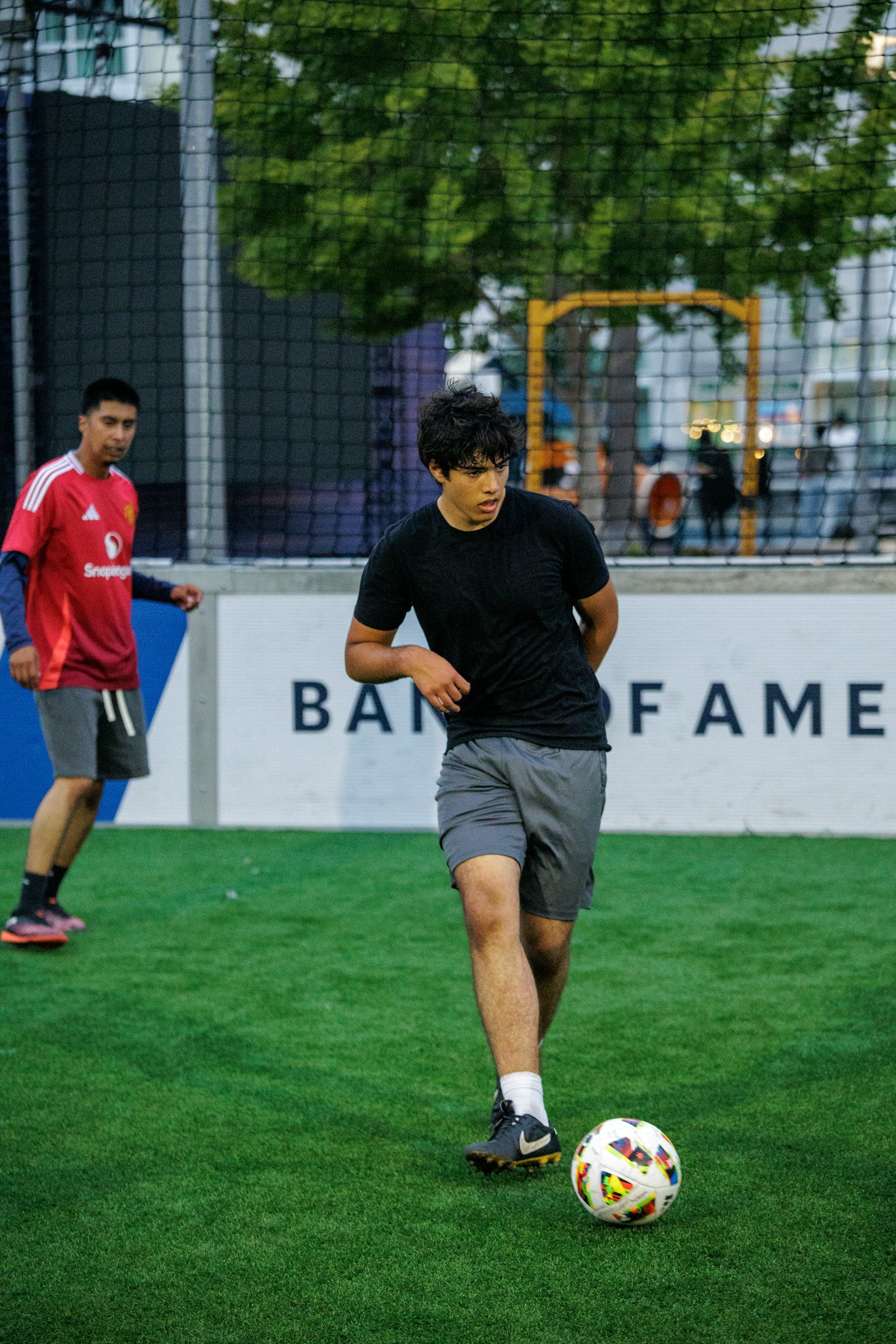
A 15-minute practice routine for soccer skills
| Minutes | Practice | Success measure |
|---|---|---|
| 0–3 | Easy dribble with both feet; inside and outside touches | Eyes up, ball close |
| 3–6 | Inside cuts, outside cuts and drag-backs around a marker | Eight controlled turns each side |
| 6–9 | Body feint and step-over, then accelerate for three strides | Clean exit touch each attempt |
| 9–12 | Cruyff turn and fake shot at low speed | Balanced turn without chasing the ball |
| 12–15 | Partner or passive-defender 1v1s, switch sides | Pick the move based on defender position |
For a solo session, a cone can mark where the defender would stand, but it cannot react. Progress to a passive defender, then a live one who can move and win the ball. Focus on making a useful decision, not merely completing a trick. For more repeatable ball-control exercises, see our separate soccer dribbling drills guide; that article develops touch and control, while this guide explains individual deception moves.
When should you use a soccer skill move?
Look up before the challenge. If the defender is moving quickly toward you, a simple outside cut or drag-back is often safer. If the defender is balanced and waiting, a body feint or step-over may cause them to shift their weight. If you are trapped near the touchline, a Cruyff turn can help reverse direction. If a teammate is free, a pass may be better than attempting a 1v1.
Effective moves use timing, deception and acceleration. A second move is only useful if the first did not create the opening. This is also why elite players sometimes look simple: they spend fewer touches getting around a defender.
Common soccer moves mistakes
- Doing a feint too early: the defender is too far away to react.
- Watching the ball continuously: you miss the open lane or teammate.
- Taking a huge exit touch: the defender intercepts it.
- Using only one foot: you become predictable when the space changes sides.
- Forcing tricks at the wrong moment: a simple pass often preserves possession.
- Never training against a person: cones cannot teach timing against an active defender.
Frequently asked questions
What is the easiest soccer move for a beginner?
The inside cut or drag-back. Both teach close contact with the ball and a controlled change of direction without demanding complex footwork.
What is the difference between a step-over and scissors?
Coaching terminology varies and the names are sometimes interchangeable. Both describe a leg movement around or across the ball that sells a fake direction before an exit touch.
How many moves should a beginner practice?
Master two or three first: one simple cut, a turn and one feint. Add a new move only when you can perform the others with both feet and under light pressure.
Will soccer moves make me faster?
Not necessarily. They help you create and exploit space. Running speed, first-step acceleration, balance and decision-making still matter.
Bottom line: Start with the cut, drag-back and body feint; progress to step-overs and Cruyff turns. Practise the move and its exit together, then use small 1v1 games to learn when it is worth trying. This guide describes general techniques rather than claiming that any particular session or drill was personally tested.