
Quick answer: The Lunar Roving Vehicle was a battery-powered electric vehicle used by astronauts on Apollo 15, 16 and 17. It let crews travel farther from their lunar modules, transport scientific equipment and bring back more samples than they could have carried on foot.
Overview
The Lunar Roving Vehicle was a battery-powered electric vehicle used by astronauts on Apollo 15, 16 and 17. It let crews travel farther from their lunar modules, transport scientific equipment and bring back more samples than they could have carried on foot. This guide separates observed facts from assumptions and explains the details that matter most to readers.
Which Apollo missions carried a rover
Apollo 15 first used the Lunar Roving Vehicle in 1971. Apollo 16 and Apollo 17 each brought their own rover in 1972. Earlier Apollo landings did not include a drivable rover.
How the lunar rover was built
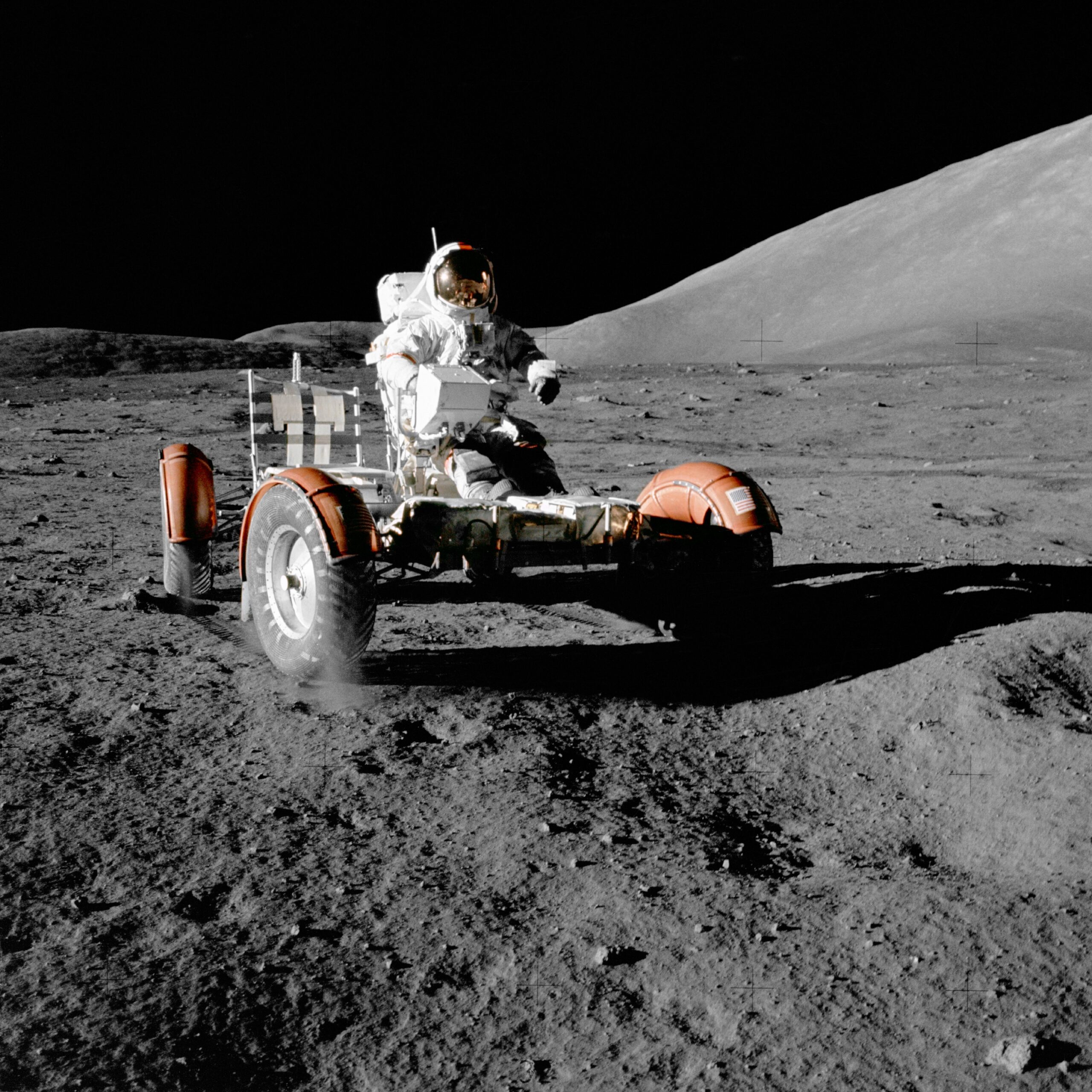
The lightweight open-frame vehicle had four wire-mesh wheels, electric drive motors, seats for two astronauts and a navigation display. It folded for transport on the lunar module and was deployed after landing.
Why electric power worked on the Moon
The rover ran on batteries rather than a gasoline engine. Combustion engines need an oxidizer and are poorly suited to the airless lunar surface; battery-powered electric motors avoid that requirement.
How astronauts navigated
The rover’s navigation system estimated direction and distance traveled using a gyroscope and wheel rotation measurements. Crews still planned routes carefully so they could return to the lunar module.
What the rover carried
Astronauts used it to transport tools, experiments, cameras and collected rocks. It also provided a platform for observations and photographs during geology stops.
What happened to the rovers
All three Apollo lunar rovers were left on the Moon. No Apollo rover drove back to Earth; the astronauts returned in their spacecraft.
Why NASA’s rover photos matter
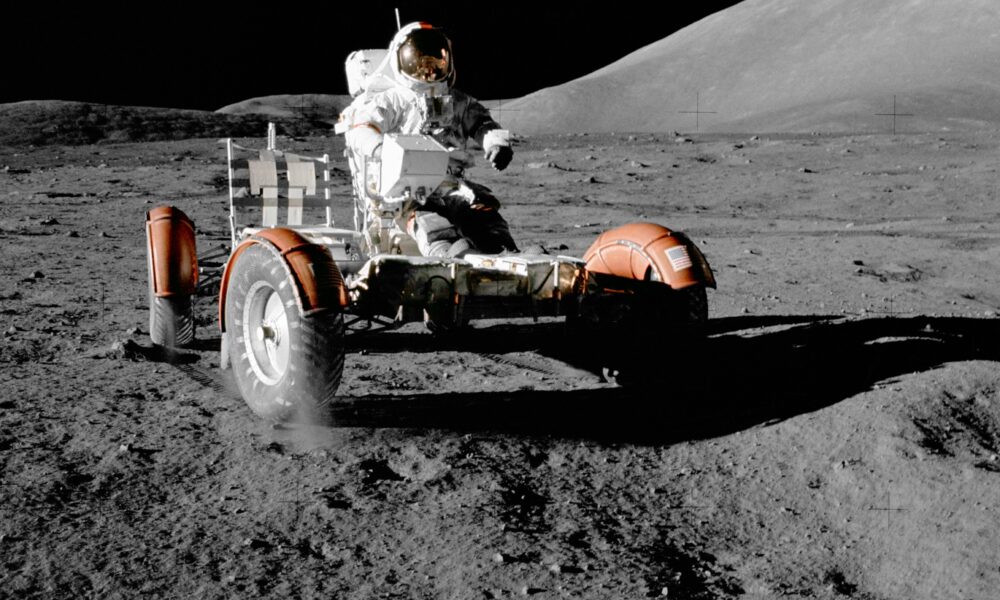
Real Apollo images show dust-coated astronauts, the rover’s wire wheels and the terrain they crossed. These are historical photographs, not concepts of a future Moon vehicle.
Key facts at a glance
- Which Apollo missions carried a rover: Apollo 15 first used the Lunar Roving Vehicle in 1971.
- How the lunar rover was built: The lightweight open-frame vehicle had four wire-mesh wheels, electric drive motors, seats for two astronauts and a navigation display.
- Why electric power worked on the Moon: The rover ran on batteries rather than a gasoline engine.
- How astronauts navigated: The rover’s navigation system estimated direction and distance traveled using a gyroscope and wheel rotation measurements.
- What the rover carried: Astronauts used it to transport tools, experiments, cameras and collected rocks.
Frequently asked questions
How many people could ride an Apollo lunar rover?
Two astronauts.
Was the lunar rover remote controlled?
The Apollo rovers were driven by astronauts on the surface, unlike robotic rovers on Mars.
The takeaway
The Lunar Roving Vehicle was a battery-powered electric vehicle used by astronauts on Apollo 15, 16 and 17. It let crews travel farther from their lunar modules, transport scientific equipment and bring back more samples than they could have carried on foot. To explore the evidence further, consult the original NASA mission or science documentation rather than an unattributed social media graphic.
Primary source: NASA official information.

Other Articles

Europa Clipper Mission: NASA’s Search for a Habitable Ocean World