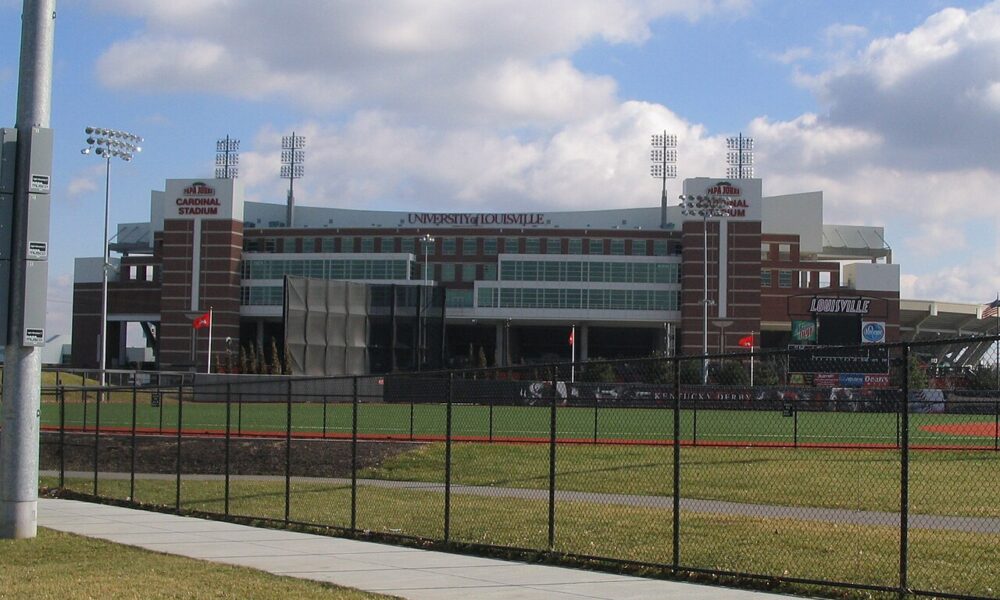

Louisville beat Florida State 44–20 on Friday, October 9, 2026, at L&N Stadium in Louisville. Florida State built a 14–0 first-quarter lead, but the Cardinals answered with 35 consecutive points, powered by a 397-yard rushing performance. Running back Issac Brown rushed for 235 yards and two touchdowns, including a 97-yard score that shifted the game. The result and individual totals are confirmed by Louisville Athletics’ official recap and box score.
Checked against official team and league information on October 11, 2026. Photos are archival and do not depict these October 2026 games.
Florida State vs Louisville: final score and quarter-by-quarter result
| Team | Q1 | Q2 | Q3 | Q4 | Final |
|---|---|---|---|---|---|
| Florida State | 14 | 0 | 0 | 6 | 20 |
| Louisville | 0 | 14 | 14 | 16 | 44 |
The home team improved to 3–3 overall and 2–2 in the ACC; Florida State fell to 3–3 and 1–2 in conference play. The score tells an unusual story: Louisville did not score in the first quarter, then won the remaining three quarters by a combined 44–6. The decisive spell was not one isolated break. It was a shift in field position, rushing efficiency and the number of possessions the Cardinals turned into touchdowns.
Why Louisville turned a 14-point deficit into a decisive win
1. Issac Brown’s 97-yard touchdown reversed the momentum
Florida State started efficiently. Quarterback Ashton Daniels finished a 14-play opening drive with a seven-yard touchdown run, then connected with Micahi Danzy for a 25-yard score. That made it 14–0 with just over two minutes left in the opening quarter.
Early in the second period, Brown broke a 97-yard touchdown run. The play took Louisville from deep in its own territory directly into the end zone and instantly reduced the deficit to one possession. Louisville identifies the rush as the longest play in program history. It mattered beyond its length: the Cardinals no longer had to spend a long possession rebuilding momentum or field position. A single play had changed both.
2. The running game kept producing explosive plays
Brown’s night did not end with the record-length sprint. He later scored on a 58-yard rush in the fourth quarter, finishing with 235 yards and two touchdowns. Louisville logged 397 rushing yards as part of 537 total yards, meaning most of its offense came on the ground. The ability to threaten a long run repeatedly made the early 14-point deficit less defining than it first appeared.
Marquise Davis tied the game 14–14 with a three-yard touchdown run in the second quarter. In the third, quarterback Lincoln Kienholz found the end zone twice on the ground, first from three yards and then from one. Braxton Jennings added a 44-yard rushing touchdown early in the fourth. By that point, Louisville had moved ahead 35–14 without asking its passing game to carry the comeback.
3. Florida State could not turn its fast start into sustained scoring
Daniels and Danzy combined for Florida State’s first-half passing touchdown and another two-yard touchdown reception in the fourth quarter. Those plays were real responses, but they were separated by a long scoreless spell during the heart of Louisville’s run. The Seminoles’ lone second-half touchdown reduced the gap to 35–20, and Brown’s second scoring run came shortly afterward. Instead of a sustained late comeback, Florida State faced another three-score deficit.
The five plays that explain the 44–20 result
- First quarter: Daniels’ seven-yard rushing touchdown establishes the 7–0 lead.
- First quarter: Danzy’s 25-yard catch extends Florida State’s advantage to 14–0.
- Second quarter, 9:16 remaining: Brown’s 97-yard run cuts the score to 14–7.
- Third quarter: Kienholz scores twice on the ground, putting Louisville ahead 28–14.
- Fourth quarter: Jennings’ 44-yard scoring run and Brown’s 58-yard touchdown prevent Florida State from recovering.
These scoring plays can be checked against the Louisville official scoring summary. The sequence is more useful than describing the result only as an upset or a collapse: it shows exactly when the home team began winning the line of scrimmage and when the Seminoles ran out of realistic opportunities to recover.
Key Louisville and Florida State statistics
| Statistic | Confirmed figure | Why it matters |
|---|---|---|
| Louisville team rushing | 397 yards | Ground production drove the comeback |
| Louisville total offense | 537 yards | Consistent gains after an empty first quarter |
| Issac Brown rushing | 235 yards, 2 TD | Both explosive scoring plays were on the ground |
| Lincoln Kienholz passing | 11 completions on 15 attempts, 140 yards | Passing complemented a run-heavy approach |
| Game score after Q1 | Florida State 14, Louisville 0 | Shows the size of the comeback |
As of the official October 9 recap, Louisville also credited Stanquan Clark and TJ Capers with 10 tackles each, while Kaleb Beasley recorded a fourth-quarter interception. Individual totals are game statistics, not claims about the entire season or future rankings.
What this result means for both teams
Louisville’s win gives its offense a clear example of how quickly explosive rushing plays can change a game even after a slow opening quarter. The performance is notable because multiple ball carriers and the quarterback scored rushing touchdowns; it was not solely a one-player rescue. For Florida State, the more practical question is how to sustain productive early drives when an opponent’s running game starts finding space. Those are observations from this game, not predictions about either team’s remaining schedule.
For another dramatic college football finish from the same weekend, read AVARIXO’s Kentucky vs LSU overtime recap.
Frequently asked questions
Who won Florida State vs Louisville in 2026?
Louisville won 44–20 on October 9, 2026, at L&N Stadium, according to the school’s official box score.
How many rushing yards did Issac Brown have?
Brown finished with 235 rushing yards and two rushing touchdowns, including a 97-yard run and a 58-yard run.
Was Florida State ahead in the first quarter?
Yes. Florida State led 14–0 after the first quarter, but Louisville scored 35 unanswered points before FSU scored again in the fourth.
Where can I find the official final score?
See Louisville Athletics or the Florida State Athletics recap for the primary game reporting.
Featured-image credit: Ken Lund, Wikimedia Commons, CC BY-SA 2.0. Archival view of Louisville’s football venue taken in 2006; not an image of this game.

Other Articles

Iowa 41, Washington 24: Moulton and Hecklinski Dominate in Seattle
2026 WNBA Finals Schedule: Dream vs Valkyries Dates, TV and Times