
Quick answer: Henri B. Kagan of France and Kenso Soai of Japan won the 2026 Nobel Prize in Chemistry for discoveries involving non-linear effects and autocatalysis in asymmetric organic synthesis. Their work helped chemists understand how a reaction can favor one of two molecular mirror images and, in Soai’s case, amplify a tiny initial imbalance until one “handed” form dominates. The discoveries matter because molecular handedness is central to biology, pharmaceuticals and modern chemical manufacturing.
Who won the 2026 Nobel Prize in Chemistry?
The Royal Swedish Academy of Sciences awarded the 2026 chemistry prize to Henri B. Kagan and Kenso Soai. The official citation recognizes their discovery of non-linear effects and autocatalysis in asymmetric organic synthesis.
| Laureate | Known for | Why it matters |
|---|---|---|
| Henri B. Kagan | Non-linear effects in asymmetric catalysis | Showed that a small imbalance in a chiral catalyst can produce a much larger imbalance in the reaction product |
| Kenso Soai | Asymmetric autocatalysis | Developed reactions in which the product helps make more of itself and amplifies one molecular handedness |
The two laureates share the 12 million Swedish kronor prize.
What are “mirror-image” molecules?
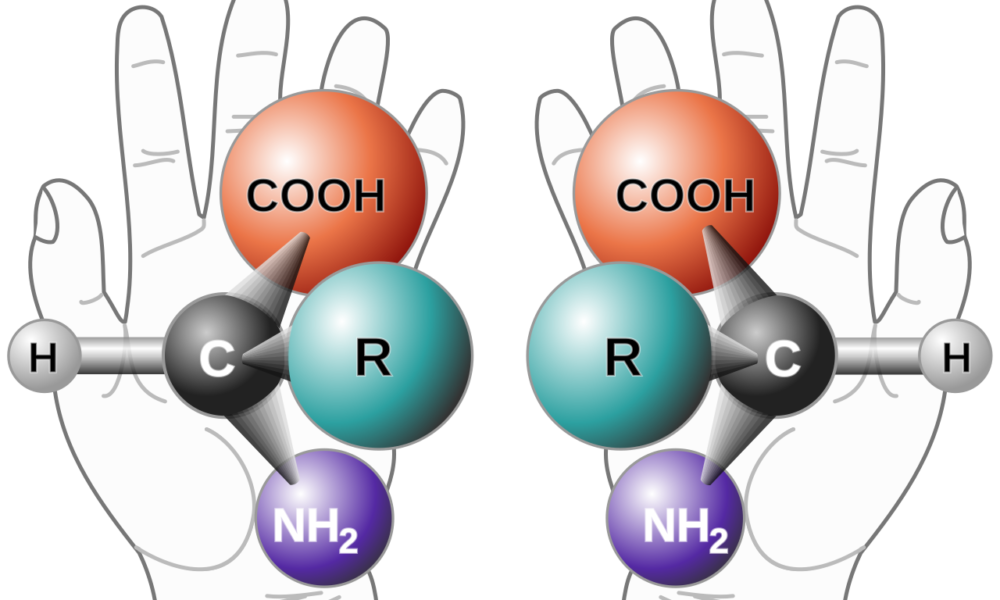
Some molecules exist in two forms that contain the same atoms and connections but are arranged as mirror images of each other. Chemists call this property chirality. A common analogy is a pair of hands: your left and right hands look like mirror images, but you cannot rotate one so that it perfectly matches the other.
The two forms of a chiral molecule are called enantiomers. In many biological systems, one enantiomer can interact very differently from the other because proteins, enzymes and receptors are themselves three-dimensional and chiral.
Why was homochirality such a major chemistry puzzle?
Life on Earth strongly favors one molecular handedness for many important building blocks. Amino acids in proteins, for example, overwhelmingly use one handed form. Chemists have long asked how a system that starts with no strong preference can end up dominated by one side.
Traditional laboratory reactions often produce both mirror images in nearly equal amounts unless a chiral influence is introduced. Kagan and Soai showed mechanisms by which a small asymmetry can become much larger, offering a chemical route toward homochirality.
What did Henri Kagan discover?
Kagan’s work on asymmetric catalysis showed that the relationship between the chirality of a catalyst and the chirality of the product does not always scale in a simple one-to-one way. In the non-linear effects he identified, a relatively small excess of one catalyst form could generate a much larger excess of one product enantiomer.
That result changed how chemists thought about asymmetric reactions. Instead of assuming that the purity of the chiral catalyst directly dictated the purity of the product, researchers had to account for amplification effects created by the reaction system itself.
What is the Soai reaction?
Soai’s breakthrough was asymmetric autocatalysis: a reaction in which the chiral product acts as a catalyst for making more of itself. If one mirror-image product appears in even a tiny excess, it can accelerate production of the same handed form. Repeated cycles amplify the imbalance.
In later work, Soai and collaborators demonstrated reactions capable of reaching an extremely high preference for one mirror image. The Royal Society of Chemistry describes the work as a key demonstration of how homochirality can emerge from an initially tiny asymmetry.
Why does this matter for medicine?
Modern drug molecules are often chiral. Because biological targets are three-dimensional, the two mirror-image forms of a compound can behave differently in the body. Being able to make one desired enantiomer efficiently is therefore a major goal in pharmaceutical chemistry.
Kagan’s and Soai’s discoveries are fundamental rather than a recipe for one particular medicine. Their importance lies in the broader toolkit and understanding they gave chemists for controlling asymmetric synthesis and amplifying molecular handedness.
Why the discovery also matters beyond pharmaceuticals
Asymmetric synthesis is used in the development of fragrances, flavors, agricultural chemicals and advanced materials as well as medicines. More broadly, the work gives chemists a laboratory model for studying one of the deepest questions in chemical evolution: how one handedness can become dominant when the starting conditions are almost balanced.
That is why the 2026 prize connects practical chemical manufacturing with a more fundamental scientific question about the origin of molecular asymmetry in living systems.
How much money do the 2026 chemistry laureates receive?
The 2026 Nobel Prize in Chemistry carries 12 million Swedish kronor. Because there are two laureates, the prize is shared between Kagan and Soai according to the Nobel award decision.
Frequently asked questions
Who won the 2026 Nobel Prize in Chemistry?
Henri B. Kagan and Kenso Soai won the prize for discoveries involving non-linear effects and autocatalysis in asymmetric organic synthesis.
What is chirality in simple terms?
Chirality means an object or molecule has a mirror image that cannot be perfectly superimposed on it, similar to the relationship between left and right hands.
What is asymmetric synthesis?
Asymmetric synthesis is a chemical process designed to produce more of one mirror-image form of a chiral molecule than the other.
What is autocatalysis?
Autocatalysis occurs when a reaction product helps catalyze the formation of more of that same product. In the Soai reaction, this can amplify one molecular handedness.
Why are mirror-image molecules important in drugs?
Biological targets are three-dimensional, so two mirror-image forms of the same molecule can interact differently with enzymes, receptors and other molecules in the body.
Sources
- Royal Society of Chemistry: 2026 Nobel Prize in Chemistry
- Associated Press: Kagan and Soai win 2026 chemistry Nobel
- Wikimedia Commons: chirality illustration
For more timely science and current-event explainers, browse AVARIXO News & Explainers.

Other Articles