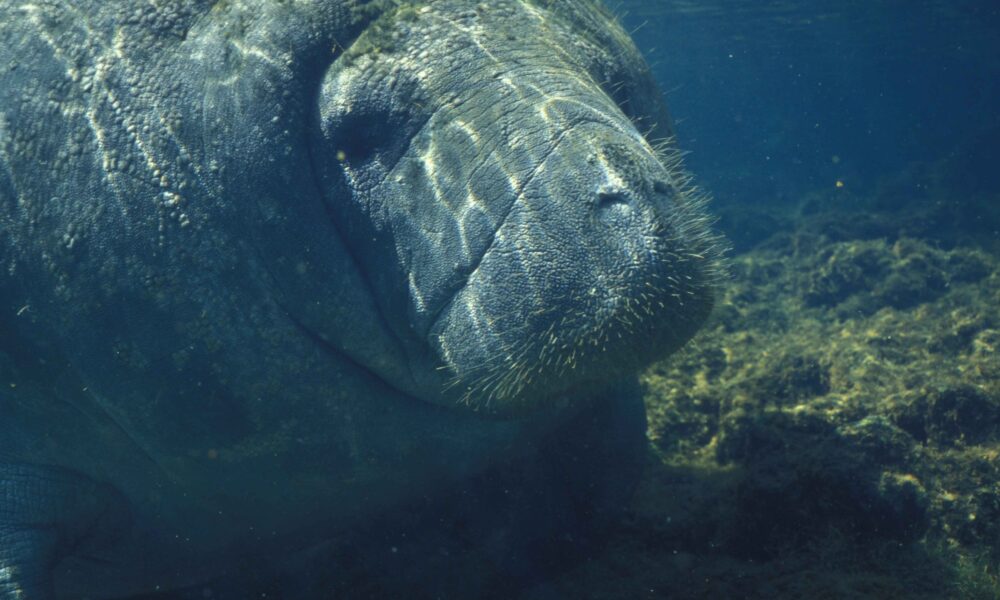
Sirenians Explained: Real Manatee Photo, Dugongs, Sea Cows and Why They Are Different

Quick answer: Sirenians are a group of slow-moving, mostly herbivorous aquatic mammals that includes manatees and dugongs. Unlike dolphins and whales, which evolved as active swimmers hunting animal prey, sirenians feed mainly on seagrasses and other aquatic plants. Living species belong to the mammalian order Sirenia. They must surface to breathe air, nurse their young with milk and use sensitive whisker-like hairs to investigate their surroundings. The famous extinct Steller’s sea cow was also a sirenian and was hunted to extinction by the eighteenth century.
What are sirenians?
The order Sirenia includes three living species of manatees—the West Indian, Amazonian and African manatees—and one living species of dugong. Their closest living terrestrial relatives are in the wider group of mammals that includes elephants and hyraxes, rather than seals or dolphins. Their bulky body shape, flipper-like forelimbs and dense bones support life in shallow coastal and freshwater habitats where they graze.
| Animal | Scientific name | Main range |
|---|---|---|
| West Indian manatee | Trichechus manatus | Caribbean, Gulf of Mexico, southeastern U.S. and tropical Atlantic |
| Amazonian manatee | Trichechus inunguis | Amazon basin freshwater |
| African manatee | Trichechus senegalensis | Western and central African waters |
| Dugong | Dugong dugon | Indian and western Pacific tropical coastal seas |
| Steller’s sea cow (extinct) | Hydrodamalis gigas | Historical North Pacific islands |
The U.S. Fish and Wildlife Service’s West Indian manatee profile and NOAA marine mammal teaching resources explain the broader group.
How can you distinguish manatees from dugongs?
The tail is one of the quickest visual clues. Manatees have a broad, rounded, paddle-like tail, whereas dugongs have a notched, fluked tail that resembles a whale’s. Dugongs are almost entirely marine and specialize in feeding on seagrass meadows. Manatees include species living in freshwater rivers and estuaries, and the West Indian manatee uses warm coastal and inland waters.
Do dugongs have trunks?
Dugongs have a downward-facing mouth and a thick muzzle designed for grazing seagrass. It is not an elephant-like trunk. Mature male dugongs may develop tusks, but these are not always visible in a swimming photograph. An illustration that exaggerates the snout into a long proboscis would misrepresent the real species.
Why do sirenians eat plants?
Manatees and dugongs are among the most plant-focused marine mammals. They graze on submerged vegetation, including seagrasses and freshwater aquatic plants, often spending long periods moving slowly through feeding areas. Some manatees occasionally consume animal material, but plants dominate their diet. Grazing can influence seagrass growth and nutrient cycling, making healthy sirenian populations part of a functioning coastal ecosystem.
How much do they eat?
A large sirenian may consume a considerable fraction of its body mass in aquatic plants each day, depending on species, size, season and forage quality. Simple claims that “every manatee eats exactly 100 pounds daily” are not scientifically precise. Conservation managers monitor habitats because abundant healthy seagrass is crucial for many coastal populations.
How do sirenians breathe and move?
They are mammals with lungs, not fish with gills. The nostrils sit high on the muzzle, allowing an animal to take air at the water’s surface. Foreflippers help steer and manipulate plants. A strong tail provides forward propulsion, with shape differing between manatees and dugongs. The animals can hold their breath for minutes while resting or feeding but cannot remain underwater indefinitely.
What makes sirenians vulnerable?
Their slow, surface-oriented behavior brings them into conflict with boats. Propellers and hulls can inflict serious wounds. Other risks include fishing-gear entanglement, habitat loss, polluted waterways, cold exposure and disruptions to food supplies. In Florida, sudden declines in available seagrass contributed to a large mortality event among manatees in the early 2020s. Managing safe navigation speeds and restoring aquatic habitat are therefore important conservation tools.
What was Steller’s sea cow?
Steller’s sea cow was a much larger relative that lived in northern Pacific waters and was described by European explorers during the eighteenth century. The species was driven to extinction within a few decades of its scientific description, largely due to intense hunting. Its loss demonstrates that even very large aquatic mammals can disappear rapidly when human pressures become extreme.
Where can you see manatees safely?
In Florida, manatees often gather in warmer rivers and springs during cool weather. Popular viewing locations include regulated refuges where visitors are expected to keep their distance. The Crystal River National Wildlife Refuge provides specific rules, including protected sanctuaries and seasonal arrangements. Do not pursue, touch, feed or block the path of manatees to get a photograph.
Sirenians versus whales and seals
| Feature | Sirenians | Whales and dolphins | Seals and sea lions |
|---|---|---|---|
| Typical diet | Mostly aquatic plants | Animal prey, including krill or fish | Fish and other animal prey |
| Hind limbs | No externally visible hind feet | No externally visible hind feet | Rear flippers visible |
| Tail movement | Large horizontal or rounded paddle | Horizontal flukes | Hind flippers chiefly assist swimming |
| Closest evolutionary relatives | Elephant-related mammal lineage | Even-toed ungulate lineage | Carnivoran lineage |
Frequently asked questions
Are manatees and dugongs both sirenians?
Yes. They belong to the living mammalian order Sirenia.
Are sirenians whales?
No. They are a distinct group of aquatic mammals, though both breathe air and nurse young.
How do manatees differ from dugongs?
Manatees have rounded paddle tails; dugongs have whale-like fluked tails. Their geographic ranges and habitats also differ.
What is a sea cow?
It is a common name applied to sirenians, especially manatees and the extinct Steller’s sea cow.
Can a sirenian live in freshwater?
Yes. Manatees can live in freshwater; the Amazonian manatee lives in inland waters.
Editorial review October 2026. Verified sources: NOAA marine mammals, USFWS manatee profile, Crystal River refuge guidance.

Other Articles