
Quick answer: NASA’s Double Asteroid Redirection Test, or DART, deliberately struck the small asteroid moonlet Dimorphos on September 26, 2022. It was the first mission to demonstrate changing an asteroid’s motion through a kinetic impact, an important technique being studied for planetary defense.
Why NASA targeted Dimorphos
Dimorphos orbits the larger asteroid Didymos. Because its orbit could be measured from Earth, researchers could detect a change after impact without needing to move the entire binary system out of its orbit around the Sun.
How DART navigated to its target
The spacecraft used autonomous navigation during its final approach, relying on camera images to distinguish the smaller moonlet from the larger asteroid. Its DRACO camera returned increasingly detailed views until impact.
What changed after the collision
Astronomers measured a shortening of Dimorphos’s orbital period around Didymos. The change was larger than a simple momentum-transfer calculation might suggest because material ejected from the impact also carried momentum.
What the final images show
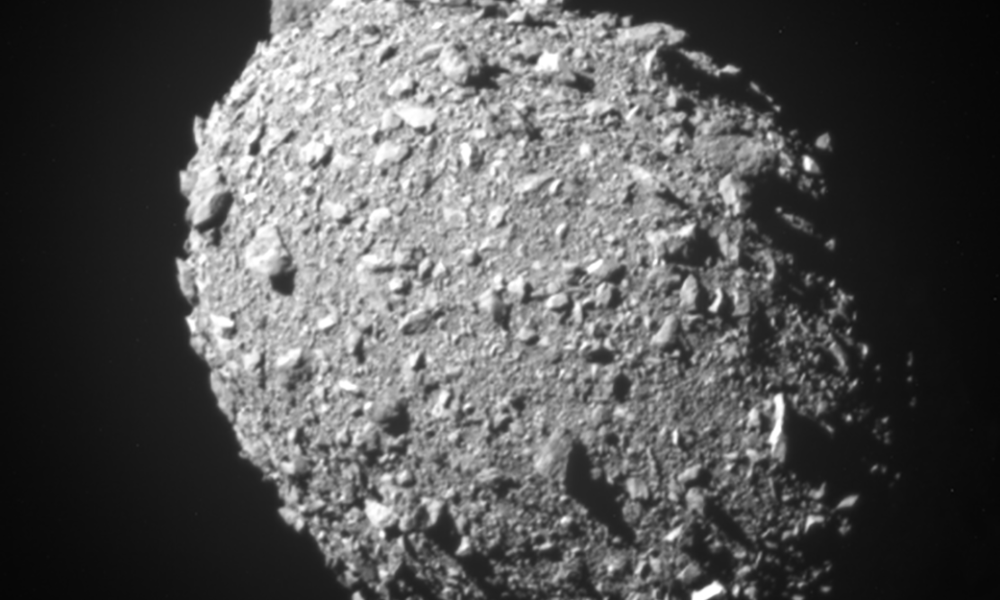
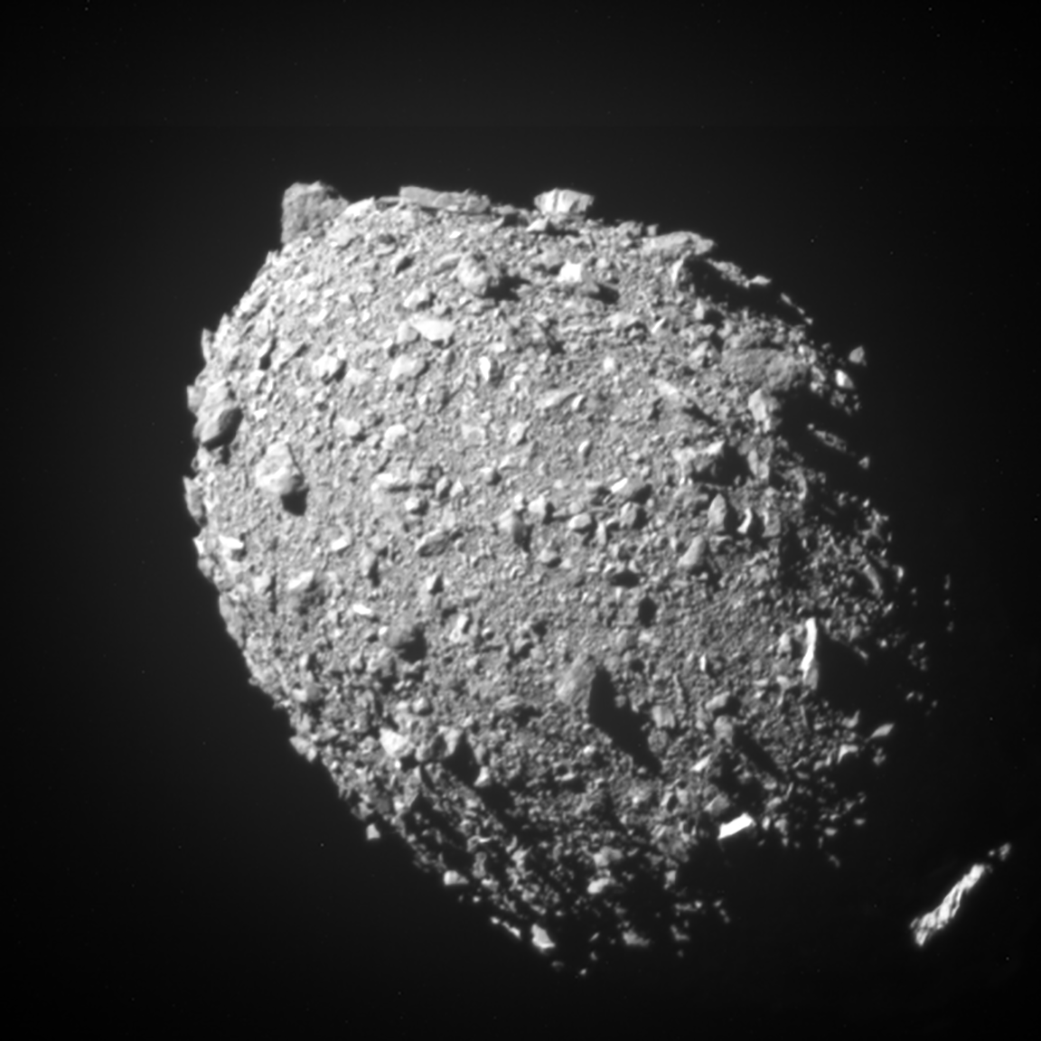
The spacecraft’s final photographs reveal the rocky surface of Dimorphos. The last complete image was taken seconds before impact. These are real mission observations, not computer-generated scenes.
Could DART have threatened Earth
The mission was planned against an asteroid system that posed no threat to Earth. It was a controlled experiment in planetary defense, not an emergency response to an incoming asteroid.
What scientists still need to learn
The effectiveness of an impact depends on an asteroid’s structure, composition, rotation and the amount of material ejected. One successful test does not mean every possible asteroid threat has a solved response.
At a glance: what to remember
- Why NASA targeted Dimorphos: Dimorphos orbits the larger asteroid Didymos.
- How DART navigated to its target: The spacecraft used autonomous navigation during its final approach, relying on camera images to distinguish the smaller moonlet from the larger asteroid.
- What changed after the collision: Astronomers measured a shortening of Dimorphos’s orbital period around Didymos.
- What the final images show: The spacecraft’s final photographs reveal the rocky surface of Dimorphos.
Frequently asked questions
Did DART destroy Dimorphos?
No. It changed the moonlet’s orbit and produced ejecta; the target was not completely destroyed.
Was DART a nuclear mission?
No. It used a high-speed spacecraft collision, not a nuclear explosive.
Bottom line
NASA’s Double Asteroid Redirection Test, or DART, deliberately struck the small asteroid moonlet Dimorphos on September 26, 2022. It was the first mission to demonstrate changing an asteroid’s motion through a kinetic impact, an important technique being studied for planetary defense. For mission milestones and updated findings, refer to the original space agency rather than treating an old timeline as a current announcement.
Primary source: NASA official mission and science documentation.

Other Articles