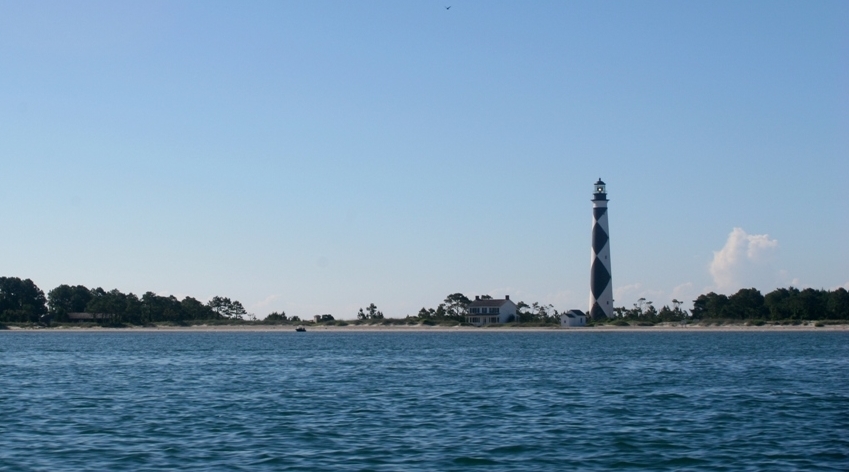

Quick answer, updated October 13, 2026: Cape Lookout National Seashore is a remote stretch of barrier islands off the coast of North Carolina. You can visit the beaches, see the black-and-white diamond-patterned lighthouse from outside, explore historic areas, camp primitively and look for the wild horses of Shackleford Banks. The Cape Lookout Lighthouse itself is closed to climbing during stabilization work. Passenger ferries operate from Beaufort and Harkers Island, and vehicle ferry routes serve the Core Banks. There is no National Park Service entrance fee, but ferries, rentals and some permits have separate costs.
The central planning mistake is treating this like a beach with a road and restaurants. It is a boat-access national seashore where tides, ferry departures, limited services and changing weather determine your day. Use the official NPS conditions page and your ferry operator’s schedule immediately before traveling.
Where is Cape Lookout National Seashore?
The seashore lies along North Carolina’s southern Outer Banks, offshore from communities such as Beaufort and Harkers Island. It covers three main barrier-island areas: South Core Banks, which includes the lighthouse; North Core Banks, which includes remote beach and historic Portsmouth Village access; and Shackleford Banks, known for wild horses and shelling. Much of the land is undeveloped, with sandy paths rather than paved roads.
The Harkers Island Visitor Center can be reached by car, at 1800 Island Road, Harkers Island, North Carolina. The islands themselves require a boat, such as an authorized passenger ferry, vehicle ferry, personal boat or appropriate watercraft. Do not confuse this seashore with Cape Hatteras National Seashore farther north or with Cape Lookout State Park in Oregon.
Which island should you choose?
| Area | Why visit | How people usually get there | Planning concern |
|---|---|---|---|
| South Core Banks / Cape Lookout Light Station | Lighthouse views, beach, keeper’s quarters, shelling | Passenger ferry from Harkers Island or Beaufort; vehicle ferry via Davis for beach driving | Lighthouse climbing closed; ferry and beach access vary |
| Shackleford Banks | Wild horses, undeveloped beach, shelling and birding | Passenger ferry from Beaufort or Harkers Island | No drinking water, no vehicles, limited seasonal restrooms |
| North Core Banks / Portsmouth Village | Remote beaches, history, fishing and primitive camping | Vehicle ferry via Atlantic or boat-based Portsmouth access | Little infrastructure; Long Point cabins remain unavailable |
If you have only a few hours, South Core Banks near the lighthouse is the most straightforward way to see the park’s recognizable landmark. For wildlife photography, consider Shackleford Banks. For remote multi-day camping, research the appropriate Core Banks ferry, beach-driving restrictions and supplies first.
How to get to Cape Lookout: ferry routes compared
Most visitors cannot drive directly onto the islands. The NPS-authorized passenger ferry concessioner is Island Express Ferry Service, which serves the Cape Lookout lighthouse area and Shackleford Banks from Beaufort and Harkers Island. Authorized vehicle ferries use different departure points and require a vehicle reservation.
| Departure | Typical destination | Approximate crossing (NPS) | Best for |
|---|---|---|---|
| Harkers Island, NC | East Shackleford Banks or Cape Lookout Lighthouse | About 30 minutes | Passenger day trips |
| Beaufort, NC | West Shackleford Banks | About 20 minutes | Horse watching and beach outings |
| Beaufort, NC | Cape Lookout Lighthouse area | About 40 minutes | Light-station visit |
| Davis, NC | Great Island on South Core Banks | About 45 minutes | Reserved vehicle ferry trips |
| Atlantic, NC | Long Point / North Core Banks | About 60 minutes | Reserved vehicle access to North Core Banks |
| Ocracoke, NC | Portsmouth Village access | About 20 minutes | Historic village trips |
These are NPS approximate crossing times, not departure times or guarantees. Ferry schedules, boat availability and prices change with season and weather. Check NPS’s authorized ferry directory, then book with the operator serving your actual destination. Select the correct landing; a ticket to Shackleford Banks is not automatically a ticket to the lighthouse.
What is different about the lighthouse ferry dock?
The National Park Service reports that a December 2022 storm damaged the ferry dock at Cape Lookout Lighthouse. Its published ferry guidance describes limited dock access and notes that the docking area is not fully wheelchair-accessible until permanent repairs are completed. Dock arrangements may change during repairs, so call the ferry operator for the current boarding and landing procedure before assuming that a dock, beach landing, boardwalk or accessible route will be available.
Can you visit without a ferry reservation?
A private boat is a possible alternative for properly prepared boaters who understand local navigation, shoals, tides and rules. For most first-time visitors, a reserved authorized ferry is easier. Arriving at a mainland visitor center does not guarantee an unsold seat on a boat, especially on weekends or during weather-limited operations. A reservation for a ferry is separate from park admission.
Can you climb Cape Lookout Lighthouse in 2026?
No. The lighthouse remains closed to public climbing while stabilization and restoration work is underway. The NPS says safety inspections in 2021 identified structural concerns; a project is addressing them. The lighthouse structure remains an important historic landmark, but seeing it from the beach or the light-station grounds is different from entering and climbing it. Avoid tour descriptions that still advertise a climb without an updated date.
As of the park’s April 8, 2026 conditions update, the lighthouse is listed as closed, while the Light Station Visitor Center and Keeper’s Quarters Museum are separately listed as open seasonally. The visitor center is generally seasonal, and the keeper’s quarters are described by NPS as open from mid-March through October. Hours and access can vary with weather, ferry operations and maintenance.
Official details: Visiting Cape Lookout Lighthouse and current park conditions.
What can you still do around the lighthouse?
View the lighthouse exterior and its distinctive diamond pattern; learn about the keepers at the museum if it is operating; walk the boardwalk and signed routes; and enjoy the pedestrian ocean beach. Look for the historical setting rather than planning around an indoor staircase climb. The NPS also cautions that cultural artifacts around the original 1812 lighthouse site must not be removed.
Cape Lookout ferry prices, entrance fees and other costs
Park admission: $0. The National Park Service does not charge an entrance fee to Cape Lookout National Seashore. That is not a free transport ticket, campground service or cabin reservation. Passenger ferries charge by trip; vehicle ferries, cabins, certain guided programs and required permits can cost extra.
| Expense | What to expect | Where to confirm |
|---|---|---|
| NPS entrance admission | No entrance fee | NPS Fees & Passes |
| Passenger ferry | Variable ticket price by destination, age and season | Authorized operator at NPS ferry directory |
| Vehicle ferry | Separate reserved crossing cost based on vehicle and route | Authorized vehicle ferry company |
| Primitive tent camping | Generally no basic camping permit; groups of 25+ need a special permit | NPS Beach Camping |
| Drive on the beach | Off-road vehicle permit required | NPS Beach Driving |
| Cabins / tours | Reservations and varying charges | NPS lodging or program page |
Check the actual amount at booking rather than relying on a fixed price copied from an older blog. NPS also says the America the Beautiful pass does not provide a Cape Lookout discount because the park charges no entrance fee.
Best things to do at Cape Lookout National Seashore
1. See the iconic black-and-white lighthouse
For a classic first visit, photograph the lighthouse from approved public viewpoints, walk the light-station paths and check whether the museum is open. Because climbing is unavailable during stabilization, allocate your time to the exterior, museum and shoreline rather than expecting a tower ticket. Try morning or later afternoon light for strong contrast on the diamond pattern, while keeping the ferry’s return schedule in mind.
2. Look for wild horses on Shackleford Banks
The wild horse herd is one of the reasons visitors choose Shackleford Banks. The animals roam freely, so seeing them is not guaranteed. Bring binoculars or a zoom lens; do not pursue, surround, feed or touch them. NPS advises giving horses space and avoiding separation of family groups. For a deeper introduction, consider the park’s ranger-guided Horse Sense and Survival Tours, subject to actual program availability.
3. Search the beach for shells without taking protected items
Shelling is popular, especially after changes in surf or weather. Focus on loose shells already on the beach, and follow park rules about collecting and protecting wildlife. Do not remove archaeological remains, historic materials, live animals or other protected resources. Wear shoes: shells and hidden debris can be sharp.
4. Explore Portsmouth Village’s history
Historic Portsmouth Village on North Core Banks preserves a different side of the Outer Banks story. It is a boat-access location, not a quick drive from the mainland. Research transportation separately from the lighthouse or Shackleford routes, and confirm any seasonal staffing, damaged facilities or closures before committing to a same-day trip.
5. Enjoy stargazing and a dark coastal sky
Cape Lookout is recognized for its dark skies. If you plan an overnight trip, prepare for wind, bugs, navigation after dark and the absence of ordinary streetlights. Use a dim red light when practical, keep a reliable weather forecast, and preserve safe access to your tent or pickup point. Do not treat dark-sky status as permission to camp in restricted historic or wildlife-protection zones.
6. Camp on the barrier islands
Camping is primitive and can be memorable, but the islands do not have developed campground loops or easy shopping. Bring food, sufficient drinking water, sturdy stakes, a trash bag, shelter suited to wind and a realistic evacuation plan. Before visiting, see the island-specific camping rules below.
Cape Lookout camping: tents, vehicles, limits and safety
NPS permits camping in many areas of the barrier islands, with clearly marked exclusions. There are no established campgrounds in the normal drive-up sense. The main rules are:
- Maximum stay: camping is limited to 14 consecutive days.
- Group size: overnight groups of 25 or more require a special-use permit.
- Shackleford Banks: tent camping only; vehicles are not permitted.
- North and South Core Banks: tent camping and permitted vehicle camping are available in allowed areas, subject to beach-driving rules.
- Where not to camp: wildlife closures, designated historic areas, dunes and other restricted zones; NPS also lists distance limitations near structures and the lighthouse.
- Vehicle access: an off-road vehicle permit is required to drive on open beaches, and the vehicle ferry must be booked separately.
- Trash: pack out everything. NPS says there are no island trash cans or collection service.
On Shackleford Banks, do not count on a freshwater source. North Core Banks also has no potable drinking water. Some seasonal water and restroom facilities are available around South Core Banks, but even there a backup supply is prudent. Use the detailed NPS camping guide for island-specific access and fire rules.
Can you sleep in an RV or drive onto the dunes?
NPS warns that sandy routes and lack of conventional roads make many RVs and trailers unsuitable. Vehicle camping is allowed only where park rules permit, generally on the ocean beach seaward of primary dunes or designated places. Driving on or through dunes and vegetation is prohibited. Never assume a rental vehicle is approved for sand driving. Four-wheel drive and proper equipment matter for personal safety, but they do not replace a permit.
Can you have a beach campfire?
NPS allows certain small beach fires with detailed restrictions; open campfires must be below the high-tide line in damp sand and no more than three feet in diameter. Weather and resource conditions can affect rules. Carry proper extinguishing water and confirm the current policy before bringing firewood or equipment.
What to pack for a ferry day trip
For a four-to-six-hour outing, pack as if you will find no restaurant, shop or drinking fountain at your particular landing. Availability differs by island and season.
- Drinking water for every traveler, plus more for heat and walking.
- Snacks or lunch, with a sealed bag to carry waste back.
- Sun protection: hat, broad-spectrum sunscreen and sunglasses.
- Bug repellent, especially in warm months, and a lightweight layer for the ferry.
- Footwear suitable for deep, hot or wet sand; closed-toe shoes if exploring rough trails.
- A downloaded map, charged phone, portable battery and a confirmed ferry return time.
- Binoculars or a telephoto lens for horse and bird watching.
- A small emergency kit and any essential prescription medicines.
The NPS Plan Your Visit page recommends carrying supplies and removing trash. Wildlife, high surf, tide changes and heat are more significant risks than many first-time visitors expect.
When is the best time to visit Cape Lookout?
Spring and autumn can be good choices for visitors who want a quieter day and are prepared for variable coastal conditions. Summer offers long daylight hours but brings stronger heat, insect exposure, storms and more demand for boats. Winter can be scenic and quiet, but some facilities or ferry services operate on reduced schedules, so it is the least forgiving season for a trip planned without confirming transportation.
The park’s mainland Harkers Island Visitor Center normally opens year-round with winter schedule changes. Seasonal island facilities and the Keeper’s Quarters Museum have their own calendars. The NPS publishes a general schedule but operators control their departure times: verify both on your actual travel date.
How do storms change a Cape Lookout itinerary?
Wind or rough water can cause the ferry operator to delay or cancel departures. An island that is open to visitors may still be inaccessible by your booked service that day. Check current forecasts, ferry alerts and NPS closures. Allow flexibility in your lodging and onward travel plans rather than making the island the only activity on a tightly timed day.
Sample first-time Cape Lookout itinerary
Morning: Arrive early at the mainland ferry departure point, confirm your pickup/return time and have water and sunscreen ready. Board for the lighthouse area if your goal is its distinctive views.
Late morning: Walk permitted paths, photograph the lighthouse exterior, and visit the Keeper’s Quarters Museum if open. Take time to understand the historical setting rather than trying to access the closed tower.
Lunch: Eat your packed lunch in an allowed spot and dispose of nothing on the island. Respect closed wildlife or restoration zones.
Afternoon: Explore the pedestrian beach, rest in shade when available and return to the designated pickup area ahead of boarding time. If wild horses are your main priority, select Shackleford Banks for a different itinerary rather than assuming a brief lighthouse ferry visit includes the entire island.
Important: This is a suggested order of activities, not an operator timetable. Booked crossings and current access take precedence.
Accessibility and family considerations
Cape Lookout is beautiful but physically demanding. Soft sand can be difficult for strollers and wheelchairs, and ferry docks may have temporary access restrictions. NPS mentions beach wheelchairs that can be loaned from mainland visitor facilities, but these are manually operated and availability is limited. Call the ranger station and ferry operator before booking if step-free boarding, safe landing, restrooms or an accessible route is essential.
For families, set clear boundaries around surf, wildlife and ferry pickup points. There are few shops or sheltered buildings. Pets are permitted in many areas but NPS requires a leash of no more than six feet, and individual ferries may charge separately. A service animal’s needs and a child’s communication restrictions may require an advance conversation with the operator.
Frequently asked questions
Is Cape Lookout National Seashore free?
Yes, NPS does not charge a park entrance fee. Ferry tickets, cabins, special programs and some permits have separate charges.
Can you drive to Cape Lookout Lighthouse?
No paved road connects the mainland to the lighthouse. Most visitors take a passenger ferry from Beaufort or Harkers Island. Some visitors take reserved vehicle ferries to South Core Banks and follow park beach-driving regulations, but that is a different, more involved trip.
Is the lighthouse open to climb in October 2026?
No. NPS lists lighthouse climbing as closed during stabilization and restoration. The exterior and nearby seasonal light-station facilities may still be accessible, subject to conditions.
How long is the ferry to Cape Lookout?
NPS lists approximately 30 minutes from Harkers Island to the lighthouse area and approximately 40 minutes from Beaufort. Those figures are crossing estimates, not guaranteed departure or arrival times.
Where are the wild horses?
They roam Shackleford Banks, not necessarily the lighthouse area. Wildlife sightings cannot be guaranteed; watch quietly from a respectful distance and never feed or approach horses.
Are there hotels or restaurants on Cape Lookout?
The islands do not have ordinary hotels, restaurants or grocery stores. Rustic seasonal cabins exist at Great Island on South Core Banks, while primitive camping is available in permitted locations. Plan to bring supplies.
Can you visit Shackleford Banks and the lighthouse on the same day?
Potentially, depending on ferry operator offerings, connections, weather and time. Do not assume a basic one-stop roundtrip ticket permits unplanned changes. Confirm any two-island itinerary when booking.
Are there restrooms or water on Shackleford Banks?
NPS describes only limited seasonal restrooms, and no drinking-water source on Shackleford Banks. Bring your own water and confirm the location of any available facilities.
Can you camp on the beach without a reservation?
Primitive tent camping is generally permitted in allowed areas without a standard campsite reservation, but groups of 25 or more need a special-use permit. Vehicle access and cabins have separate requirements.
Is this the same place as Cape Lookout in Oregon?
No. Cape Lookout National Seashore is in North Carolina. Cape Lookout State Park is on the Oregon Coast and has different access, lodging and camping rules.
Official information and image provenance
- National Park Service: Cape Lookout current conditions — park, facility and lighthouse operating status, last updated April 8, 2026.
- National Park Service: authorized ferry services — departure points, approximate crossings, operator links and ferry considerations.
- National Park Service: lighthouse visitation — current stabilization project and keeper’s quarters.
- National Park Service: fees and passes — no park admission fee; ferry and other charges separate.
- National Park Service: beach camping rules — limits, permitted areas and facilities.
- National Park Service: horse watching — wildlife protection and recommended behavior.
- U.S. Geological Survey: Cape Lookout Lighthouse photograph — credited to National Park Service, explicitly marked public domain. The photo was copied to AVARIXO’s media library; it is not AVARIXO photography.
AVARIXO editorial review: October 13, 2026. Ferry fares, schedules, dock access and seasonal closures can change on short notice. Check the linked official park sources and authorized boat operator before booking. This guide has not been field-tested by AVARIXO.


